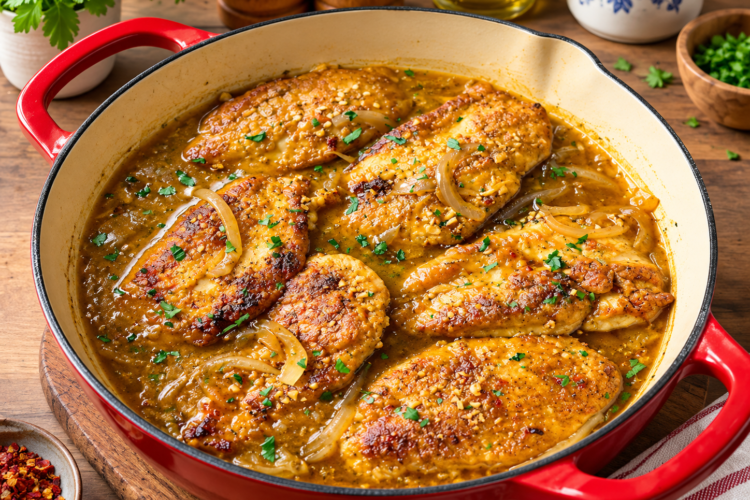
Smothered chicken is the kind of comforting dinner that turns simple ingredients into something deeply satisfying. Tender chicken breasts are lightly coated in seasoned flour, browned in a skillet, and then finished in a rich homemade onion gravy. The chicken absorbs the savory sauce as it simmers, creating a meal that is juicy, flavorful, and perfect for serving with classic Southern side dishes.
The combination of golden chicken, sweet onions, garlic, and savory chicken broth makes this an easy skillet dinner that feels much more special than the effort required.
This Southern smothered chicken recipe is especially useful when you want a hearty homemade meal without spending hours in the kitchen. The entire dish comes together in one large skillet, which means the cooking process is straightforward and cleanup is easier. Browning the chicken first creates flavorful bits on the bottom of the pan, while the seasoned flour helps build the gravy later.
Every step contributes to the final flavor, so even though the ingredient list is simple, the finished chicken has plenty of depth.
What Makes Smothered Chicken So Delicious
The appeal of smothered chicken comes from the way several simple cooking techniques work together. The chicken is first seasoned and dredged in flour before being pan-fried in olive oil. This gives the outside a lightly crisp, browned coating while also leaving flavorful residue in the skillet. The browned pieces stuck to the bottom of the pan become especially important when the chicken broth is added because they dissolve into the liquid and help create a more savory gravy.
The seasoned flour serves another important purpose. A small amount is reserved after coating the chicken and later cooked with butter, onions, and garlic. When the chicken broth is stirred into this mixture, the flour thickens the liquid naturally. Paprika, onion powder, and garlic powder also carry their flavor into the gravy, giving the sauce a balanced seasoning that complements the chicken rather than overpowering it.
How to Prepare the Chicken
Boneless, skinless chicken breasts work particularly well for this recipe because they cook quickly and are easy to portion. Cutting the breasts horizontally creates thinner pieces, allowing them to cook evenly and absorb more of the surrounding gravy. If some pieces are still thicker than a quarter inch, gently pounding them to an even thickness helps prevent the thinner portions from becoming overcooked while the thicker areas finish cooking.
Before dredging, the chicken should be patted dry with paper towels. Removing excess moisture helps the flour coating adhere properly and encourages better browning in the skillet. Seasoning the chicken before it goes into the flour also gives the meat flavor from the inside, while the seasoned flour adds another layer of seasoning to the exterior.
Building a Flavorful Flour Coating
A well-seasoned flour mixture is one of the most important parts of this smothered chicken recipe. All-purpose flour is combined with paprika, onion powder, and garlic powder to create a savory coating with gentle color and plenty of flavor. Rather than treating the flour as only a coating, this recipe uses some of it again when making the gravy, so seasoning it properly affects both the chicken and sauce.
The flour should be mixed thoroughly before the chicken is added. Each piece should receive a light, even coating, and excess flour should be shaken off. Too much loose flour can create a heavy coating and may also make the gravy unnecessarily thick. Reserving the specified tablespoon of the flour mixture gives you enough to help thicken the skillet gravy without changing the original proportions.
Browning the Chicken in a Skillet
The chicken is cooked in batches rather than crowded into the pan. This is important because overcrowding can reduce the skillet temperature and make it harder for the chicken to develop a beautiful golden-brown exterior. Using a large 12-inch stainless steel or cast iron skillet gives the chicken enough room to brown properly while leaving space for the onions and gravy later.
Olive oil provides the cooking fat for browning, and the chicken is seared for several minutes on each side. At this stage, the chicken does not necessarily need to be completely cooked through. It will finish cooking later in the gravy. Once browned, the chicken is moved to a plate while the flavorful contents of the skillet remain behind.
Creating the Onion Gravy
The gravy begins with butter and thinly sliced yellow onion. Cooking the onions until they soften allows their natural sweetness to develop, creating a pleasant contrast with the savory chicken and broth. Garlic is added toward the end of this stage because it needs only a short amount of cooking time to become fragrant without burning.
Once the garlic is ready, the reserved seasoned flour is stirred into the skillet. Cooking the flour briefly is important because it removes the raw flour taste and prepares it to thicken the chicken broth. The mixture may look somewhat thick at this point, but the broth will loosen everything and transform it into a smooth skillet gravy.
Using the Browned Bits for Extra Flavor
One of the easiest ways to improve a skillet chicken recipe is to make use of the browned bits left behind after searing. When the chicken broth is poured into the skillet, a wooden spoon can be used to scrape the bottom gently. These browned pieces contain concentrated flavor from the chicken, seasoned flour, and cooking process.
This step also helps incorporate the flour mixture evenly into the liquid. As the broth reaches a boil and then settles into a simmer, the sauce begins to thicken. The onions remain throughout the gravy, giving it texture and a subtle sweetness that works beautifully with the tender chicken.
Finishing the Chicken in the Gravy
After the gravy reaches a boil, the heat is reduced to maintain a gentle simmer. The browned chicken and any juices that collected on the plate are returned to the skillet in a single layer. This allows the chicken to finish cooking while the surrounding sauce gradually works its way around the pieces.
The chicken should reach an internal temperature of at least 165ºF when checked with an instant-read thermometer. This final simmer generally takes only a few minutes because the chicken was already partially cooked during browning. Avoid unnecessarily prolonged cooking, as chicken breasts can become dry if they are left simmering much longer than necessary.
Best Side Dishes for Smothered Chicken
Smothered chicken naturally calls for comforting side dishes that can soak up the onion gravy. Creamy mashed potatoes are a classic choice because the smooth potatoes provide a mild base for the rich sauce. Green beans also pair nicely with the dish, adding freshness and a different texture to the plate.
Buttery biscuits are another excellent option, particularly if you want to make the meal feel like a traditional Southern-style dinner. The gravy can be spooned over the biscuits, while the chicken remains the centerpiece of the meal. Rice or another simple grain can also work when you want something that absorbs the sauce without competing with its flavor.
How to Get Tender, Juicy Chicken
The key to tender chicken is controlling both thickness and cooking time. Chicken breasts that vary greatly in thickness do not cook evenly, so horizontally slicing and gently pounding the thicker pieces creates a more consistent shape. This allows the chicken to brown properly and then finish cooking in the gravy without some portions becoming dry before others are done.
Another useful step is allowing the browned chicken to rest on a plate while the gravy is prepared. Any juices that collect on the plate should be returned to the skillet along with the chicken. Those juices contain flavor and help keep the meat moist as it finishes cooking.
Notes for Making the Recipe Successfully
For the best browning, make sure the skillet and olive oil are properly heated before adding the chicken. The oil should be shimmering, but it should not be smoking heavily. Place the chicken into the skillet carefully and avoid moving it around too much during the first few minutes. Allowing it to remain undisturbed helps develop the browned exterior that gives this dish much of its character.
When making the gravy, scrape the bottom of the skillet thoroughly but gently. Those browned bits are useful, but any pieces that are genuinely burnt should not be aggressively incorporated because they can make the sauce taste bitter. Keep the heat controlled when cooking the onions, garlic, and flour so the ingredients develop flavor without scorching.
Common Questions About Smothered Chicken
Can I use chicken thighs?
This particular recipe specifies boneless, skinless chicken breasts, so the ingredient list should remain as written when following the recipe exactly. Chicken thighs have different cooking characteristics and would require adjustments to timing and preparation. For the intended result, use the specified chicken breasts and follow the preparation method carefully.
Why is the chicken dredged in flour?
The flour creates a lightly browned coating around the chicken and also provides part of the thickening for the gravy. Because the flour mixture contains paprika, onion powder, and garlic powder, it contributes seasoning as well. A portion is reserved for the sauce, allowing the flavors used on the chicken to carry through into the gravy.
How do I know when the chicken is done?
The most reliable method is to check the thickest part of the chicken with an instant-read thermometer. The chicken should reach at least 165ºF. Since the pieces are relatively thin, they can finish cooking quickly during the final simmer, so checking the temperature helps prevent both undercooking and unnecessary overcooking.
Can I make the gravy more flavorful?
The recipe already develops flavor through the seasoned flour, browned chicken, butter, onion, garlic, and chicken broth. Scraping the browned bits from the bottom of the skillet is particularly important because they add savory depth to the gravy. Tasting the sauce at the end also allows you to determine whether additional kosher salt is needed.
Why This Easy Chicken Dinner Works
This recipe succeeds because every stage builds on the previous one. The seasoned flour gives the chicken a flavorful exterior, the skillet browning develops savory browned bits, the onions provide sweetness, and the garlic adds aromatic depth. Finally, chicken broth brings everything together into a smooth gravy that surrounds the chicken and transforms basic pantry ingredients into a satisfying dinner.
For busy weeknights, this is an especially practical chicken breast recipe because it does not require complicated equipment or a long list of ingredients. Everything happens in one skillet, and the chicken cooks relatively quickly after being prepared. At the table, the result feels like classic comfort food: tender chicken covered in onion-rich gravy with plenty of sauce for your favorite side dishes.
Serving and Storage Notes
Serve the chicken while it is hot, spooning plenty of onion gravy over each piece. Because the sauce is an important part of the dish, choose sides that can capture some of it. Leftovers should be cooled and stored properly in the refrigerator. When reheating, warm the chicken gently with some of the gravy so the meat remains moist rather than drying out.
This Southern smothered chicken is best enjoyed as a complete skillet meal with comforting sides, but its versatility makes it suitable for ordinary family dinners as well as relaxed weekend meals. The combination of tender chicken, savory onion gravy, and a simple preparation method makes it a dependable recipe to keep in your regular dinner rotation.

Smothered Chicken Recipes
 Recipe by admin1
Tender boneless chicken breasts are coated in seasoned flour, pan-fried until golden, and finished in a savory onion and garlic gravy made with chicken broth.
4-6
servings15
minutes25
minutes40
minutesIngredients
1/2 cup all-purpose flour
2 teaspoons paprika
1 teaspoon onion powder
1 teaspoon garlic powder
3 medium boneless, skinless chicken breasts (about 1 1/2 pounds)
1 1/2 teaspoons kosher salt, divided, plus more as needed
1/4 teaspoon freshly ground black pepper
3 tablespoons olive oil, divided
2 tablespoons unsalted butter
1 large yellow onion, thinly sliced (about 3 cups)
2 cloves garlic, minced
2 cups low-sodium chicken broth
Directions
- Whisk together the all-purpose flour, paprika, onion powder, and garlic powder in a shallow bowl or pie plate until the seasonings are evenly distributed throughout the flour.
- Cut the chicken breasts in half horizontally to create 6 pieces. If any pieces are thicker than 1/4-inch, place them in a large resealable plastic bag and gently pound them with the flat side of a meat mallet or a small saucepan until they reach an even thickness.
- Pat the chicken dry with paper towels. Season both sides with 1 teaspoon kosher salt and the black pepper. Dredge each piece in the seasoned flour, shaking off any excess coating. Reserve 1 tablespoon of the remaining flour mixture for the gravy and discard the rest.
- Heat 2 tablespoons olive oil in a large 12-inch stainless steel or cast iron skillet over medium heat until shimmering. Add half of the chicken in a single layer. Cook for 3 to 5 minutes on each side, until nicely browned. Transfer the chicken to a large plate.
Add the remaining 1 tablespoon olive oil to the skillet and brown the remaining chicken in the same way. Transfer it to the plate with the first batch. - Melt the unsalted butter in the same skillet. Add the thinly sliced yellow onion and the remaining 1/2 teaspoon kosher salt. Cook, stirring occasionally, for 5 to 8 minutes, or until the onions are softened.
Add the minced garlic and cook for about 30 seconds, just until fragrant. - Add the reserved tablespoon of seasoned flour mixture to the skillet. Stir regularly and cook for about 1 minute. This brief cooking time helps remove the raw flour taste.
- Pour in the low-sodium chicken broth while stirring. Use a wooden spoon to scrape the browned bits from the bottom of the skillet. Bring the mixture to a boil, then reduce the heat so the gravy maintains a gentle simmer.
- Return the browned chicken and any accumulated juices from the plate to the skillet. Arrange the chicken in a single layer in the gravy. Simmer for 5 to 6 minutes, or until the chicken is completely cooked and reaches at least 165ºF on an instant-read thermometer.
- Taste the onion gravy and add more kosher salt if needed. Serve the hot smothered chicken with plenty of gravy spooned over the top and your preferred comforting side dishes.
Notes
- Seasoning the flour well is important because the flour contributes flavor to both the chicken coating and the gravy.
- Avoid overcrowding the skillet while browning the chicken. Cook in two batches as directed for better browning.
- Scrape the browned bits from the bottom of the skillet when adding the chicken broth to incorporate their flavor into the gravy.
- Use an instant-read thermometer to confirm that the chicken reaches at least 165ºF.
- Taste the finished gravy before serving and adjust the kosher salt as needed.
- Serve with mashed potatoes, green beans, buttery biscuits, or another favorite side that works well with savory gravy.


