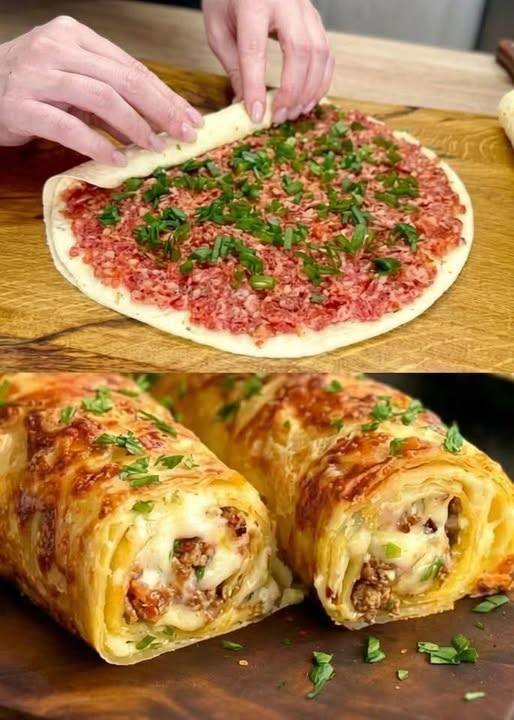
Tortilla wraps are soft, flexible flatbreads used for wraps, burritos, quesadillas, shawarma rolls, sandwiches, and many other meals. A good tortilla should be soft, bend easily without cracking, and stay fresh for hours. This recipe explains every detail from ingredient selection to kneading, rolling, cooking, storing, reheating, and making variations.
What Makes a Perfect Tortilla Wrap
A perfect tortilla wrap should:
- Be soft and flexible
- Have light brown spots after cooking
- Stay moist without becoming sticky
- Roll without breaking
- Taste mild and slightly buttery
- Remain usable even after cooling
The secret comes from:
- Correct flour choice
- Proper hydration
- Enough kneading
- Resting the dough
- Correct pan temperature
- Avoiding overcooking
Ingredients for Basic Flour Tortilla Wraps
This recipe makes about 10 medium wraps.
Dry Ingredients
- 4 cups all-purpose flour
- 1 teaspoon salt
- 1 teaspoon sugar
- 1 teaspoon baking powder
Fat
Choose one:
- 5 tablespoons oil
- 5 tablespoons butter
- 5 tablespoons vegetable shortening
- 5 tablespoons ghee
Liquid
- 1¼ cups warm water
Optional:
- 2 tablespoons milk powder for softer wraps
Understanding Each Ingredient
Flour
All-purpose flour works best because it gives enough gluten for flexibility while remaining soft. Bread flour creates chewier tortillas. Whole wheat flour creates denser wraps unless mixed with white flour.
Salt
Salt improves flavor and strengthens the dough structure.
Sugar
Sugar helps light browning and slightly improves softness.
Baking Powder
Baking powder creates tiny bubbles and lighter texture. Some traditional tortillas skip it, but for wrap-style tortillas it helps softness.
Fat
Fat coats flour particles and prevents excessive gluten toughness.
- Butter gives rich flavor
- Oil gives flexibility
- Shortening gives restaurant-style softness
- Ghee gives deep aroma
Warm Water
Warm water hydrates flour better and creates softer dough.
Equipment Needed
- Large mixing bowl
- Rolling pin
- Flat pan or skillet
- Clean kitchen towel
- Dough scraper
- Measuring cups
- Brush for oiling if needed
Step 1 – Mixing the Dough
Place flour into a large bowl.
Add:
- Salt
- Sugar
- Baking powder
Mix thoroughly so ingredients spread evenly.
Add the fat.
Now use fingers to rub the fat into flour until mixture looks like coarse crumbs. This stage is important because it distributes fat evenly.
The flour should hold shape briefly when squeezed in your hand.
Step 2 – Adding Water
Pour warm water slowly while mixing.
Do not add all water immediately.
Different flours absorb water differently depending on:
- Brand
- Protein level
- Weather
- Humidity
Mix continuously until dough begins forming.
The dough should:
- Feel soft
- Slightly tacky
- Not dry
- Not sticky like batter
If dough feels dry:
- Add 1 tablespoon water at a time
If dough feels too wet:
- Sprinkle small amounts of flour
Step 3 – Kneading
Transfer dough onto clean surface.
Knead for 8–10 minutes.
Push dough forward with palm, fold back, rotate, and repeat.
At first dough may:
- Look rough
- Tear slightly
- Feel uneven
After several minutes it becomes:
- Smooth
- Elastic
- Soft
- Stretchy
Proper kneading develops gluten, allowing wraps to bend without cracking.
Dough Test
Press finger into dough:
- If it slowly springs back, it is ready
Stretch a small piece:
- It should stretch without tearing quickly
Step 4 – Resting the Dough
Shape dough into ball.
Lightly oil surface.
Cover with:
- Damp towel
or - Plastic wrap
Rest for 30–60 minutes.
This is one of the most important stages.
Resting:
- Relaxes gluten
- Makes rolling easier
- Improves softness
- Prevents shrinking
Without resting:
- Dough fights back while rolling
- Tortillas become tough
Step 5 – Dividing Dough
After resting, divide dough evenly.
For medium wraps:
- 10 pieces
For large burrito wraps:
- 6–8 pieces
For small tacos:
- 12–14 pieces
Roll each piece into smooth balls.
Cover balls with towel so they do not dry.
Rest balls another 15 minutes.
This second rest makes rolling much easier.
Step 6 – Rolling Tortillas
Lightly flour surface.
Take one dough ball.
Flatten gently with fingers.
Use rolling pin from center outward.
Rotate dough often.
Try keeping thickness even.
Ideal Thickness
- Thin enough to flex
- Thick enough not to tear
Very thin tortillas:
- Cook quickly
- Become slightly crisp
Thicker tortillas:
- Stay softer
- Better for wraps
Shape Tips
Perfect circles come from:
- Rotating dough frequently
- Rolling evenly in all directions
Do not worry if shape is imperfect. Homemade tortillas naturally vary.
Step 7 – Heating the Pan
Use:
- Cast iron skillet
- Heavy frying pan
- Flat griddle
Heat pan over medium-high heat.
Correct temperature is critical.
If pan is too cold:
- Tortillas dry out
- Become stiff
If pan is too hot:
- Burn before cooking inside
Test with tiny dough piece:
- It should sizzle gently within seconds
Step 8 – Cooking Tortillas
Place rolled tortilla onto dry hot pan.
Cook first side about 20–30 seconds.
You will see:
- Small bubbles
- Color change
- Light brown spots
Flip tortilla.
Cook second side about 20–30 seconds.
Flip once more for 5–10 seconds if needed.
Avoid overcooking.
Overcooked tortillas become:
- Dry
- Brittle
- Hard
Correctly cooked tortillas stay:
- Flexible
- Moist
- Soft
Step 9 – Keeping Tortillas Soft
Immediately after cooking:
- Stack tortillas
- Wrap in clean towel
Steam trapped inside keeps them soft.
This step is extremely important.
Fresh tortillas may appear slightly firm directly from pan but soften while resting in towel.
Step 10 – Cooling and Storage
Allow wraps to cool fully before storing.
Store in:
- Airtight container
or - Sealed plastic bag
Room Temperature
Good for:
- 1–2 days
Refrigerator
Good for:
- Up to 1 week
Freezer
Good for:
- 2–3 months
Separate tortillas with baking paper before freezing.
Reheating Methods
Pan Reheating
Heat 10–15 seconds per side.
Best method for flavor and texture.
Microwave
Wrap in damp paper towel.
Heat 15–20 seconds.
Oven
Wrap stack in foil.
Heat at low temperature.
Common Problems and Solutions
Tortillas Crack
Causes:
- Dough too dry
- Overcooked
- Not enough resting
Solutions:
- Add more water
- Cook shorter time
- Rest dough longer
Tortillas Shrink While Rolling
Cause:
- Gluten too tight
Solution:
- Rest dough longer
Tortillas Become Hard
Causes:
- Too much flour
- Low heat cooking
- Overcooking
Dough Sticky
Causes:
- Too much water
- Humid weather
Solution:
- Add tiny amounts of flour gradually
No Brown Spots
Cause:
- Pan not hot enough
Whole Wheat Tortilla Wraps
Ingredients
- 2 cups whole wheat flour
- 2 cups all-purpose flour
- 1 teaspoon salt
- 1 teaspoon baking powder
- 5 tablespoons oil
- 1⅓ cups warm water
Whole wheat absorbs more water and creates denser dough.
Allow extra resting time for softer texture.
Spinach Tortilla Wraps
Blend:
- Fresh spinach
- Warm water
Use green liquid in dough.
Result:
- Green wraps
- Mild spinach flavor
- Attractive appearance
Garlic Herb Tortillas
Add:
- Garlic powder
- Dried oregano
- Basil
- Parsley
Excellent for sandwich wraps.
Chili Tortilla Wraps
Add:
- Chili powder
- Paprika
- Black pepper
Creates spicy wraps for grilled chicken or beef fillings.
Butter Tortilla Version
Replace oil with melted butter.
Result:
- Richer flavor
- Softer texture
- Golden aroma
Restaurant-Style Tortilla Secrets
Restaurants often:
- Use shortening
- Let dough rest longer
- Cook at higher heat
- Stack tortillas immediately
- Use very soft dough
The softer the dough before cooking, the softer the final tortilla.
How to Make Extra Large Burrito Wraps
To make large wraps:
- Divide dough into fewer portions
- Roll extremely thin
- Use very large skillet
Large wraps require:
- More resting
- More even rolling
Nutrition Overview
Approximate per medium tortilla:
- Calories: 140–180
- Carbohydrates: 22–28g
- Fat: 4–7g
- Protein: 3–5g
Values vary depending on fat used.
Best Fillings for Tortilla Wraps
Chicken Wrap
- Grilled chicken
- Lettuce
- Mayo
- Cheese
Veggie Wrap
- Cucumber
- Tomato
- Onion
- Hummus
Breakfast Wrap
- Eggs
- Cheese
- Sausage
- Potatoes
Shawarma Style
- Spiced chicken
- Garlic sauce
- Pickles
- Fries
Mexican Style
- Beans
- Rice
- Salsa
- Beef
Professional Rolling Technique
For neat wraps:
- Do not overfill
- Keep filling centered
- Fold sides inward
- Roll tightly from bottom upward
Warm tortillas roll better than cold ones.
Why Homemade Tortillas Taste Better
Homemade wraps:
- Have fresher flavor
- Contain fewer preservatives
- Stay softer when fresh
- Allow ingredient control
- Can be customized easily
Store-bought tortillas often contain:
- Stabilizers
- Preservatives
- Artificial softeners
Advanced Softness Technique
For ultra-soft wraps:
- Use hot water instead of warm
- Rest dough longer
- Keep dough slightly sticky
- Cook quickly on high heat
- Steam after cooking
This method creates very flexible wraps.
Traditional vs Modern Tortillas
Traditional tortillas:
- Often simpler
- Sometimes only flour, fat, water, salt
Modern wraps:
- Softer
- Larger
- Include baking powder
- Designed for rolling
Final Complete Summary
To make excellent tortilla wraps:
- Use soft dough
- Knead thoroughly
- Rest dough properly
- Roll evenly
- Use hot pan
- Cook quickly
- Stack immediately
- Store airtight
Following these details carefully produces soft, flexible, flavorful homemade tortilla wraps suitable for burritos, shawarma, sandwiches, breakfast wraps, and many other meals.


