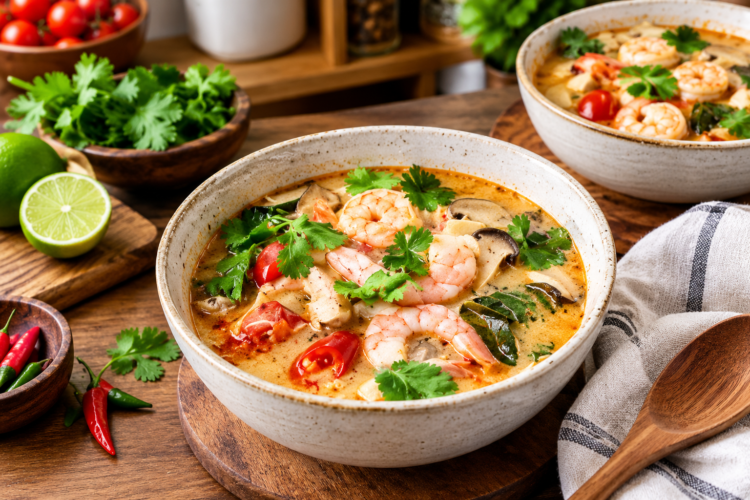
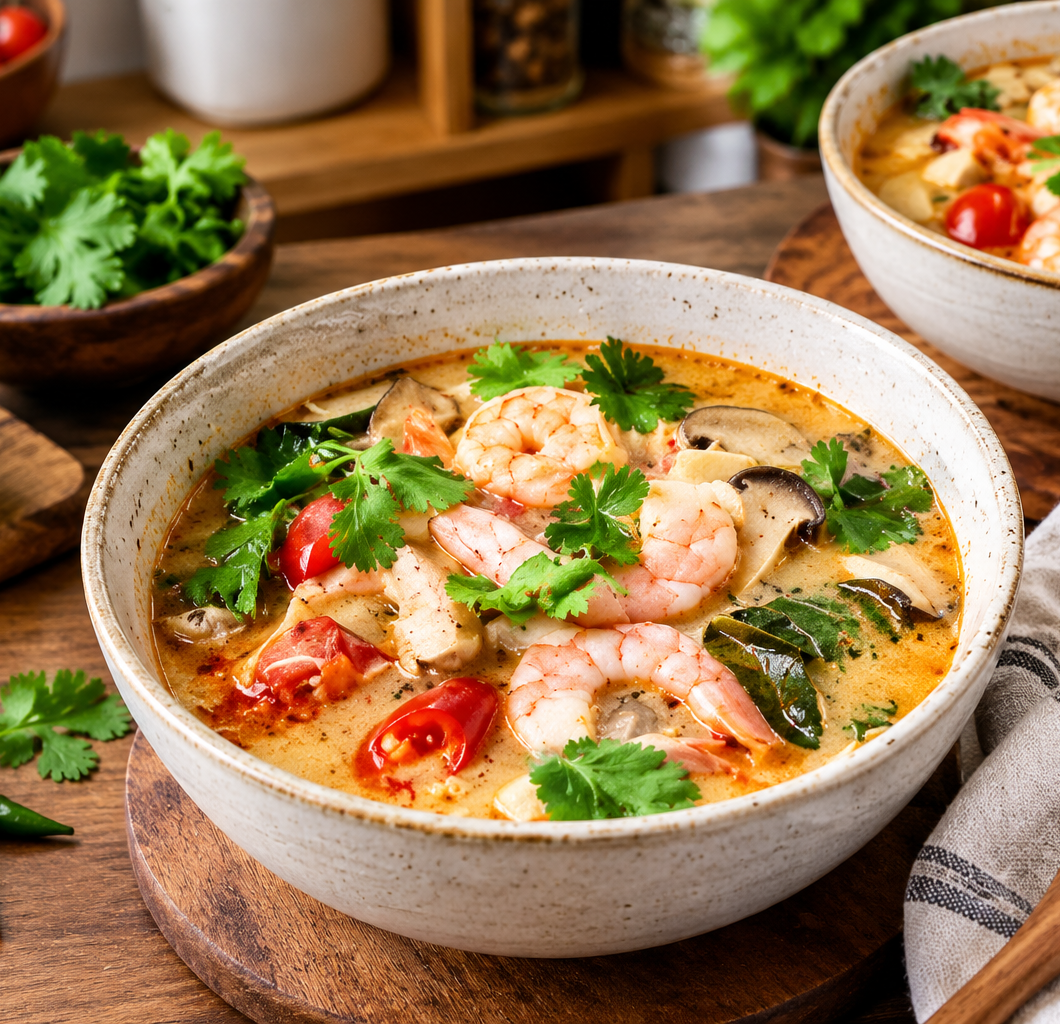
This high-protein Thai prawn soup is a light yet satisfying meal built around juicy prawns, aromatic herbs, mushrooms, coconut milk, and chewy glass noodles. The broth has the familiar balance associated with Thai cooking, combining fragrant galangal and lemongrass with chilli, kaffir lime leaves, fish sauce, and fresh lime juice. It is a practical choice when you want a flavorful meal that feels comforting without being overly heavy.
Prawns are the main source of protein in this Thai soup, making the dish particularly appealing for anyone looking for a protein-rich lunch or dinner. They provide complete protein, containing all nine essential amino acids that the body needs from food. The combination of prawns with mushrooms and aromatic ingredients creates a bowl that is both flavorful and filling, while the broth keeps the overall dish fresh and light.
The recipe is also quick enough for a busy weeknight. Most of the preparation involves slicing a few ingredients and soaking the glass noodles, while the soup itself cooks in roughly 15 minutes. Because the prawns cook quickly, they can be added near the end of the cooking process rather than simmered for a long time. This helps keep them tender and prevents the seafood from becoming tough or rubbery.

What Makes This Thai Prawn Soup Special
A good Thai-style soup depends on layers of aroma and flavor rather than a long cooking time. Here, galangal, lemongrass, fresh chilli, and kaffir lime leaves are gently simmered in stock to create the foundation of the broth. These ingredients are not intended to be eaten, but their fragrant oils infuse the liquid and give the soup its distinctive Southeast Asian character.
Coconut milk adds a small amount of richness without making the broth excessively creamy. The recipe uses only 45ml, so the coconut flavor remains balanced with the sharper ingredients. Mushrooms bring an earthy quality, while Nam Prik Pao contributes a combination of chilli, sweetness, and savory depth. Fish sauce provides the salty, umami element that ties the ingredients together.
Fresh lime juice is added after the soup has been removed from the heat. This simple step makes a noticeable difference because the bright acidity stays fresh instead of becoming harsh during prolonged cooking. The finished broth should taste aromatic, savory, gently spicy, and pleasantly sour, with the exact amount of lime adjusted according to personal preference.
Why Prawns Work So Well in a High-Protein Meal
Prawns are naturally rich in protein while being relatively low in calories, which makes them a useful ingredient for balanced meals. Their mild flavor also works particularly well with strongly aromatic ingredients such as lemongrass, galangal, chilli, and lime. In this recipe, the prawns absorb some of the savory broth while remaining the central ingredient of the bowl.
Protein is important for maintaining and repairing body tissues, and meals containing a good protein source can also be satisfying. This soup combines prawns with noodles and vegetables, giving you a meal with protein, carbohydrates, fiber, and fat rather than relying on one food group alone. The listed nutrition provides approximately 33.4g of protein per serving.
Prawns also cook extremely quickly. Once they are added to the simmering soup, they generally need only a few minutes to become opaque and cooked through. Watching their color and texture is more useful than simply relying on a timer because the exact cooking time can vary according to the size of the prawns and the temperature of the broth.
Understanding Galangal, Lemongrass, and Kaffir Lime Leaves
Galangal is closely related to ginger and has a distinctive peppery, citrusy, and slightly earthy aroma. Although it may look similar to ginger, its flavor is different enough to give Thai soups their characteristic fragrance. Fresh galangal is ideal when available, but minced jarred galangal can also be useful when fresh root is difficult to find.
If galangal is unavailable, ginger can be used as a substitute, although the final soup will not taste exactly the same. Ginger is sharper and more familiar, whereas galangal tends to have a more complex citrus-like aroma. The substitution works when convenience is more important than reproducing the precise traditional flavor.
Lemongrass contributes a clean citrus fragrance, while kaffir lime leaves provide an intensely aromatic lime character. Both ingredients are commonly used in Thai cooking and are particularly effective in broths. The lemongrass is partly sliced and partly crushed in this recipe, helping release its aroma while keeping larger pieces easy to identify and remove before eating.

The Role of Nam Prik Pao
Nam Prik Pao, sometimes called Thai chilli jam or Thai roasted chilli paste, is one of the ingredients that gives this soup extra depth. It is more complex than ordinary chilli oil because it can bring together chilli, sweetness, savory flavors, and shrimp-based notes. Only half a tablespoon is needed here, so it enhances the broth without overwhelming the other ingredients.
If you are buying Nam Prik Pao, Asian grocery stores are a useful place to look. Different brands can vary considerably in sweetness, spice, texture, and seafood flavor, so checking the ingredient label can help you choose one that suits the dish. A traditional-style Thai chilli paste will generally provide a more suitable flavor profile than a generic Western chilli sauce.
The paste can also be adjusted according to taste. If you prefer a milder soup, keep the quantity as written and avoid adding additional chilli. If you enjoy more heat, fresh chilli can provide extra spice without dramatically changing the texture of the broth. Because Nam Prik Pao can also contain shrimp, anyone with a seafood allergy should check the label carefully.
Choosing the Right Glass Noodles
Glass noodles are thin, translucent noodles commonly made from mung bean starch or other starches such as sweet potato. Once prepared, they become glossy and pleasantly chewy. Their delicate texture makes them especially suitable for broth-based dishes because they absorb some of the soup while still retaining a pleasant bite.
The noodles should be soaked in room-temperature water before boiling. This softens them and reduces the amount of time they need in hot water. The recipe specifies a 15-minute soaking period, followed by approximately three to four minutes of boiling. Once transparent and tender, they should be drained promptly so they do not become overly soft.
Glass noodles are often available in the international section of larger supermarkets and in Asian grocery stores. If they are unavailable, the recipe notes that rice noodles can be substituted in an equal quantity. Since different noodle brands have different preparation requirements, follow the cooking instructions on the package when making the substitution.
How to Make the Thai Soup
Begin by soaking the glass noodles in room-temperature water for 15 minutes. While they soften, prepare a separate pot of water that will later be used to cook the noodles. Keeping the noodles separate from the soup allows you to control their texture and prevents them from absorbing too much broth during cooking.
Next, bring the fish or chicken stock to a gentle simmer. Add the galangal slices, lemongrass, fresh chilli, and torn kaffir lime leaves. Allow the aromatics to simmer for five minutes. This short infusion gives the stock time to take on their fragrance without requiring a long cooking process.
After the aromatic base has developed, add the coconut milk, sliced mushrooms, and Nam Prik Pao. Continue simmering for another three to four minutes. During this stage, the mushrooms soften and the chilli paste blends into the stock, creating a more rounded and flavorful broth.
Add the raw peeled prawns and fish sauce, then cook for around three minutes. The prawns should become opaque and cooked through. Avoid unnecessarily extending the cooking time because seafood can quickly lose its tender texture when overcooked.
While the prawns are cooking, place the soaked glass noodles into the prepared boiling water. Cook them for three to four minutes, or until they become fully transparent and tender. Drain them well. Cooking the noodles separately also makes it easier to serve the correct amount in each bowl.
Remove the soup from the heat before adding the lime juice. Squeezing fresh lime into the hot but no-longer-cooking broth gives the soup a bright finish. Taste it and adjust the lime according to your preference. The goal is a balanced flavor where acidity lifts the savory broth without overpowering the prawns.
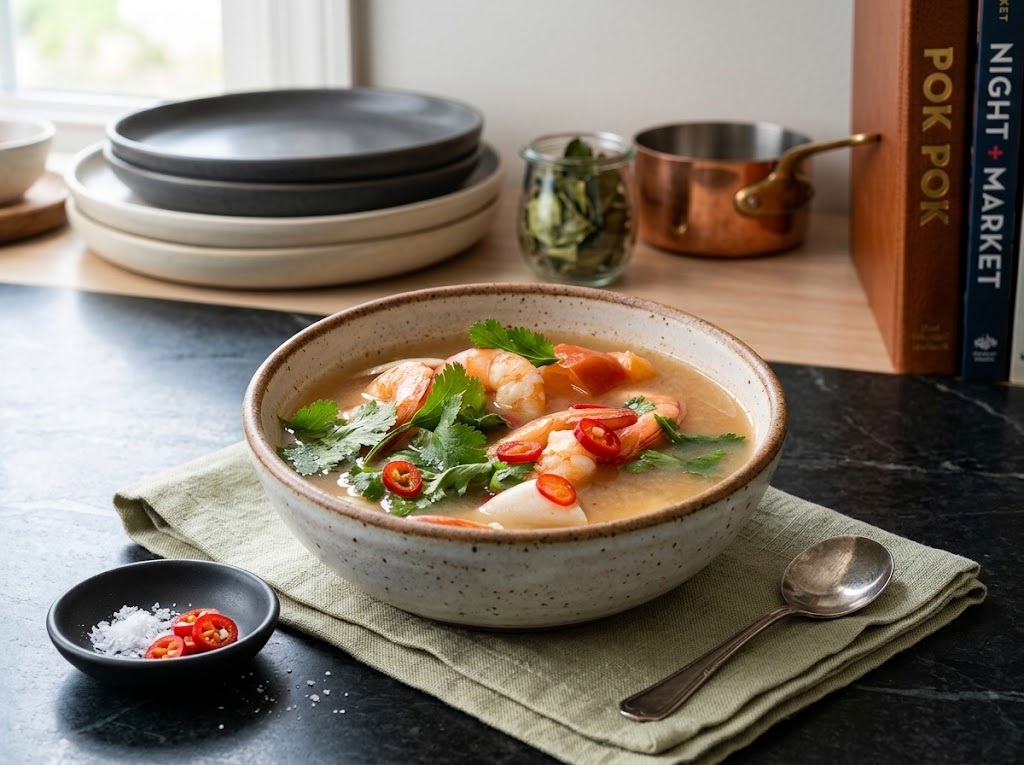
To serve, divide the cooked glass noodles between two bowls and ladle the hot Thai prawn soup over them. Finish with fresh coriander. The result is a fragrant bowl with tender prawns, chewy noodles, mushrooms, and a bright aromatic broth.
How to Get the Best Flavor
The most important technique is to avoid treating the aromatics like vegetables that need to be eaten. Galangal, lemongrass, and kaffir lime leaves are primarily used to perfume the broth. Their larger pieces should remain in the soup while it cooks but should not be eaten. If preferred, you can remove them before serving.
Fresh lime juice should always be added toward the end rather than simmered for an extended period. This preserves its fresh citrus character. Start with the amount provided by the recipe, taste the broth, and add more only if necessary. Lime can vary in acidity, so tasting is the easiest way to achieve a balanced result.
The same principle applies to chilli. Fresh chilli and Nam Prik Pao can differ in strength, so the final heat level depends partly on the ingredients you use. If you are cooking for people with different spice preferences, keep the soup moderately spicy and serve additional chilli separately.
Easy Ingredient Substitutions
Fresh kaffir lime leaves and lemongrass are preferred for the most aromatic result, but frozen or jarred versions can be used when fresh ingredients are difficult to find. The goal is to preserve the characteristic citrus fragrance of the soup while making the recipe practical for different kitchens and locations.
Galangal can be replaced with ginger when necessary. Although ginger does not reproduce the exact flavor of galangal, it provides a related warm and aromatic quality. This is a particularly useful substitution for home cooks who already have fresh ginger available.
For the noodles, rice noodles can replace glass noodles in the same quantity. However, cooking times differ between noodle varieties, so follow the package instructions. This keeps the noodles from becoming too soft while allowing them to retain enough texture to stand up to the broth.
Serving Suggestions
This Thai prawn soup works well as a complete light meal because it combines noodles, seafood, mushrooms, and a flavorful broth. If you want to increase the vegetable content without substantially changing the character of the dish, additional low-calorie non-starchy vegetables can be served alongside it.
Fresh coriander is the finishing garnish specified in the recipe. Its herbal flavor contrasts with the rich aroma of the broth and provides a fresh final note. A little extra lime can also be served at the table for people who enjoy a sharper, more citrus-forward soup.
Because the broth is flavorful on its own, there is no need for a heavy side dish. A simple vegetable accompaniment is enough if you want more volume. The soup can also be enjoyed as a quick lunch or dinner when you want something warm and satisfying without spending a long time in the kitchen.

Storage and Reheating Notes
Leftover soup should be transferred to an airtight container and refrigerated. According to the supplied recipe, leftovers can be stored in the refrigerator for up to three days. When reheating, heat the soup thoroughly before serving. If possible, storing noodles separately can help them maintain a better texture because noodles can continue absorbing liquid while sitting in broth.
When reheating a portion, avoid prolonged boiling. Gentle reheating is preferable, especially because the prawns have already been cooked. Excessive heat can make them firm or rubbery. If the noodles have absorbed a substantial amount of broth, a small amount of additional stock may help restore the desired consistency.
Notes
Glass noodles are generally gluten-free, but ingredients vary between brands. If you need to avoid gluten, check the noodle package and the stock carefully for gluten-containing ingredients or cross-contact information.
Canned coconut milk is typically found in the Asian or Mexican food aisle. The unsweetened variety is intended for this recipe. The supplied recipe uses an assumed energy value of 154 calories per 100ml for canned coconut milk.
Nam Prik Pao has a distinctive flavor that is difficult to reproduce with ordinary chilli oil. Choose a Thai-style chilli paste when possible, particularly one containing traditional ingredients such as dried shrimp, if that fits your dietary requirements.
Fresh aromatics generally provide the strongest flavor, but frozen or jarred lemongrass and kaffir lime leaves can be convenient alternatives. Similarly, jarred minced galangal can be used when fresh root is unavailable.
High Protein Thai Soup: Tom Yum with Prawns
 Recipe by admin
A fragrant Thai-inspired prawn soup made with glass noodles, mushrooms, coconut milk, galangal, lemongrass, kaffir lime leaves, chilli, Nam Prik Pao, and fresh lime.
2
servings15
minutes15
minutes369
kcal30
minutesIngredients
100g glass noodles, (see notes)
900ml fish or chicken stock
4 slices galangal
2 stalks lemongrass, half sliced, half lightly crushed
1 fresh chilli, sliced
2 kaffir lime leaves, torn
45ml canned coconut milk
6 brown mushrooms, sliced
1/2 tbsp Nam Prik Pao (chilli jam) (see notes)
200g raw peeled prawns
4 tbsp fish sauce
1 lime, juice
fresh coriander, to garnish
Directions
- Place the glass noodles in room-temperature water and soak for 15 minutes, until they become slightly transparent. Meanwhile, bring a separate pot of water to the boil for cooking the noodles.
- Pour the fish or chicken stock into another pot and bring it to a gentle simmer. Add the galangal, lemongrass, fresh chilli, and torn kaffir lime leaves. Simmer for 5 minutes so the aromatics infuse the broth.
- Add the canned coconut milk, sliced brown mushrooms, and Nam Prik Pao. Continue simmering for 3–4 minutes, allowing the mushrooms to soften and the chilli paste to blend into the soup.
- Add the raw peeled prawns and fish sauce. Cook for approximately 3 minutes, or until the prawns are opaque and cooked through.
- While the prawns are cooking, transfer the soaked glass noodles to the pot of boiling water. Cook for 3–4 minutes, until completely transparent and tender. Drain thoroughly.
- Take the Tom Yum soup off the heat and squeeze in the lime juice. Adjust the amount of lime to suit your taste. Adding the lime after removing the soup from the heat helps preserve its fresh citrus flavor.
- Divide the cooked glass noodles between two bowls. Pour the hot Tom Yum soup over the noodles and finish with fresh coriander.
Notes
- Thai chilli jam has a distinctive sweet, spicy, savory flavor and may contain dried shrimp. Asian grocery stores are a good place to find it.
- These are commonly made from mung bean or sweet potato starch. If unavailable, use an equal quantity of rice noodles and follow the package cooking instructions.
- Glass noodles are often gluten-free, but always check the packaging. Also check the stock, fish sauce, and other packaged ingredients if gluten avoidance is important.
- Fresh kaffir lime leaves and lemongrass give the best flavor, but frozen or jarred versions can be used.
- Fresh galangal is preferred. Ginger can be substituted if necessary, although the flavor will be slightly different.
- Serve with additional low-calorie, non-starchy vegetables if desired.
- Keep leftovers in an airtight container in the refrigerator for up to 3 days. Reheat thoroughly before serving.
- Use unsweetened canned coconut milk. The supplied recipe assumes approximately 154 calories per 100ml.
Nutrition Facts
- Total number of serves: 1
- Calories: 369kcal
- Fat: 5.1g
- Carbohydrates: 49.9g
- Fiber: 5.4g
- Protein: 33.4g


