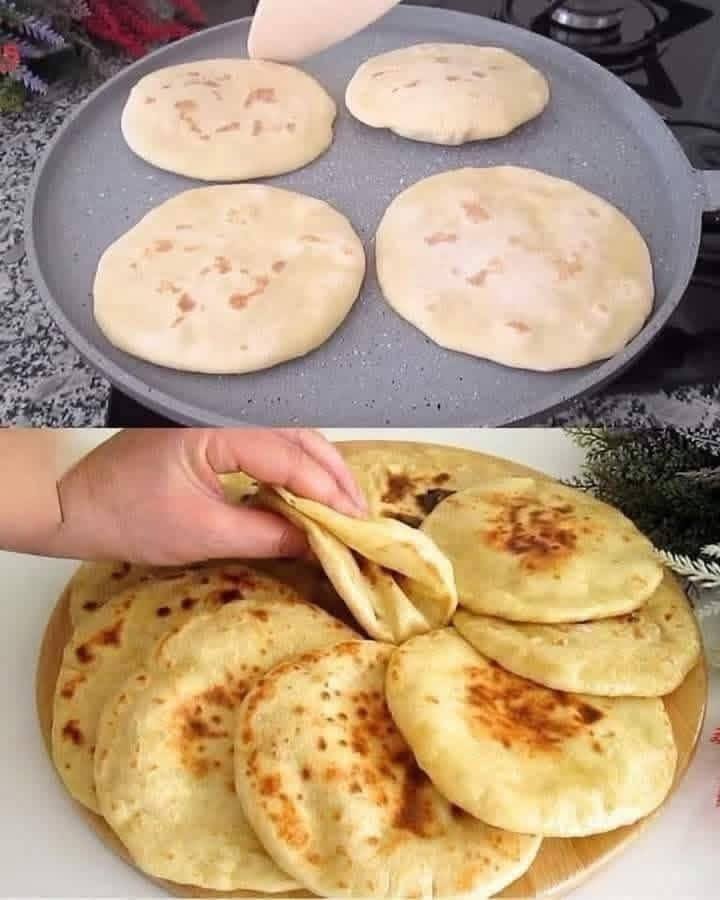
There is something incredibly satisfying about making fresh bread at home, especially when it doesn’t require yeast or hours of waiting. This skillet garlic flatbread is one of those dependable recipes that fits into almost any meal. Whenever I want fresh bread without turning on the oven, this is the recipe I make. It comes together with simple pantry ingredients, cooks in a hot skillet, and turns out soft with lightly golden spots on the outside.
The dough is easy to prepare and only needs a short resting time before cooking. Fresh minced garlic is mixed directly into the dough, giving each flatbread a mild garlic flavor that pairs well with a variety of dishes. Since the bread is cooked on the stovetop, each piece develops a beautiful texture with golden brown patches while remaining soft and flexible inside.
One of the reasons I keep coming back to this recipe is its versatility. I serve it with hearty soups during cooler months, alongside lentils or beans for everyday dinners, and even as a quick alternative to pizza crust. It also tastes wonderful on its own while still warm from the skillet. Whether it is served with a meal or enjoyed as a snack, this flatbread is always a welcome addition to the table.
Unlike traditional yeast bread, this recipe relies on baking powder for a little lift. That means there is no need to wait for the dough to rise. A short resting period allows the dough to relax, making it easier to roll into thin circles before cooking. The result is tender, flavorful flatbread that looks homemade and tastes fresh every time.
Why I Like Making This Flatbread
Fresh bread often sounds like a time-consuming project, but this recipe proves that homemade bread can be simple and approachable. Everything is mixed together in one bowl, the dough is easy to handle, and each flatbread cooks in just a couple of minutes.
Another reason I enjoy making this recipe is that it uses ingredients I almost always have available. Flour, baking powder, salt, butter, garlic, and hot water are common kitchen staples, so I rarely need a special trip to the grocery store. Even on busy days, I can prepare fresh flatbread without much planning.
The garlic adds just enough flavor without overpowering the bread. As the flatbread cooks in the hot skillet, the aroma fills the kitchen and makes the entire meal feel homemade. Each batch develops slightly different golden spots, giving every piece its own rustic appearance.
Since the bread cooks individually, it’s easy to prepare only what is needed or keep the cooked flatbreads covered with a clean towel until serving. They stay warm and soft while the remaining dough cooks, making them perfect for serving everyone at once.
What Makes This Recipe Work
Although the ingredient list is short, every ingredient has an important purpose.
The all-purpose flour creates a dough that is soft while still being sturdy enough to roll into thin rounds. It produces flatbread with a pleasant chew and tender texture.
Baking powder provides gentle lift during cooking. Instead of becoming dense, the bread puffs slightly in the skillet, creating soft layers inside.
Salt enhances the overall flavor of the dough. Even though the recipe uses only a small amount, it balances the richness of the butter and complements the garlic.
Butter is worked directly into the flour before adding the water. This creates tiny pockets of fat throughout the dough, helping produce a softer texture after cooking.
Hot water brings everything together into a smooth dough. It hydrates the flour quickly and makes kneading very simple.
Fresh minced garlic is mixed throughout the dough, ensuring every bite carries subtle garlic flavor instead of only coating the outside.
The combination of these simple ingredients creates flatbread that is tender, flavorful, and easy enough for beginners to make successfully.
Ingredients
The ingredients remain simple and are likely already available in most kitchens.
- 2½ cups all-purpose flour
- 1 teaspoon baking powder
- 1 teaspoon salt
- ¼ cup butter, cut into small pieces
- 1 cup hot water
- 3 cloves garlic, minced
Since there are only a handful of ingredients, using fresh garlic makes a noticeable difference. It blends into the dough and gives the bread its signature flavor without requiring additional herbs or seasonings.
Preparing the Dough
I always begin by combining the flour, baking powder, and salt in a large mixing bowl. Mixing these dry ingredients first helps distribute the baking powder evenly throughout the flour.
Next, I add the small pieces of butter. Using my hands, I gently work the butter into the flour until the mixture resembles coarse breadcrumbs. This step is simple but important because evenly distributed butter contributes to the soft texture of the finished flatbread.
The hot water is mixed with the minced garlic before being poured into the flour mixture. As everything comes together, the dough begins forming quickly. I stir until there are no dry patches left before transferring the dough onto a lightly floured work surface.
Only a few kneads are needed. The goal is simply to bring the dough together into a smooth ball rather than developing lots of gluten. Overworking the dough can make the flatbread firmer than desired, so I keep this step short.
After kneading, I divide the dough into ten equal portions. Rolling each portion into a ball first makes it easier to create evenly sized flatbreads later. Each ball is then gently pressed into a small disk before resting.
Resting the Dough
One step that is worth waiting for is the twenty-minute rest. I cover the dough with a clean kitchen towel and leave it on the counter.
This resting period allows the flour to fully absorb the moisture while giving the gluten time to relax. Once rested, the dough becomes noticeably easier to roll without springing back.
Skipping this step often makes rolling more difficult, so even though it is only twenty minutes, it improves both the texture and the cooking process.
Rolling the Flatbread
Once the dough has rested, I lightly flour the work surface and rolling pin.
Each dough disk is rolled into a circle roughly the size of the skillet. I try to keep the thickness even so the bread cooks uniformly. It doesn’t have to be perfectly round. Slightly uneven edges give homemade flatbread its rustic appearance and make each piece look freshly prepared.
If the dough sticks while rolling, a light dusting of flour is enough to keep it manageable. Too much extra flour can make the surface dry, so I use only what is necessary.
Preparing one flatbread at a time while the skillet heats helps maintain the best texture. By the time one finishes cooking, the next piece is ready to roll.
Heating the Skillet
A well-heated cast iron skillet produces the best results. I preheat it over medium-high heat until it is evenly hot before placing the first flatbread inside.
As soon as the dough touches the skillet, small bubbles begin forming across the surface. Within a minute or two, golden brown spots appear, showing that the bread is ready to flip.
Cooking continues on the second side for another minute or two until both sides develop beautiful golden patches while remaining soft in the center.
After each flatbread finishes cooking, I transfer it to a plate and immediately cover it with a clean kitchen towel. This simple step keeps every piece warm and helps retain its soft texture while the remaining dough cooks.
By repeating the same process with the rest of the dough, I end up with a stack of warm, homemade garlic flatbreads ready to enjoy with almost any meal.Serving Ideas
One of the best things about this skillet garlic flatbread is how easily it fits into everyday meals. Since the flavor is mild with a hint of fresh garlic, it pairs well with a wide variety of dishes without overpowering them.
I often serve these warm flatbreads alongside homemade soups because they are perfect for dipping into rich broths and creamy soups. They are equally delicious with lentils, beans, or a hearty bowl of chili, making even a simple dinner feel more complete.
These flatbreads also work well as a quick substitute for naan or other skillet breads when serving Indian-inspired meals. Their soft texture makes them ideal for scooping up curries or enjoying with flavorful sauces.
For a lighter meal, I like using them as wraps. Once cooled slightly, they become flexible enough to fold around grilled vegetables, cooked chicken, or fresh salad ingredients without breaking.
Another favorite way to enjoy them is as an easy pizza base. A layer of sauce, shredded cheese, and a few toppings can transform these flatbreads into quick personal pizzas in just a few minutes. They are also delicious served warm with butter or alongside a simple dipping sauce.
Whether served fresh from the skillet or as part of another recipe, these flatbreads are versatile enough for lunch, dinner, or even a satisfying snack.
Helpful Tips for Success
Although this recipe is simple, a few small details make a noticeable difference in the final result.
One of the most important steps is measuring the flour correctly. Too much flour can make the dough dry and harder to roll. Measuring carefully helps create dough that stays soft and easy to work with.
The butter should be cut into small pieces before mixing it with the flour. Smaller pieces distribute more evenly throughout the mixture and contribute to the tender texture of the cooked bread.
Using hot water helps bring the dough together quickly. The dough should feel soft without becoming sticky. If it seems slightly tacky at first, a light dusting of flour during kneading is usually enough.
Avoid kneading the dough too much. Only a few folds are needed to bring everything together. Excess kneading can make the bread firmer than desired.
The resting period should not be skipped. Giving the dough twenty minutes to rest allows it to relax, making rolling easier and improving the texture after cooking.
Preheating the skillet properly is equally important. A skillet that is too cool will not create the golden spots that give the bread its appealing appearance, while excessive heat may brown the outside before the inside cooks completely.
Cooking each flatbread individually also helps maintain even results. Since every piece cooks quickly, staying close to the skillet makes it easier to flip the bread at the right moment.
Finally, keeping the cooked flatbreads covered with a clean kitchen towel helps them remain warm and soft until ready to serve.
Storage and Reheating
If there are leftovers, they store surprisingly well.
Once the flatbreads have cooled completely, I stack them with parchment paper between each piece before placing them in an airtight container or resealable bag. They can be refrigerated for several days while maintaining their texture.
For longer storage, the flatbreads can also be frozen. Wrapping them well helps prevent freezer burn and makes it easy to remove only the number needed. Allow them to thaw before reheating.
When it is time to serve them again, I prefer warming each flatbread in a dry skillet for about a minute on each side. This restores much of the original texture while gently heating the bread.
They can also be warmed in the microwave for a few seconds if a quicker option is needed, although reheating in a skillet gives the best texture.
Description
This easy skillet garlic flatbread is soft, tender, and full of fresh garlic flavor. Made with simple pantry ingredients and cooked in a hot cast iron skillet, it is a delicious addition to soups, lentils, beans, chili, or curries. It also works well as a quick pizza base or served warm on its own.
pre time
15 minutes
Cook Time
20 minutes
Rest Time
20 minutes
Total Time
55 minutes
Servings
10 flatbreads
Ingredients
- 2½ cups all-purpose flour
- 1 teaspoon baking powder
- 1 teaspoon salt
- ¼ cup butter, cut into small pieces
- 1 cup hot water
- 3 cloves garlic, minced
Instructions
- In a large mixing bowl, combine the all-purpose flour, baking powder, and salt until evenly mixed.
- Add the butter pieces to the flour mixture. Using your hands, rub the butter into the flour until the mixture resembles coarse breadcrumbs.
- Stir the minced garlic into the hot water.
- Pour the garlic water into the flour mixture and mix until a soft dough forms.
- Transfer the dough to a lightly floured work surface and knead it 3 to 4 times, just until smooth.
- Divide the dough into 10 equal portions. Roll each portion into a ball, then gently flatten into a small disk.
- Cover the dough with a clean kitchen towel and let it rest for 20 minutes.
- Heat a cast iron skillet over medium-high heat until hot.
- Roll one dough disk into a circle about the same size as the skillet.
- Place the rolled dough into the hot skillet and cook for 1 to 2 minutes, or until bubbles form and the bottom develops golden brown spots.
- Flip the flatbread and cook the other side for another 1 to 2 minutes until lightly browned and cooked through.
- Transfer the cooked flatbread to a serving platter and cover with a clean kitchen towel to keep it warm.
- Repeat the rolling and cooking process with the remaining dough portions.
- Serve warm with your favorite soups, curries, beans, lentils, chili, or use as a wrap or quick pizza base.
Notes
Leftover flatbreads can be refrigerated in an airtight container and reheated in a dry skillet before serving.
Measure the flour carefully to keep the dough soft and easy to handle.
Avoid over-kneading; a few folds are enough to bring the dough together.
Resting the dough for 20 minutes makes it easier to roll and improves the texture.
Keep the skillet properly preheated for even cooking and golden brown spots.
Cover the cooked flatbreads with a clean kitchen towel to help them stay warm and soft until serving.


