
Chicken enchiladas are one of those comforting Mexican-inspired meals that can turn simple ingredients into a rich, satisfying dinner. Soft tortillas are filled with seasoned chicken, refried beans, sweet corn, peppers, onion, garlic, and melted cheese before being covered in a homemade enchilada sauce and baked until bubbling. Making chicken enchiladas from scratch does involve several steps, but each part adds flavor, texture, and freshness that makes the finished dish especially rewarding.
Why These Homemade Chicken Enchiladas Are Worth Making
The difference between ordinary enchiladas and homemade chicken enchiladas comes down to the details. Instead of relying on a packet seasoning mix and a jar of prepared sauce, this recipe builds the flavor from a simple homemade enchilada seasoning blend. The same seasoning is used in both the sauce and chicken filling, creating a balanced taste throughout the entire dish. The result is savory, gently smoky, slightly spicy, and full of familiar Mexican-inspired flavors.
Another important feature is the texture of the filling. These enchiladas are designed to be generously filled rather than thinly rolled with only a small amount of chicken inside. The combination of chicken, refried beans, corn, vegetables, and cheese creates a filling that stays moist and holds together when the enchiladas are sliced and served. Refried beans are particularly useful because they help bind the ingredients while adding creaminess without making the filling watery.
The homemade enchilada sauce also plays a major role. It is prepared with olive oil, flour, chicken broth, tomato passata, and the homemade spice mixture. Cooking the sauce until it reaches a thick syrup-like consistency gives it enough body to coat the tortillas while still remaining soft and saucy after baking. This prevents the finished enchiladas from becoming dry or covered with nothing more than a hardened layer of sauce.
The Homemade Enchilada Seasoning
A simple spice blend provides the foundation for this chicken enchilada recipe. Onion powder and garlic powder add savory depth, while cumin brings a warm earthy character. Paprika contributes color and mild sweetness, and dried oregano adds an aromatic herbal note. Cayenne pepper can be included for heat, while black pepper and salt round out the seasoning.
Preparing the seasoning before starting the sauce or chicken makes the cooking process easier. Rather than measuring individual spices repeatedly, combine the complete mixture in a small bowl. Part of the blend goes into the enchilada sauce, while the remaining seasoning is used to coat the chicken. This double-purpose approach gives the recipe a consistent flavor from the filling to the sauce.
How to Make the Enchilada Sauce
The homemade sauce begins with a simple roux made from olive oil and all-purpose flour. Heating the flour briefly in the oil helps create the base that thickens the liquid ingredients. The flour should be stirred continuously during this short cooking stage so it blends smoothly with the oil without becoming overly browned.
Chicken broth and tomato passata are then added along with two tablespoons of the prepared enchilada seasoning. Whisking the mixture regularly helps prevent lumps and distributes the spices evenly. As the sauce simmers, the flour gradually thickens the liquid. After approximately four minutes, it should have a consistency similar to thick syrup. This texture is ideal because the sauce will continue cooking slightly when the enchiladas bake in the oven.
Tomato passata gives the sauce its smooth texture and rich tomato flavor. Depending on where you live, passata may be labeled tomato puree. If tomato passata is unavailable, the listed tomato paste substitution can also be used according to the recipe notes. The important goal is to create a smooth, flavorful sauce that is thick enough to cling to the tortillas without becoming heavy.
Preparing the Juicy Chicken Filling
Chicken breast works especially well in this recipe because it cooks quickly and provides plenty of lean meat for the filling. Slicing the chicken breasts horizontally creates thinner pieces, which increases the surface area available for the seasoning. This also helps the chicken cook quickly and evenly in a hot skillet. Boneless chicken thighs can be used as an alternative when preferred.
Before cooking, coat the chicken with one tablespoon of olive oil and the prepared seasoning. Make sure the spice mixture is distributed over the entire surface. Heat the remaining oil in a large skillet over high heat, then cook the chicken briefly on both sides. Because the chicken has been sliced into thinner pieces, it does not require a long cooking time.
After cooking, allow the chicken to rest for about two minutes before chopping it. Resting gives the juices a chance to settle, helping the meat remain moist when incorporated into the filling. Cut the chicken into small pieces rather than shredding it too finely. Small chunks provide a satisfying texture and make every bite of the enchiladas substantial.
Building the Flavorful Filling
The same skillet used for the chicken becomes the base for the vegetables. Add the chopped onion and minced garlic and cook briefly until fragrant. The diced red bell pepper is then added and cooked until the onion becomes translucent. Cooking the vegetables in the same skillet allows them to pick up some of the savory flavors left behind by the seasoned chicken.
Once the vegetables are ready, add the refried beans, chopped chicken, drained corn, and water. Stir everything together and cook for another couple of minutes. The goal is a filling that is thick and juicy rather than loose or watery. If the mixture seems too wet, allowing it to cook briefly helps excess moisture reduce.
Refried beans may seem like an unusual addition to a chicken enchilada filling, but they serve an important purpose. Their smooth texture helps hold the chicken, vegetables, and corn together while adding moisture. They also make the enchiladas feel more substantial and satisfying. Along with the chicken and cheese, they create a filling that stays together when the tortillas are rolled and served.
Choosing and Preparing the Tortillas
Both flour and corn tortillas can be used for these homemade enchiladas. Flour tortillas are convenient because larger varieties are generally flexible and easy to roll. Corn tortillas provide a more traditional texture and flavor, but they may need a little warming before assembly so they do not crack while being folded.
If the tortillas feel stiff, warm them briefly in the microwave. Around ten seconds is enough to make them more flexible in many cases. The goal is not to cook them but simply to soften them enough to roll comfortably around the filling. Keeping the tortillas pliable makes assembly faster and helps prevent splits.
How to Assemble Chicken Enchiladas
Start by spreading a small amount of enchilada sauce over the bottom of a 22 x 33cm / 9 x 13-inch baking pan. This creates a thin layer of sauce beneath the tortillas and helps prevent them from sticking. Place a tortilla on a clean work surface and spoon approximately 2/3 cup of filling onto the lower third.
Sprinkle some shredded cheese over the filling, then roll the tortilla firmly around the mixture. Finish with the seam facing downward so the enchilada stays closed. Continue with the remaining tortillas and filling until all eight enchiladas are assembled. Arrange them closely in the baking dish so they support one another while baking.
Pour the remaining enchilada sauce over the rolled tortillas, making sure the surface is well covered. Finish with the remaining shredded cheese. Covering the tortillas generously with sauce is important because it keeps the enchiladas moist as they bake and allows the cheese to melt into a rich topping.
Baking the Enchiladas
Preheat the oven to 180°C/350°F before assembling or baking. Place the prepared pan into the hot oven and bake the enchiladas for approximately 20 to 25 minutes. The dish is ready when the cheese has completely melted and developed a lightly golden appearance, while the sauce is bubbling around the edges.
Once baked, allow the enchiladas to be served immediately. Scatter roughly chopped coriander or cilantro over the top for a fresh finish. The contrast between the creamy melted cheese, rich red sauce, hearty filling, and fresh herbs makes the finished dish especially appealing.
Serving Suggestions
These chicken enchiladas are filling enough to work as a complete main course, but they can also be served with simple Mexican-inspired sides. A fresh salad, extra corn, beans, or a light vegetable side can complement the rich cheese and sauce. Because the enchiladas are generously stuffed, a modest side dish is usually enough.
The recipe makes eight large enchiladas. Depending on appetite and what else is served with the meal, one enchilada may be enough for some people, while a larger appetite may call for more. The substantial chicken and bean filling makes this a particularly satisfying dinner option.
Make-Ahead, Storage, and Freezing
Cooked chicken enchiladas can be stored in the refrigerator for up to four days. For the best texture when preparing them ahead, keeping the sauce separate from the tortillas is useful because tortillas naturally absorb liquid as they sit. Add the sauce and cheese immediately before baking whenever possible.
The enchiladas can also be assembled ahead of time. If preparing the complete dish in advance, allow both the sauce and rolled enchiladas to cool fully before combining them. Using cold components helps reduce how much sauce the tortillas absorb before baking, which can help preserve their structure.
For freezing, keep the sauce separate when practical. Thaw the sauce before assembling, then add the sauce and cheese immediately before baking. Fully assembled enchiladas can also be baked directly from frozen. Cover the dish with foil and bake for 20 minutes, then remove the foil and continue baking for another 20 minutes at 180°C/350°F. If the enchiladas have been thawed, follow the standard baking instructions.
Notes
Tortilla note
Flour tortillas are convenient because they are generally soft and flexible. Corn tortillas or firmer flour tortillas should be warmed briefly before filling so they bend without cracking.
Chicken note
Slicing the chicken breast horizontally creates thinner pieces. This allows the seasoning to cover more surface area and helps the chicken cook quickly and evenly.
Refried bean note
Refried beans add moisture and help bind the filling. They are essentially mashed or pureed beans commonly used in Mexican and Tex-Mex cooking and are often sold in cans.
Tomato note
Tomato passata may be labeled tomato puree in the United States and Canada. If using the tomato paste substitution, use 4 tablespoons tomato paste, 1 additional cup broth or stock, and 1 teaspoon sugar.
Storage note
Cooked leftovers can be refrigerated for up to four days. For better texture, store the sauce separately when preparing the dish in advance.
Freezer note
The assembled enchiladas can be frozen and baked from frozen. Cover with foil for the first 20 minutes, then remove the foil and bake for another 20 minutes at 180°C/350°F.
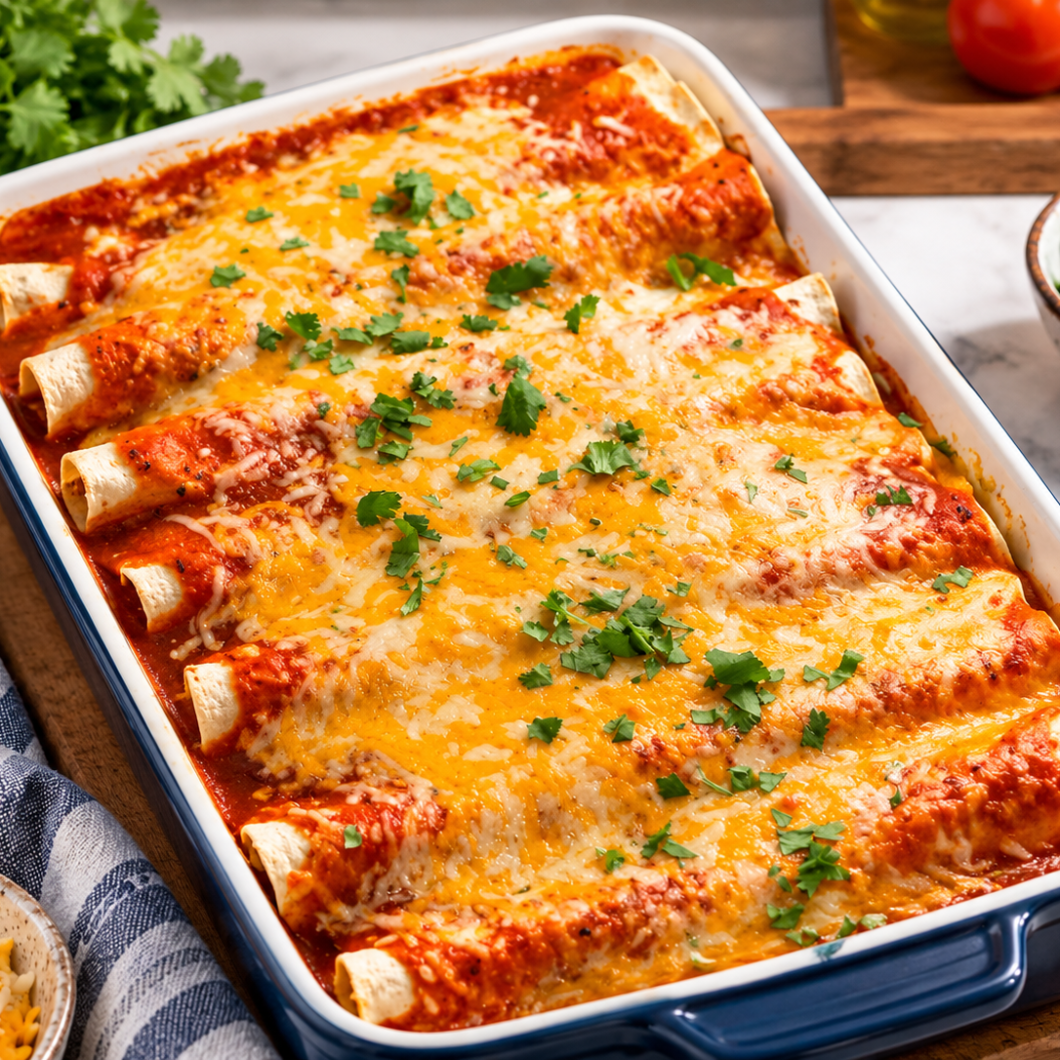
Chicken Enchiladas
 Recipe by admin1
Juicy homemade chicken enchiladas filled with seasoned chicken, refried beans, corn, bell pepper, onion, garlic, and melted cheese.
8
servings20
minutes45
minutes471
kcal1
hour5
minutesIngredients
- Tortillas
8 tortillas, flour or corn (about 20cm/8″ wide, Note 1)
- Enchilada Seasoning
1 tsp EACH onion powder, garlic powder, salt
1 tbsp EACH dried cumin powder, paprika, dried oregano
1/4 tsp black pepper
3/4 tsp cayenne pepper (optional, adjust to taste)
- Enchilada Sauce
2 tbsp olive oil
3 tbsp flour, plain/all purpose
2 cups (500ml) chicken stock/broth, low sodium
1.5 cups (375ml) tomato passata or US puree (Note 4 sub)
- Chicken Filling
600g / 1.2lb chicken breast, sliced in half horizontally (or boneless thigh) (Note 2)
2 tbsp olive oil, separated
1/2 onion, chopped
2 garlic cloves, finely minced
1 red capsicum/bell pepper, diced
400g / 14oz refried beans (Note 3)
400g/14oz canned corn, drained (sub frozen 1 3/4 cups)
1/4 cup (65ml) water
1 cup (100g) cheese shredded (Mexican cheese blend, Monterey Jack, cheddar)
- Topping
1.5 cups (150g) cheese, shredded
2 tbsp coriander/cilantro, roughly chopped
Directions
- Combine the onion powder, garlic powder, salt, cumin, paprika, oregano, black pepper, and cayenne pepper in a small bowl. Mix thoroughly and set aside. This seasoning will be divided between the homemade enchilada sauce and chicken filling.
- Heat 2 tablespoons olive oil in a saucepan over medium heat. Add the flour and stir continuously for about 20 seconds. Add 2 tablespoons of the prepared enchilada seasoning, chicken broth, and tomato passata. Stir until combined.
- Increase the heat slightly to medium-high. Cook for approximately 4 minutes, whisking regularly, until the sauce thickens to a consistency similar to thick syrup. Remove from the heat and set aside.
- Drizzle 1 tablespoon olive oil over the chicken and toss to coat. Sprinkle with the remaining enchilada seasoning and turn the chicken pieces until evenly covered.
- Heat the remaining 1 tablespoon olive oil in a large skillet over high heat. Add the chicken and cook for 2 minutes. Turn and cook for another 1.5 minutes. Remove from the skillet and rest for 2 minutes before chopping.
- Using the same skillet, add the chopped onion and minced garlic. Cook for 1 minute. Add the diced red bell pepper and cook for approximately 2 minutes, until the onion becomes translucent.
- Add the refried beans, chopped chicken, drained corn, and water. Stir everything together and cook for about 2 minutes, allowing the mixture to reduce slightly. The finished filling should be thick and juicy rather than watery.
- Heat the oven to 180°C/350°F.
- Place a tortilla on a clean work surface. Spread approximately 2/3 cup of filling over the lower third of the tortilla. Sprinkle with some shredded cheese, then roll it firmly. Place the tortilla seam-side down in the baking dish. Repeat with the remaining tortillas.
- Spread a scoop of enchilada sauce across the base of a 22 x 33cm / 9 x 13-inch baking pan. Arrange the rolled enchiladas in the pan, then pour the remaining sauce over them. Sprinkle the remaining shredded cheese across the top.
- Bake for 20–25 minutes, or until the cheese is melted and lightly golden and the sauce is bubbling.
- Remove from the oven and serve immediately. Finish with roughly chopped coriander or cilantro.
Nutrition Facts
- Total number of serves: 1
- Calories: 471kcal
- Fat: 22g
- Carbohydrates: 35g
- Fiber: 4g
- Sugar: 6g
- Protein: 32g


