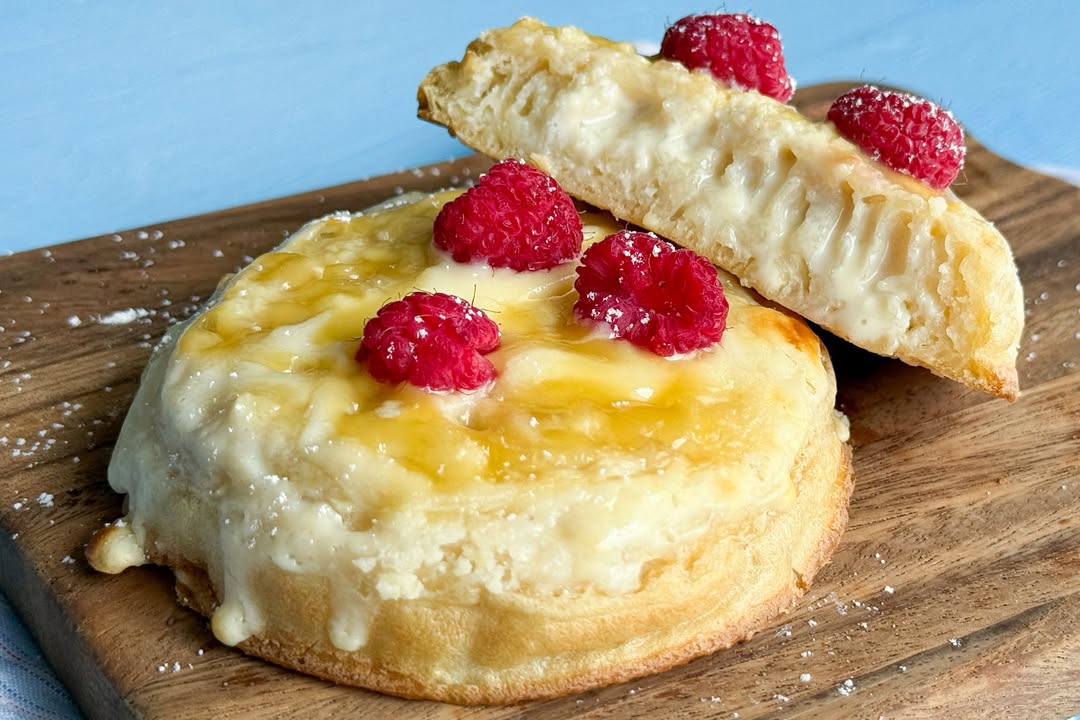
Lemon Cheesecake (Extremely Detailed and Very Long Recipe)
Introduction
Lemon cheesecake is a luxurious dessert that combines the rich creaminess of traditional cheesecake with the bright, refreshing flavor of fresh lemons. The balance between sweet and tangy creates a dessert that feels both indulgent and refreshing. This detailed recipe explains every stage thoroughly, from selecting ingredients and preparing the crust to baking, cooling, chilling, decorating, and serving. Following these instructions carefully will help produce a smooth, creamy, bakery-style lemon cheesecake with a velvety texture and a beautiful citrus aroma.
Preparation Time
Preparation: 45 minutes
Baking Time: 70–90 minutes
Cooling Time: 2 hours
Chilling Time: 8–12 hours
Total Time: Approximately 12–15 hours
Servings
12–16 slices
Ingredients for the Crust
350 grams digestive biscuits, graham crackers, or vanilla cookies
170 grams unsalted butter, melted
3 tablespoons granulated sugar
1 teaspoon lemon zest
1 pinch salt
Ingredients for the Cheesecake Filling
1 kilogram full-fat cream cheese, softened
300 grams granulated sugar
250 grams sour cream
250 milliliters heavy cream
5 large eggs
2 egg yolks
3 tablespoons fresh lemon juice
2 tablespoons finely grated lemon zest
2 teaspoons pure vanilla extract
3 tablespoons cornstarch
1 pinch salt
Ingredients for Lemon Topping
200 milliliters fresh lemon juice
150 grams granulated sugar
2 tablespoons cornstarch
60 milliliters water
1 tablespoon lemon zest
20 grams butter
Ingredients for Optional Decoration
Whipped cream
Fresh lemon slices
Fresh berries
Extra lemon zest
Mint leaves
Selecting the Best Ingredients
The quality of ingredients greatly influences the final cheesecake.
Cream cheese should be full-fat and softened at room temperature. Low-fat varieties can produce a less creamy texture.
Fresh lemons are essential. Freshly squeezed juice provides a cleaner and brighter flavor than bottled lemon juice.
Heavy cream contributes richness and smoothness.
Eggs should be fresh and at room temperature to ensure proper blending.
Real vanilla extract enhances the overall flavor profile.
Preparing the Equipment
Gather all equipment before beginning.
23-centimeter springform pan
Large roasting pan
Mixing bowls
Electric mixer
Silicone spatula
Whisk
Measuring cups and spoons
Kitchen scale
Aluminum foil
Cooling rack
Sharp knife
Preparing the Crust
Preheat the oven to 165°C.
Lightly grease the bottom and sides of the springform pan.
Crush the biscuits into very fine crumbs. A food processor works best, but a rolling pin can also be used.
Place crumbs into a large bowl.
Add sugar, lemon zest, and salt.
Mix thoroughly.
Pour melted butter over the crumb mixture.
Stir until every crumb is coated.
The mixture should resemble damp sand.
Press the crumbs firmly into the bottom of the prepared pan.
Use the bottom of a measuring cup to compact the crust evenly.
Press slightly up the sides if desired.
Bake the crust for approximately 10–12 minutes.
Remove from the oven and cool completely.
Preparing the Lemon Zest
Wash lemons thoroughly.
Dry completely.
Use a fine grater to remove only the yellow outer layer.
Avoid the white pith beneath the skin because it is bitter.
Set zest aside for the filling and topping.
Preparing the Lemon Juice
Cut lemons in half.
Squeeze using a citrus juicer.
Strain through a fine sieve to remove seeds and pulp.
Measure carefully according to recipe requirements.
Preparing the Springform Pan for Water Bath Baking
Wrap the outside of the cooled springform pan with several layers of heavy-duty aluminum foil.
Ensure the foil extends to the top edges.
This prevents water from leaking into the cheesecake during baking.
Making the Cheesecake Filling
Place softened cream cheese into a large mixing bowl.
Beat on low speed until completely smooth.
Scrape the sides and bottom frequently.
Add sugar gradually.
Continue mixing until creamy and silky.
Add cornstarch and salt.
Mix until incorporated.
Add sour cream.
Blend gently until smooth.
Pour in heavy cream.
Mix slowly until combined.
Add lemon juice.
Add lemon zest.
Add vanilla extract.
Mix carefully until evenly distributed.
Add eggs one at a time.
Mix only until each egg disappears into the batter.
Add egg yolks.
Mix briefly.
Avoid overmixing because trapped air may cause cracks.
Scrape the bowl thoroughly.
Fold gently using a spatula.
The final batter should be smooth, glossy, and lump-free.
Assembling the Cheesecake
Pour filling onto the cooled crust.
Tap the pan gently several times against the counter.
This helps release trapped air bubbles.
Smooth the surface with a spatula.
Preparing the Water Bath
Place the wrapped springform pan inside a large roasting pan.
Transfer carefully to the oven rack.
Pour hot water into the roasting pan until it reaches halfway up the sides of the cheesecake pan.
The water bath provides gentle heat.
It helps produce a creamy texture and reduces cracking.
Baking the Cheesecake
Bake at 165°C for approximately 70–90 minutes.
Baking times vary depending on oven accuracy.
The outer edges should appear firm.
The center should still wobble slightly.
Avoid opening the oven repeatedly.
Sudden temperature changes may cause cracking.
If excessive browning occurs, loosely place aluminum foil over the cheesecake.
Testing for Doneness
Gently shake the pan.
A properly baked cheesecake should move slightly in the center.
The edges should remain stable.
The center will continue setting during cooling.
Cooling Inside the Oven
Turn off the oven.
Open the oven door slightly.
Leave the cheesecake inside for one hour.
This gradual cooling process reduces stress on the cheesecake structure.
Removing from the Water Bath
After one hour, carefully remove the roasting pan.
Lift out the cheesecake.
Remove foil carefully.
Run a thin knife around the inside edge of the pan.
This prevents sticking as the cheesecake contracts during cooling.
Room Temperature Cooling
Place cheesecake on a cooling rack.
Allow it to cool completely.
This usually requires one to two hours.
Do not refrigerate while still warm.
Preparing the Lemon Topping
Combine sugar and cornstarch in a saucepan.
Whisk thoroughly.
Add water and lemon juice.
Place over medium heat.
Whisk continuously.
As the mixture heats, it will gradually thicken.
Continue stirring until smooth and glossy.
Add lemon zest.
Remove from heat.
Stir in butter.
Allow topping to cool until slightly warm.
Applying the Lemon Topping
Pour cooled lemon topping onto the cheesecake.
Spread evenly with a spatula.
Allow the topping to settle naturally.
The glossy lemon layer adds both flavor and visual appeal.
Chilling the Cheesecake
Cover the cheesecake loosely.
Place in the refrigerator.
Chill for at least eight hours.
Overnight chilling is ideal.
During this time, the texture becomes dense, creamy, and perfectly sliceable.
Preparing Whipped Cream Decoration
Pour chilled heavy cream into a cold bowl.
Add powdered sugar.
Whip until soft peaks form.
Transfer to a piping bag if desired.
Decorating the Cheesecake
Pipe whipped cream around the edge.
Arrange lemon slices attractively.
Sprinkle additional lemon zest.
Add berries for color contrast.
Use mint leaves sparingly for freshness.
Achieving Perfect Slices
Remove cheesecake from the refrigerator approximately 20 minutes before serving.
Fill a tall glass with hot water.
Dip a sharp knife into the water.
Wipe dry.
Make one clean cut.
Repeat cleaning the knife before every slice.
This method creates smooth, professional-looking portions.
Flavor Characteristics
A properly made lemon cheesecake should have:
A creamy texture
A rich dairy flavor
Balanced sweetness
Bright citrus notes
Smooth consistency
Tender crust
Fresh lemon aroma
Silky mouthfeel
Common Mistakes to Avoid
Using cold cream cheese
Overmixing the batter
Skipping the water bath
Overbaking
Rapid cooling
Insufficient chilling time
Using bottled lemon juice instead of fresh lemons
Under-measuring ingredients
Storage Instructions
Store covered in the refrigerator for up to five days.
Keep away from foods with strong odors.
Cheesecake easily absorbs surrounding aromas.
Freezing Instructions
Wrap individual slices tightly in plastic wrap.
Add an outer layer of aluminum foil.
Freeze for up to three months.
Thaw overnight in the refrigerator.
Avoid thawing at room temperature.
Serving Suggestions
Serve with fresh berries.
Serve with raspberry sauce.
Serve with blueberry compote.
Serve with strawberry topping.
Serve with whipped cream.
Serve with lemon curd.
Serve with white chocolate drizzle.
Serve with vanilla ice cream.
Serve with fresh fruit salad.
Nutritional Characteristics
Lemon cheesecake is rich in protein, calcium, and dairy fats. The fresh lemon contributes vitamin C and natural citrus oils that enhance flavor and aroma. While it is an indulgent dessert, moderate portions provide a satisfying balance of richness and freshness.
Final Result
The finished lemon cheesecake should feature a golden buttery crust, an exceptionally smooth and creamy filling, a vibrant lemon flavor, and a glossy citrus topping. Each slice should hold its shape while remaining soft and velvety inside. The combination of rich cream cheese and fresh lemon creates a dessert that is elegant, refreshing, and memorable, making it suitable for celebrations, family gatherings, holidays, special dinners, or any occasion where a truly impressive homemade dessert is desired.


