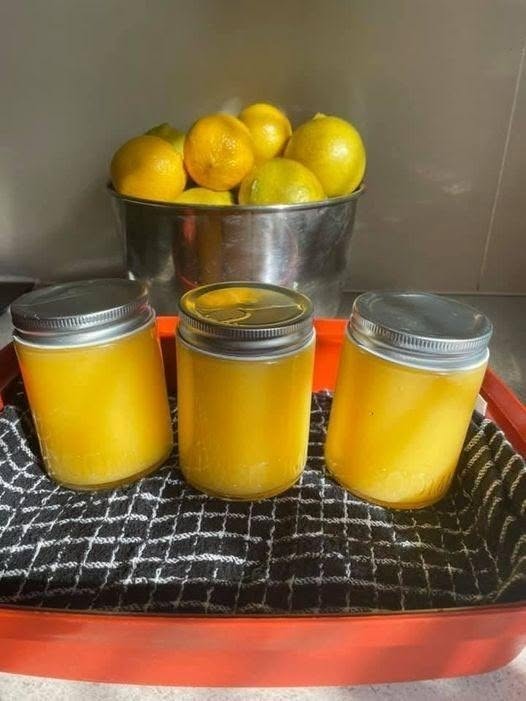
Lemon curd is a rich, smooth, intensely lemon-flavored spread made from fresh lemon juice, lemon zest, sugar, eggs, and butter. It can be used as a filling for cakes, tarts, pastries, macarons, doughnuts, crepes, and cookies, or simply spread on toast, scones, and muffins. The secret to exceptional lemon curd is balancing sweetness, acidity, and richness while cooking the mixture gently enough to create a silky texture without scrambling the eggs.
Ingredients
For a large batch of lemon curd:
2 cups (400 grams) granulated sugar
6 large lemons
8 large eggs
4 large egg yolks
1 cup (240 milliliters) freshly squeezed lemon juice
2 tablespoons finely grated lemon zest
1 cup (226 grams) unsalted butter, cut into small cubes
1/4 teaspoon fine salt
Equipment Needed
Large heatproof mixing bowl
Medium saucepan
Whisk
Fine-mesh sieve
Microplane or zester
Citrus juicer
Rubber spatula
Kitchen thermometer (optional but helpful)
Clean glass jars or airtight containers
Step 1: Selecting the Lemons
Choose lemons that feel heavy for their size because they contain more juice. The skin should be bright yellow and free from major blemishes. Fresh, aromatic lemons provide the best flavor. Thin-skinned lemons often yield more juice than thick-skinned ones.
Wash the lemons thoroughly under cool running water. Dry them completely with a clean towel. Since the zest will be used, remove any dirt, wax, or residue from the skin.
Step 2: Preparing the Zest
Using a fine grater or microplane, grate only the yellow outer layer of the lemon peel. Avoid the white pith underneath because it is bitter and can negatively affect the final flavor.
Continue until you have approximately 2 tablespoons of finely grated zest. The zest contains essential oils that provide intense lemon aroma and flavor.
Set the zest aside.
Step 3: Extracting the Lemon Juice
Cut the lemons in half and squeeze them using a citrus juicer.
Strain the juice through a fine sieve to remove seeds and excess pulp if a very smooth curd is desired.
Measure exactly 1 cup of juice. If necessary, squeeze additional lemons.
Fresh juice is strongly recommended because bottled juice lacks the vibrant flavor needed for high-quality lemon curd.
Step 4: Preparing the Egg Mixture
Crack 8 whole eggs into a large heatproof bowl.
Add 4 additional egg yolks.
Whisk thoroughly until the eggs and yolks are fully blended.
Add the granulated sugar and salt.
Whisk continuously for several minutes until the mixture becomes lighter in color and slightly thickened.
The sugar begins dissolving during this process, helping create a smoother final texture.
Step 5: Incorporating Lemon Components
Pour the measured lemon juice into the egg mixture.
Add the lemon zest.
Whisk until all ingredients are evenly combined.
At this stage the mixture will appear thin and pale yellow. This is completely normal.
Step 6: Setting Up a Double Boiler
Fill a medium saucepan with about 2 inches of water.
Bring the water to a gentle simmer over medium heat.
Place the heatproof bowl containing the lemon mixture over the saucepan.
The bottom of the bowl should not touch the water.
This indirect cooking method provides gentle heat and greatly reduces the risk of scrambling the eggs.
Step 7: Beginning the Cooking Process
Start whisking immediately once the bowl is over the simmering water.
Whisk continuously and steadily.
The mixture will initially remain thin for several minutes.
As the eggs slowly heat, proteins begin to coagulate and thicken the liquid.
Patience is important because rushing the process with excessive heat can create lumps.
Step 8: Monitoring Texture Changes
After several minutes, the mixture will become slightly thicker.
Continue whisking constantly.
Pay particular attention to the edges and bottom of the bowl where the mixture heats first.
The color will gradually deepen into a brighter yellow.
The aroma of fresh lemon will become increasingly noticeable.
Step 9: Reaching Proper Thickness
Continue cooking until the curd thickens enough to coat the back of a spoon.
When a finger is drawn across the spoon, the line should remain visible without the curd immediately flowing back together.
If using a thermometer, the mixture generally thickens properly between 170°F and 175°F (77°C to 79°C).
Avoid exceeding 180°F (82°C) because the eggs may begin curdling.
Step 10: Adding the Butter
Remove the bowl from the heat.
Immediately begin adding the butter cubes a few pieces at a time.
Whisk continuously as each addition melts into the hot curd.
The butter enriches the flavor and creates a luxurious, silky mouthfeel.
Continue until all butter has been incorporated and the mixture becomes glossy and smooth.
Step 11: Straining the Curd
Place a fine-mesh sieve over a clean bowl.
Pour the lemon curd through the sieve.
Use a spatula to gently push the curd through.
This step removes any bits of cooked egg and larger pieces of zest, ensuring an exceptionally smooth texture.
Discard any solids remaining in the sieve.
Step 12: Cooling the Lemon Curd
Allow the strained curd to cool for approximately 15 minutes.
Stir occasionally to release excess heat.
As the curd cools, it will continue thickening.
Do not leave it uncovered for extended periods because a skin may form on the surface.
Step 13: Preventing Surface Skin Formation
Press plastic wrap directly onto the surface of the warm curd.
Ensure there are no air gaps.
This prevents moisture loss and keeps the top perfectly smooth.
Allow the curd to cool further at room temperature.
Step 14: Refrigeration
Transfer the curd into sterilized jars or airtight containers.
Seal tightly.
Refrigerate for at least 4 hours, though overnight chilling provides the best consistency.
The curd will become noticeably thicker and richer after chilling.
Understanding the Science Behind Lemon Curd
Lemon curd thickens primarily because egg proteins unfold and bond together when heated. The acidic lemon juice affects these proteins and contributes to the unique texture.
Sugar not only sweetens the curd but also helps protect the eggs from coagulating too quickly. Butter adds fat, which creates smoothness and richness while softening the overall texture.
The balance between heat, acidity, sugar, and fat determines the success of the final product.
Common Mistakes and How to Avoid Them
One common mistake is cooking over direct high heat. This can cause scrambled eggs rather than smooth curd.
Another mistake is insufficient whisking. Constant movement helps distribute heat evenly.
Using bottled lemon juice may result in a flat flavor.
Adding butter before the curd has thickened can affect texture development.
Skipping the straining step may leave small lumps.
Overcooking can produce a grainy consistency.
Undercooking may create a curd that never sets properly.
Flavor Variations
For a sweeter curd, increase the sugar slightly.
For a sharper lemon flavor, increase the zest.
For a floral note, add a small amount of vanilla extract after cooking.
For a citrus blend, substitute part of the lemon juice with lime, orange, or grapefruit juice.
For a richer version, add additional egg yolks.
Serving Ideas
Spread on toast for breakfast.
Use as a filling between cake layers.
Pipe into tart shells.
Fill cream puffs and éclairs.
Layer into parfaits.
Swirl into yogurt.
Serve alongside pancakes.
Fill macarons.
Use in trifles.
Top cheesecakes.
Spread inside croissants.
Serve with fresh berries.
Layer into sponge cakes.
Mix into whipped cream for a light lemon mousse.
Use as a filling for doughnuts.
Storage Information
Refrigerated lemon curd typically remains at its best quality for about 1 to 2 weeks when stored in a clean airtight container.
Always use a clean spoon when serving to avoid contamination.
For longer storage, lemon curd can be frozen in freezer-safe containers for several months. Thaw overnight in the refrigerator before use.
Final Result
A properly prepared lemon curd should be bright yellow, glossy, silky smooth, richly buttery, and intensely flavored with fresh lemon. It should hold its shape on a spoon while remaining soft enough to spread easily. The taste should be a perfect balance of sweet, tart, creamy, and refreshing, making it one of the most versatile citrus preparations in baking and dessert making.


