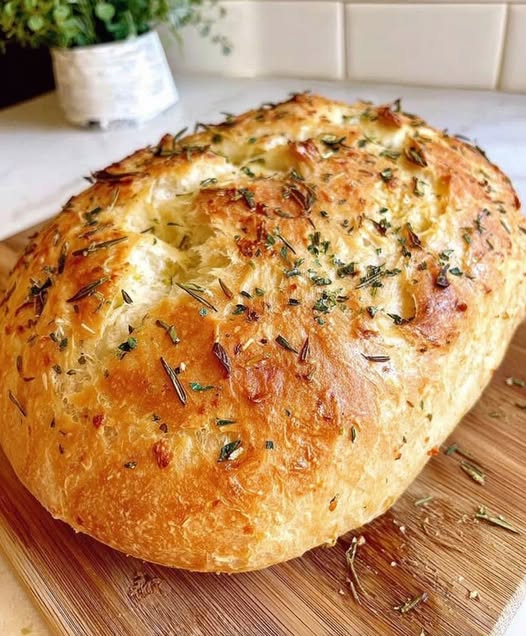
Rosemary garlic bread is one of the most aromatic and comforting breads you can make at home. The combination of fresh rosemary, roasted garlic, butter, olive oil, and warm bread creates a deep savory flavor with a crisp crust and soft interior. This recipe is designed to be extremely detailed so that even a beginner can follow every stage carefully and achieve excellent results.
This version includes:
- Homemade bread dough
- Slow roasted garlic
- Fresh rosemary infusion
- Detailed kneading instructions
- Rising guidance
- Baking techniques
- Optional variations
- Troubleshooting
- Storage methods
- Reheating instructions
The final bread has:
- Crispy golden crust
- Soft chewy center
- Rich buttery garlic flavor
- Fragrant rosemary aroma
- Slightly rustic artisan texture
Preparation Time
- Dough preparation: 30 minutes
- First rise: 1½ to 2 hours
- Garlic roasting: 40 minutes
- Shaping and second rise: 45 minutes
- Baking: 30 minutes
- Cooling: 20 minutes
Total time: Approximately 4 to 5 hours
Ingredients
For the Bread Dough
- 4 cups bread flour
- 1½ teaspoons salt
- 2 tablespoons sugar
- 2¼ teaspoons instant yeast
- 1¼ cups warm water
- 3 tablespoons olive oil
- 2 tablespoons melted butter
- 1 teaspoon dried rosemary or 1 tablespoon fresh rosemary finely chopped
For the Roasted Garlic Filling
- 2 whole garlic bulbs
- 2 tablespoons olive oil
- Aluminum foil for roasting
For the Rosemary Garlic Butter
- 6 tablespoons unsalted butter softened
- 2 tablespoons olive oil
- Roasted garlic cloves mashed into paste
- 2 tablespoons finely chopped fresh rosemary
- ½ teaspoon black pepper
- ½ teaspoon salt
- 1 tablespoon parsley finely chopped
- Optional: ¼ teaspoon chili flakes
Optional Toppings
- Extra rosemary leaves
- Flaky sea salt
- Parmesan cheese
- Mozzarella cheese
- Black pepper
- Olive oil drizzle
Equipment Needed
- Large mixing bowl
- Measuring cups and spoons
- Baking tray or loaf pan
- Rolling pin
- Pastry brush
- Sharp knife
- Kitchen towel
- Oven
- Cooling rack
- Small bowl for butter mixture
Step 1: Roasting the Garlic
Roasted garlic creates a sweet deep flavor that raw garlic cannot provide. This stage is important because it transforms the garlic into a creamy spreadable paste.
Instructions
- Preheat your oven to 400°F (200°C).
- Take the garlic bulbs and peel away the loose outer papery skin. Do not separate the cloves.
- Slice about half an inch off the top of each garlic bulb so the tops of the cloves are visible.
- Place each bulb on a piece of aluminum foil.
- Drizzle olive oil over the exposed garlic cloves.
- Wrap the bulbs tightly in foil.
- Place them on a baking tray.
- Roast for 35 to 40 minutes until the cloves become golden, soft, and fragrant.
- Remove from oven and let cool.
- Squeeze the garlic cloves into a bowl. Mash them with a fork until smooth.
The garlic should become creamy like soft butter.
Step 2: Preparing the Dough
Mixing the Dry Ingredients
In a large bowl combine:
- Bread flour
- Salt
- Sugar
- Instant yeast
- Rosemary
Mix thoroughly so everything distributes evenly.
Adding Wet Ingredients
- Pour warm water into the bowl gradually.
- Add olive oil and melted butter.
- Mix using a wooden spoon or your hands until a shaggy dough forms.
The dough should look rough and slightly sticky.
Step 3: Kneading the Dough
Kneading develops gluten which gives bread structure and chewiness.
Hand Kneading Method
- Lightly flour a clean surface.
- Transfer the dough onto the surface.
- Push the dough away with the heel of your hand.
- Fold it back over itself.
- Rotate slightly.
- Repeat continuously for 10 to 12 minutes.
At first the dough may stick to your hands. Avoid adding too much flour because dry dough leads to dense bread.
The dough is ready when:
- It becomes smooth
- It feels elastic
- It springs back slowly when pressed
Step 4: First Rise
- Grease a clean bowl lightly with olive oil.
- Place the dough inside.
- Turn the dough once so all sides are lightly coated.
- Cover with a kitchen towel or plastic wrap.
- Place in a warm draft-free location.
- Let rise for 1½ to 2 hours.
The dough should double in size.
Step 5: Preparing Rosemary Garlic Butter
While the dough rises prepare the butter mixture.
Instructions
- In a bowl combine:
- Softened butter
- Olive oil
- Mashed roasted garlic
- Chopped rosemary
- Salt
- Pepper
- Parsley
- Mix thoroughly until smooth and creamy.
- Taste and adjust seasoning if needed.
The aroma should be rich, herbaceous, and buttery.
Step 6: Shaping the Bread
After the dough has doubled:
- Punch down gently to release excess gas.
- Transfer onto a lightly floured surface.
- Roll into a rectangle approximately:
- 16 inches long
- 10 inches wide
- Spread the rosemary garlic butter evenly across the surface.
- Leave a small border around the edges.
Rolling the Dough
- Starting from the long side roll the dough tightly into a log.
- Pinch the seam closed.
- Place seam-side down on a baking tray.
Alternative Twisted Shape
For a decorative artisan look:
- Slice the rolled dough lengthwise down the center.
- Twist the two halves together while exposing the layers.
- Shape into a loaf or spiral.
This allows the garlic butter layers to caramelize beautifully during baking.
Step 7: Second Rise
- Cover the shaped dough loosely.
- Let rise again for 30 to 45 minutes.
The dough should become puffy and airy.
During this time preheat the oven to 375°F (190°C).
Step 8: Baking the Bread
Before Baking
Brush the loaf with:
- Olive oil
or - Melted butter
Optional:
- Sprinkle sea salt
- Add rosemary leaves
- Add grated parmesan
Baking Instructions
- Place bread in the center rack.
- Bake for 28 to 35 minutes.
- Rotate halfway through for even browning.
The bread is ready when:
- The crust is golden brown
- The bottom sounds hollow when tapped
- Internal temperature reaches approximately 190°F to 200°F
Step 9: Finishing Touch
Immediately after baking:
- Brush hot bread with additional garlic butter.
- Sprinkle fresh rosemary and parsley on top.
- Let cool for at least 20 minutes before slicing.
This resting period allows the crumb to finish setting.
Texture and Flavor Description
The crust should be:
- Crisp
- Golden
- Slightly crackly
The inside should be:
- Soft
- Moist
- Layered with garlic butter
The flavor should include:
- Earthy rosemary notes
- Sweet roasted garlic
- Rich butteriness
- Mild olive oil fruitiness
Serving Suggestions
Rosemary garlic bread pairs wonderfully with:
- Tomato soup
- Creamy pasta
- Grilled chicken
- Steak
- Roasted vegetables
- Alfredo sauce
- Lasagna
- Mushroom soup
- Caesar salad
It can also be served:
- As an appetizer
- Alongside dinner
- As sandwich bread
- With olive oil dip
Optional Cheese Version
For cheesy rosemary garlic bread:
Add:
- 1 cup mozzarella
- ½ cup parmesan
Layer cheese inside the dough before rolling.
During baking the cheese melts into the garlic butter creating rich savory layers.
Extra Crispy Version
For a crispier crust:
- Place a tray of hot water on the lower oven rack.
- Bake with steam for first 10 minutes.
This creates artisan bakery-style crust.
Herb Variations
You may combine rosemary with:
- Thyme
- Basil
- Oregano
- Sage
- Chives
Each herb creates a slightly different aroma profile.
Whole Wheat Variation
Replace:
- 1 cup bread flour with whole wheat flour
You may need:
- Extra 2 to 4 tablespoons water
Whole wheat flour absorbs more moisture.
Overnight Refrigerator Method
For deeper flavor:
- After kneading place dough in refrigerator overnight.
- The slow fermentation improves taste and texture.
- Remove from refrigerator next day.
- Allow dough to warm for 45 minutes before shaping.
This method creates:
- Better chew
- More aroma
- Slightly tangy artisan flavor
Common Mistakes and Solutions
Dough Too Sticky
Cause:
- Too much water
Solution:
- Add flour 1 tablespoon at a time
Bread Too Dense
Cause:
- Insufficient kneading
- Expired yeast
- Not enough rise time
Solution:
- Knead thoroughly
- Check yeast freshness
- Allow complete rise
Garlic Burning
Cause:
- Raw garlic exposed directly during baking
Solution:
- Use roasted garlic
- Cover loosely with foil if browning too fast
Bread Drying Out
Cause:
- Overbaking
Solution:
- Check at 28 minutes
- Brush with butter after baking
Storage Instructions
Room Temperature
Store in airtight container:
- Up to 2 days
Refrigerator
Store wrapped tightly:
- Up to 5 days
Reheat before serving for best texture.
Freezer
Wrap slices individually and freeze:
- Up to 2 months
Thaw and warm in oven before eating.
Reheating Instructions
Oven Method
- Preheat oven to 350°F (175°C).
- Wrap bread in foil.
- Heat for 10 minutes.
This keeps the inside soft while refreshing the crust.
Air Fryer Method
- Heat at 320°F for 3 to 5 minutes.
Excellent for restoring crispness.
Garlic Bread Dip Ideas
Serve with:
- Marinara sauce
- Garlic aioli
- Olive oil and balsamic vinegar
- Cheese dip
- Spinach dip
- Herb butter
Professional Bakery Tips
Use Bread Flour
Bread flour creates:
- Better chew
- Stronger structure
- Artisan texture
Measure Carefully
Too much flour makes bread heavy.
For best accuracy:
- Spoon flour into measuring cup
- Level with knife
Fresh Rosemary Matters
Fresh rosemary provides:
- Stronger aroma
- Cleaner herbal flavor
- Better visual appearance
Rest Before Cutting
Cutting too early releases steam and can create gummy texture.
Always cool at least:
- 15 to 20 minutes
Final Result
When prepared correctly this rosemary garlic bread becomes:
- Deeply aromatic
- Richly buttery
- Beautifully golden
- Crispy outside
- Soft and fluffy inside
The roasted garlic melts into the bread while the rosemary perfumes every bite. The layered butter creates a savory pull-apart texture that works perfectly as a side dish, appetizer, or centerpiece for a comforting homemade meal.


