
Cheesy Potato Gratin Stacks are a delicious way to turn simple potatoes, cream, garlic, butter, and cheese into an elegant individual side dish. These golden potato stacks are layered in a muffin tin, baked until tender, and finished with bubbling melted cheese.
The result is crisp and golden around the edges while remaining creamy, tender, and flavorful in the center. Because each portion is baked separately, these potato gratin stacks are especially attractive for dinner parties, holiday meals, brunch tables, family dinners, and casual gatherings where easy serving matters.
Why You’ll Love These Potato Gratin Stacks
If you enjoy classic potato gratin, scalloped potatoes, or creamy cheesy potato recipes, this muffin tin version is worth trying. Instead of baking one large casserole and cutting it into portions, thin potato slices are arranged into individual stacks. This creates neat servings that look impressive on a plate without requiring complicated cooking techniques.
The combination of starchy potatoes, rich cream, melted cheese, garlic, butter, and fresh thyme gives every bite a comforting flavor that works beautifully alongside roasted meats, eggs, bacon, vegetables, or other favorite side dishes.
What Makes Muffin Tin Potato Gratin Special
Using a muffin tin changes the presentation and makes this recipe particularly convenient for entertaining. The potato slices are stacked directly into individual muffin holes, allowing the cream and cheese to work their way through the layers as everything cooks.
During baking, the potatoes soften and become tender while the top develops a delicious golden cheese crust. The individual portions are also easy to remove after resting for a few minutes. This makes them useful as a side dish for a family dinner or as warm finger food for a party buffet.
Choosing the Best Potatoes
The type of potato makes an important difference when preparing homemade potato gratin stacks. Starchy or all-rounder potatoes are preferred because they soften during cooking and create a fluffy, cohesive texture. Waxy potatoes are less suitable because their texture can prevent the layers from sticking together properly. Large, long potatoes are also helpful because they can be trimmed and sliced into similarly sized pieces that fit neatly inside the muffin tin. Russet potatoes are a good option in the United States, while Sebago, Dutch creams, King Edwards, golden delight, coliban, and red rascal varieties can also work well.
Preparing Thin Potato Slices
For evenly cooked potato stacks, the slices should be very thin, around 2mm. A mandolin can make this process faster and more consistent, although a sharp kitchen knife can also be used carefully. Consistent slices are important because thicker pieces may require additional cooking time while thinner pieces can soften more quickly. After peeling the potatoes, trimming the base helps them stand upright while you create the cylinder shapes. The goal is to prepare potato pieces that fit comfortably into the muffin tin and allow the finished stacks to maintain an attractive shape.
Making the Garlic Cream Sauce
The garlic cream mixture provides richness and helps flavor the potato layers from the inside. Melt the butter in a saucepan over medium heat, reserving some for brushing the muffin tin. Add the finely minced garlic to the remaining butter and cook briefly, just long enough to release its aroma without allowing it to become overly browned. Add the heavy or thickened cream and salt, bring the mixture to a gentle simmer, and cook briefly. Keeping this sauce warm makes it easier to drizzle over the potato stacks during assembly and helps distribute the flavor evenly.
How to Assemble the Potato Gratin Stacks
Assembly is straightforward once the potatoes and cream mixture are ready. Begin by arranging potato slices in the prepared muffin tin until they reach approximately halfway up each muffin hole. Matching slices by size helps create tidy, uniform stacks. Drizzle each portion with part of the warm cream mixture before adding one square of Gruyere cheese. Continue with the remaining potato slices, adding more cream and thyme before baking. The uncooked stacks should rise slightly above the rim because they naturally settle as the potatoes soften in the oven.
Baking the Potato Stacks
The first stage of baking is done with the muffin tin loosely covered with foil. This helps the potatoes cook through while reducing the risk of excessive browning before the centers are tender. After about 40 minutes, test a stack with a small sharp knife. The blade should pass through the potatoes without resistance when they are properly cooked. Once tender, remove the foil and add the shredded Gruyere cheese. The final uncovered baking stage allows the cheese to melt, bubble, and become beautifully golden on top.
Getting Golden and Crispy Cheese
The final cheese layer is one of the most appealing parts of these individual potato gratin stacks. Shredded Gruyere melts smoothly and develops a savory, golden finish as the stacks bake uncovered. Gruyere is particularly well suited to this recipe because it offers both strong flavor and excellent melting qualities. If you do not have Gruyere, another melting cheese can be used. Swiss cheese is a close alternative, while Colby, Monterey Jack, cheddar, and tasty cheese can also provide good results depending on the flavor you prefer.
Serving Cheesy Potato Gratin Stacks
These individual cheesy potato stacks can be served in several different ways. For dinner, place them beside roasted chicken, beef, pork, lamb, or vegetables as an attractive alternative to ordinary mashed or roasted potatoes. For breakfast or brunch, serve them alongside eggs and bacon for a filling combination. They can also be presented as warm finger food at a party or gathering. Because each stack is already portioned, guests can easily take one without needing serving utensils or cutting into a larger casserole.
A Great Side Dish for Special Occasions
Potato gratin is naturally suited to festive meals because its creamy texture and rich cheese topping make it feel more special than everyday potato dishes. Preparing individual portions in a muffin tin adds an elegant presentation without requiring elaborate decoration. These stacks can be served during holiday dinners, family celebrations, dinner parties, brunches, birthdays, or buffet-style meals. The recipe is also practical because much of the preparation involves simple ingredients that are commonly available in supermarkets, making it an approachable option when you want a polished side dish.
How to Prevent the Potato Stacks from Sticking
Greasing the muffin tin is an important preparation step. The recipe uses oil spray and also calls for melted butter to lightly brush the muffin tin holes. This coating helps the cooked potato stacks release more easily after baking. Once the stacks come out of the oven, allowing them to stand for approximately five minutes gives the layers a chance to settle. A tablespoon or butter knife can then be used carefully to loosen the edges and lift each portion from the muffin tin without breaking the layers.
How to Make the Layers Hold Together
The texture of the finished stacks depends on both the potato variety and the thinness of the slices. Starchy potatoes naturally become softer and more cohesive as they cook, helping the layers stay together. Keeping the slices similar in size also makes the stacks more stable. The cheese layer in the center adds flavor and contributes to the structure, while the cream helps create the rich, tender texture. Avoid using very waxy potatoes because they are less likely to break down enough for the layers to bind together.
Make-Ahead Potato Gratin Stacks
One useful feature of this recipe is that the potato stacks can be prepared ahead of time. Bake the stacks according to the recipe, allow them to cool appropriately, and then store them in the refrigerator or freeze them for later use. If frozen, they should be defrosted before reheating. To warm refrigerated or defrosted stacks, place them in an oven at 180°C/350°F for approximately 10 minutes, or until heated through. This make-ahead option can be especially helpful when preparing food for guests because the main cooking can be completed before mealtime.
Best Cheese Options for Potato Gratin
Gruyere is an excellent choice because it melts well and has a rich, savory flavor that complements potatoes and cream. However, the recipe is flexible enough to accommodate other melting cheeses. Swiss cheese is a strong alternative if you want a similar style of flavor. Colby and Monterey Jack provide a mild, creamy result, while cheddar or tasty cheese gives the stacks a more familiar sharp cheese flavor. Mozzarella can melt successfully, but it generally has a milder flavor than the other options, so it may not provide the same depth.
Fresh Thyme for Extra Flavor
Fresh thyme adds a subtle herbal note that balances the richness of the cream, butter, and cheese. The recipe uses fresh thyme leaves, although dried thyme can also be used in the specified quantity. Most of the thyme is added before baking, while a small amount is reserved for garnishing the finished stacks. This simple finishing touch adds color and a fresh aroma to the dish. If you are serving these potato stacks at a special meal, the small green flecks of thyme also make the golden cheese topping look more appealing.
Texture and Doneness Guide
The most reliable way to check whether the potato stacks are finished cooking is to test the center with a small sharp knife. Properly cooked potatoes should offer virtually no resistance. If the knife still meets firm or crunchy potato, continue baking until the center becomes tender. Oven performance can vary, and the exact cooking time can depend on the thickness of the slices and the type of potato used. Keeping the slices close to the recommended 2mm thickness helps the stacks cook more evenly and reduces the chance of an undercooked center.
Common Mistakes to Avoid
A few simple details can make the difference between neat potato stacks and portions that fall apart. Avoid using thick, uneven potato slices because they can cook at different rates. Do not skip greasing the muffin tin, as the cooked cheese and cream can make the stacks harder to release. Avoid over-browning the top before the potatoes are cooked by keeping the tin loosely covered during the first baking stage. Finally, give the stacks a short resting period after baking so they can firm up before you remove them from the muffin tin.
Notes for Preparing the Recipe Successfully
For the best results, choose large, long starchy or all-rounder potatoes that can be trimmed into shapes suitable for the muffin tin. Use a mandolin or sharp knife to create thin, consistent slices. Gruyere is recommended for its flavor and melting performance, but other melting cheeses can be substituted. The potato stacks may be made ahead, refrigerated, or frozen according to the storage method described above. When serving, handle the stacks gently after the five-minute resting period and use a spoon or butter knife to help lift them from the tin.
Frequently Asked Questions About Potato Gratin Stacks
Can I use a different type of potato?
Yes, but starchy or all-rounder potatoes are recommended for the best texture. Varieties such as Russet and other suitable starchy potatoes soften during cooking and help the layers hold together. Waxy potatoes are less desirable because their structure remains firmer and the individual slices may not bind as effectively. Large potatoes with a long shape are also easier to trim into pieces that fit the muffin tin, which helps create attractive and evenly sized individual servings.
Can I substitute the Gruyere cheese?
Yes. Gruyere can be replaced with another cheese that melts well. Swiss cheese is a particularly suitable alternative, while Colby, Monterey Jack, cheddar, and tasty cheese can also be used. The flavor and texture will vary depending on the cheese selected. A stronger cheese can give the potato stacks a more pronounced savory taste, while a mild cheese creates a gentler flavor. For the closest combination of rich flavor and smooth melting, Gruyere remains an excellent choice.
Can these potato stacks be made ahead?
Yes. These individual potato gratin stacks are convenient for make-ahead cooking. Prepare and bake them according to the recipe, then store them in the refrigerator or freeze them for later use. Frozen stacks should be defrosted before reheating. To serve them warm again, place the refrigerated or defrosted stacks in a 180°C/350°F oven for around 10 minutes. This makes the recipe particularly useful when you are planning a dinner party, holiday meal, brunch, or buffet and want to reduce last-minute preparation.
What can I serve with cheesy potato stacks?
These potato stacks work well with a wide range of meals. They can be served as a side dish with dinner, particularly alongside roasted or grilled meats and vegetables. For breakfast or brunch, pair them with eggs and bacon. They can also be served warm as finger food for parties and gatherings. Their individual shape makes them convenient for entertaining, while the combination of creamy potatoes and melted cheese gives them enough flavor to stand confidently beside simple main dishes.
Cheesy Potato Gratin Stacks are a practical and impressive alternative to traditional potato gratin. Thin slices of starchy potato are layered with garlic cream, Gruyere cheese, butter, and thyme before being baked until tender and finished with a golden cheese topping. The muffin tin creates individual portions that are easy to serve and attractive on the table. Whether you prepare them for a family dinner, weekend brunch, holiday gathering, or party, this creamy potato side dish offers the comforting flavor of classic gratin in a convenient individual format.
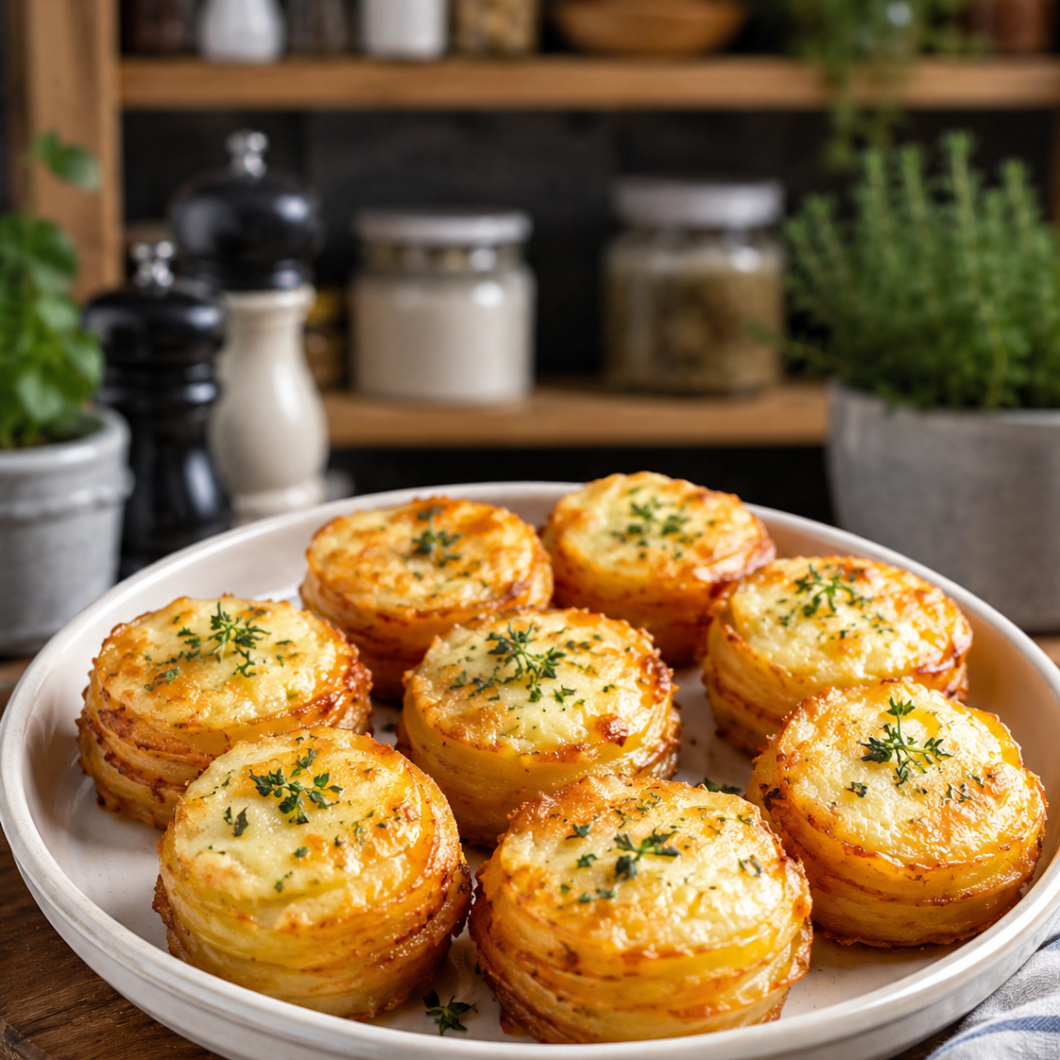
Mini-potato-gratin
 Recipe by admin1
Individual cheesy potato gratin stacks made with thinly sliced starchy potatoes, garlic-infused cream, butter, thyme, and Gruyere cheese. Baked in a muffin tin, these creamy potato stacks become tender inside with a beautifully golden, melted cheese topping. They are ideal as a dinner side dish, breakfast accompaniment with eggs and bacon, or warm party finger food.
12
servings15
minutes45
minutes169
kcal1
hourIngredients
Oil spray
1.2 kg / 2.4 lb starchy potatoes
30g / 2 tbsp unsalted butter
2 garlic cloves, finely minced
1/2 cup heavy / thickened cream
1 tsp fresh thyme leaves, or 3/4 tsp dried
1/2 tsp salt
Black pepper
75g / 2.5 oz Gruyere cheese, sliced into 12 squares to fit into the muffin tin, or another melting cheese
3/4 cup Gruyere cheese, shredded, or another melting cheese
Directions
- Preheat the oven to 350°F/180°C. This temperature works for all oven types.
- Melt the butter in a saucepan over medium heat. Use some of the melted butter to lightly brush the holes of the muffin tin. Keep the remaining butter in the saucepan for preparing the cream sauce.
- Add the minced garlic to the remaining melted butter and cook for about 20 seconds. Add the heavy or thickened cream and salt. Bring the mixture to a gentle simmer and cook for approximately 30 seconds. Remove it from the heat and keep the sauce warm.
- Peel the potatoes and trim the base so each potato can stand upright. Cut the potatoes into cylinder shapes that fit the muffin tin. Slice them into approximately 2mm / 1/10-inch pieces using a mandolin or a sharp knife.
- Arrange potato slices inside the prepared muffin tin, filling each hole to approximately halfway. Match slices by size where possible so the individual stacks remain neat and even.
- Drizzle approximately 1 teaspoon of the warm cream mixture over each potato stack, using about half of the total cream mixture at this stage.
- Place one square of sliced Gruyere cheese on top of each potato stack.
- Add the remaining potato slices to each muffin hole. The stacks should sit approximately 1cm / 1/3-inch above the rim of the muffin tin because they will sink as they bake. Drizzle over the remaining cream mixture and sprinkle with most of the thyme, reserving a little for the final garnish.
- Loosely cover the muffin tin with foil and bake for approximately 40 minutes, or until the potatoes are completely tender. Test the center with a small sharp knife. It should pass through the potato without resistance.
- Remove the foil and sprinkle the shredded Gruyere over the potato stacks.
- Return the muffin tin to the oven and bake uncovered for about 10 minutes, or until the cheese has melted and developed a golden finish.
- Remove the potato stacks from the oven and sprinkle with the remaining thyme. Allow them to stand for approximately 5 minutes before serving.
- Use a tablespoon or butter knife to carefully loosen and lift each potato stack from the muffin tin.
Nutrition Facts
- Calories: 169kcal
- Fat: 10g
- Carbohydrates: 16g
- Fiber: 01g
- Sugar: 01g
- Protein: 5g


