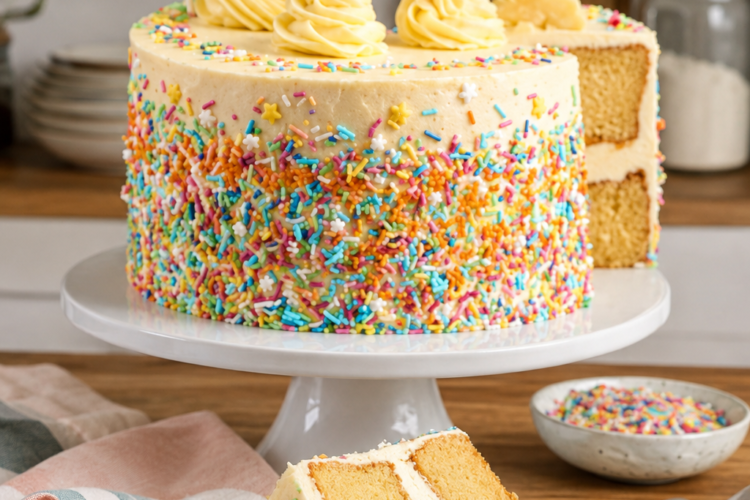
This keto vanilla cake is made without regular wheat flour or refined sugar, making it suitable for a low-carb dessert menu. Almond flour and coconut flour create a soft cake with a tender crumb, while allulose provides sweetness without the same carbohydrate load as traditional sugar. The finished cake is layered and covered with keto vanilla frosting for a simple dessert that works well for birthdays, family gatherings, and everyday treats.
A Simple Low-Carb Cake
Finding a good keto cake recipe can be difficult when many low-carb cakes turn out dry, dense, or overly crumbly. This recipe uses a combination of blanched almond flour and coconut flour to create a better texture. Unsalted butter adds richness, while eggs help hold the cake together. Almond milk keeps the batter smooth, and vanilla extract gives the cake its familiar vanilla flavor.
Why Almond Flour Works
Blanched almond flour is one of the main ingredients in this keto vanilla cake. Unlike regular wheat flour, almond flour is made from finely ground almonds and contains fewer carbohydrates. It also gives baked goods a moist texture and mild nutty taste. For the best result, use finely ground blanched almond flour so the cake has a smoother crumb and does not feel coarse after baking.
The Purpose of Coconut Flour
Coconut flour is highly absorbent, so a small amount can make a noticeable difference in a cake batter. Here, it works alongside almond flour to help give the cake structure. Coconut flour also helps balance the moisture from the butter, eggs, and almond milk. It is important to use the amount listed in the recipe because changing the quantity can affect the final texture of the cake.
Sweetening the Cake
Allulose is used instead of regular granulated sugar in this low-carb vanilla cake. It provides sweetness while helping keep the recipe lower in net carbohydrates. The butter and allulose are creamed together before the eggs are added, which helps create a lighter batter. Be sure to mix the butter and allulose thoroughly so the mixture becomes fluffy before continuing with the remaining ingredients.
Preparing the Cake Pans
Start by preheating the oven to 180°C (350°F). Line two 8-inch cake pans with parchment or baking paper to make removing the baked cakes easier. Greased springform pans can also be used if preferred. Preparing the pans before mixing the batter saves time and ensures that the cake can go directly into the oven once the batter is ready.
Mixing the Dry Ingredients
The almond flour, coconut flour, baking powder, and salt should be mixed together before being added to the wet mixture. Combining these ingredients first helps distribute the baking powder and salt evenly throughout the flour. This step is especially useful when working with alternative flours because they can behave differently from standard all-purpose flour.
Creaming Butter and Allulose
The butter and allulose need enough mixing time to become fluffy. Using a stand mixer or hand mixer, cream them together for around eight minutes. This step helps incorporate air into the mixture and contributes to the light texture of the finished cake. If the butter is too cold, it may not cream properly, so use softened butter for easier mixing.
Adding the Eggs
Add the four large eggs one at a time rather than adding them all together. Beat well after each addition so the eggs become fully incorporated into the butter mixture. Eggs provide structure and moisture in this cake, making them an important part of the recipe. Taking time at this stage can help produce a smoother batter before the dry ingredients are added.
Adding Almond Milk and Vanilla
Once the eggs are incorporated, add the almond milk and vanilla extract. Mix until the ingredients are combined and the batter looks even. Vanilla extract gives the cake its main flavor, while almond milk adds moisture without making the batter overly heavy. Mix only until the ingredients are incorporated before moving on to the dry mixture.
Combining Wet and Dry Ingredients
Add the prepared dry ingredients to the wet mixture and beat until the batter becomes creamy. Avoid making unnecessary changes to the ingredient amounts because keto baking depends on the balance between almond flour, coconut flour, eggs, butter, and liquid. The finished batter should be thick but smooth enough to divide between the two prepared cake pans.
Dividing the Batter
Divide the cake batter evenly between the two 8-inch pans. Try to distribute the batter as evenly as possible so both layers finish at a similar thickness. Smooth the tops gently with a spatula before placing the pans in the oven. Even layers make assembling the finished keto birthday cake much easier and give the dessert a neat appearance.
Baking the Keto Cake
Bake the cakes at 180°C (350°F) for around 22 to 25 minutes. The exact baking time can vary slightly depending on the oven and the pans being used. Check the cakes near the end of the baking time by inserting a skewer into the center. If the skewer comes out clean, the cakes are ready to be removed from the oven.
Cooling the Cake Layers
Allow the baked cake layers to cool completely before adding frosting. This is an important step because frosting a warm cake can cause the frosting to soften or slide. Letting the layers cool also makes them easier to handle when assembling the cake. Do not rush this stage if you want clean, even layers and a smooth frosting finish.
Adding Keto Vanilla Frosting
Once both cake layers have cooled completely, frost the cakes with the keto vanilla frosting. Spread the frosting evenly over the first layer, place the second cake layer on top, and then cover the remaining surface with frosting. The creamy frosting adds sweetness and gives the cake the appearance of a traditional layered vanilla cake while keeping the dessert aligned with a keto-style menu.
How the Texture Turns Out
The combination of almond flour, coconut flour, eggs, and butter gives this cake a soft, moist crumb. It should not have the same texture as a traditional wheat-flour sponge, but it can still be light enough to slice easily. The frosting adds another layer of moisture and richness. Allowing the cake to cool fully before frosting helps preserve the structure of the layers.
How to Serve Keto Vanilla Cake
This cake can be served as a dessert after a family meal, as a birthday cake, or alongside coffee or tea. Because it is already layered and frosted, there is little extra preparation required once it has cooled. Slice it with a sharp knife and wipe the blade between cuts if you want cleaner portions. Refrigerated cake can be allowed to sit at room temperature before serving.
Making the Cake Ahead
The cake can be prepared up to two days before serving. After baking and frosting, cover the cake properly and refrigerate it. About two hours before serving, bring the cake back to room temperature. This gives the frosting and cake time to soften while keeping the dessert convenient for parties, birthdays, and other occasions where preparing dessert in advance is helpful.
Storing Leftover Cake
Leftover keto vanilla cake should be kept in an airtight container in the refrigerator. Properly covered, it can be stored for up to five days. Refrigeration helps maintain the cake’s texture and keeps the frosting in good condition. When you want a slice, allow it to sit at room temperature for a short time if you prefer a softer texture.
Freezing Keto Cake
Individual slices can be frozen in freezer-safe containers for longer storage. The original recipe allows the cake to be frozen for up to six months. Freezing individual portions makes it easier to remove only what you need instead of thawing the entire cake. For the best texture, thaw a frozen slice overnight in the refrigerator before serving.
Choosing the Right Frosting
The recipe calls for one serving of keto vanilla frosting, which is used after the cake layers have cooled. Since frosting contributes to the final sweetness and texture, use the specified keto vanilla frosting rather than replacing it with a standard sugar-based frosting if you want to keep the recipe aligned with its original low-carb purpose. Spread it evenly for a neat layered cake.
Understanding Net Carbs
This keto vanilla cake contains five grams of carbohydrates and three grams of fiber per serving according to the supplied nutrition information. That gives two grams of net carbs per slice. Net carbohydrates are commonly calculated by subtracting fiber from total carbohydrates. Keep in mind that the exact nutrition can vary with different brands of almond flour, almond milk, allulose, butter, and frosting.
Why This Is a Keto Recipe
This cake fits the keto recipe category because it replaces traditional wheat flour and regular sugar with almond flour, coconut flour, and allulose. These substitutions help reduce the carbohydrate content compared with many conventional vanilla cakes. The recipe still contains fat from butter and almond flour, while eggs provide protein and structure. Portion size remains important when following a specific carbohydrate target.
Keto Baking Tips
Keto baking often requires more attention to ingredient measurements than traditional baking. Almond flour and coconut flour do not behave exactly like wheat flour, so changing the proportions can make a cake dry, crumbly, or overly wet. Use the stated measurements and allow the cake to cool fully before judging its texture. Accurate measuring is especially useful when working with coconut flour.
Avoid Overbaking
One of the easiest ways to make an almond flour cake dry is to leave it in the oven too long. Start checking the cake around the 22-minute mark because oven temperatures can differ. Insert a skewer into the center of the cake and remove it when the skewer comes out clean. Once baked, remove the pans from the oven and allow the layers to cool.
Keep the Batter Even
When dividing the batter between two pans, use the same amount in each pan as closely as possible. Uneven portions can result in one layer being thicker or thinner than the other. Smooth the tops before baking and avoid repeatedly opening the oven door during the first part of baking. A stable oven temperature helps the layers bake more evenly.
Common Texture Questions
If the cake feels slightly different from a traditional flour-based cake, that is expected with almond and coconut flour. These ingredients produce their own type of crumb and do not behave like wheat flour. A moist texture is desirable, but the cake should still be firm enough to slice. Cooling completely and using the correct flour measurements can help produce the intended result.
Serving Suggestions
For the best texture, refrigerate the finished cake when storing it, then allow it to come closer to room temperature before serving. This can soften the crumb and frosting after chilling. If serving the cake at a gathering, prepare it in advance and keep it covered until needed. Cutting the cake into individual portions also makes storage and serving easier.
Make-Ahead Preparation
The cake can be baked and frosted up to two days before serving. Keep it covered in the refrigerator during this period. When ready to serve, take it out about two hours beforehand so it can return toward room temperature. This approach can make dessert preparation easier when the cake is being served for a birthday, dinner, or special occasion.
Refrigerated Storage
Store leftover slices in an airtight container and keep them refrigerated for up to five days. Keeping the cake covered helps prevent it from absorbing refrigerator odors and protects the frosting. If several slices are stored together, place parchment paper between them if needed to reduce sticking. Let individual portions sit briefly before serving if a softer texture is preferred.
Freezing Tips
For longer storage, freeze individual slices in freezer-safe containers for up to six months. Labeling the containers with the date can make it easier to track storage time. Thaw the slices overnight in the refrigerator rather than leaving them out for a long period. Once thawed, allow the cake to come closer to room temperature before serving for a better texture.
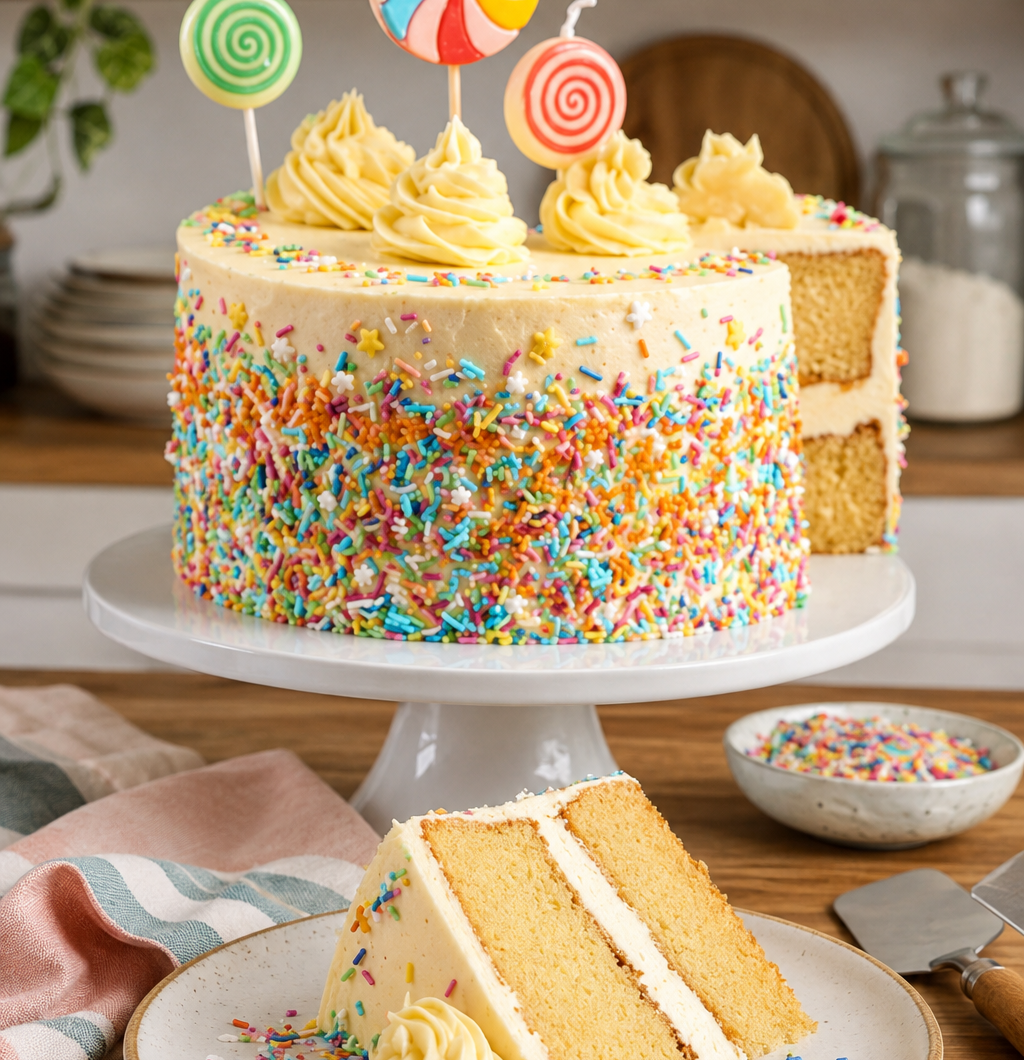
Keto Birthday Cake(Vanilla Cake)
 Recipe by admin1
A soft and moist low-carb vanilla cake made with blanched almond flour, coconut flour, butter, allulose, eggs, almond milk, and vanilla extract.
16
slices10
minutes25
minutes172
kcal2
g35
minutesIngredients
1 1/2 cups blanched almond flour (150g)
1/2 cup coconut flour (56g)
1/4 teaspoon salt
2 teaspoons baking powder (8g)
1/4 teaspoon salt
3/4 cup unsalted butter (170g)
1 cup allulose (200g)
4 large eggs
1/2 cup almond milk
1 teaspoon vanilla extract
1 serving keto vanilla frosting (240g)
Directions
- Heat the oven to 180°C (350°F). Line two 8-inch cake pans with parchment or baking paper. Greased springform pans can also be used.
- Combine the blanched almond flour, coconut flour, baking powder, and salt in a bowl. Stir well and set the mixture aside.
- Beat the unsalted butter and allulose with a stand mixer or hand mixer until fluffy, about 8 minutes. Add the eggs one at a time, beating well after each addition. Mix in the almond milk and vanilla extract.
- Add the dry ingredients to the wet mixture and beat until creamy. Divide the batter evenly between the two prepared cake pans and smooth the tops.
- Bake for approximately 22 to 25 minutes, or until a skewer inserted into the center comes out clean. Remove the cakes from the oven and allow both layers to cool completely.
- Once the cake layers are completely cool, frost them with the keto vanilla frosting. Assemble the layers and serve, or cover and refrigerate for later.
Nutrition Facts
- Calories: 172kcal
- Fat: 16g
- Carbohydrates: 5g
- Protein: 4g


 )