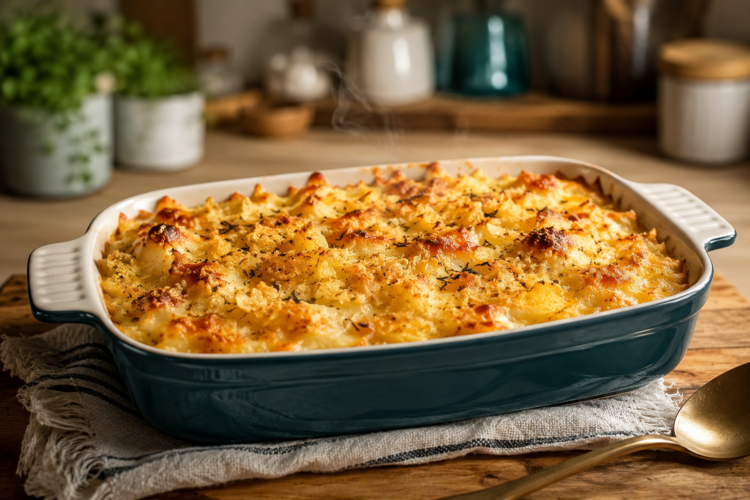
Gluten-Free Newfoundland Cod Au Gratin is a warm, satisfying seafood dish that brings together tender cod, a rich homemade cheese sauce, and a crisp golden topping. Inspired by the traditional flavors of Newfoundland and Labrador, this comforting baked fish recipe is ideal for anyone who enjoys creamy seafood meals but needs a gluten-free option. The combination of flaky cod, melted cheddar and Parmesan, savory seasonings, and crunchy potato chips creates a dish that feels both hearty and special.
Cod has long been an important ingredient in Newfoundland cooking. The province’s connection to the Atlantic fishing industry has shaped many traditional meals, and cod remains one of the most recognizable ingredients in East Coast Canadian cuisine. This gluten-free version of Cod Au Gratin keeps the comforting character of the classic dish while replacing traditional flour-based thickening methods with cornstarch or potato starch. The result is a smooth, creamy sauce that works beautifully with the mild flavor and delicate texture of the fish.
One of the best things about this gluten-free cod recipe is that it can be served for both everyday dinners and more special occasions. It is filling enough to work as a main course, yet the ingredients are familiar and straightforward. The creamy sauce turns simple cod into something richer, while the cheese and crunchy topping add layers of flavor and texture. Every bite combines soft, flaky fish with a savory sauce and a crisp finish.
The recipe also offers a good balance between comfort and nutrition. Cod is naturally high in protein and relatively lean, making it a popular choice for seafood dinners. When paired with milk and cheese, it becomes part of a satisfying meal that can be served with vegetables, potatoes, or a fresh salad. The richness of the sauce makes the dish feel indulgent, but the cod remains the central ingredient and provides the light, delicate flavor that keeps the meal from becoming too heavy.
A Classic Newfoundland-Inspired Seafood Dinner
Newfoundland-style Cod Au Gratin is known for its comforting, home-style appeal. Traditional versions often feature salt cod or fresh cod covered in a creamy sauce and baked until hot and bubbling. The exact preparation can vary from kitchen to kitchen, but the idea remains the same: good-quality fish is combined with a rich sauce and finished with a flavorful topping.
This gluten-free version follows that same comforting approach. Instead of using regular flour to thicken the sauce, cornstarch or potato starch provides the necessary thickness without adding gluten. This simple change makes the recipe suitable for people following a gluten-free diet while preserving the creamy texture expected from a classic au gratin dish.
The topping is another important part of the recipe. Crumbled plain potato chips add a crisp texture that contrasts with the soft fish and creamy cheese sauce. When baked, the topping becomes golden and crunchy while the sauce underneath bubbles around the cod. If preferred, certified gluten-free breadcrumbs can also be used, but potato chips give the dish a distinctive, casual, comforting finish.
The use of dried summer savory also helps give the recipe a traditional Newfoundland-inspired flavor. Summer savory has a warm, herbal taste that works especially well with rich sauces, seafood, and cheese. It adds depth without overpowering the cod, allowing the other ingredients to remain balanced.
Why This Gluten-Free Cod Au Gratin Works So Well
The success of this dish comes from the contrast between its different textures. Cod becomes tender and flaky as it cooks, while the cheese sauce remains creamy and smooth. The potato chip topping provides crunch, and the melted cheddar and Parmesan create a savory finish.
Fresh boneless cod loins are especially useful because they have a firm yet delicate texture. When cut into bite-sized pieces, they cook evenly and are easy to serve. Frozen cod can also be used, but it should be fully thawed and drained before assembling the dish. Excess moisture can make the sauce thinner and may affect the final texture.
The cheese sauce is another major reason this recipe is so satisfying. Butter, onion, and garlic create the flavor base, while Dijon mustard and dry white wine add depth. Milk provides the creamy foundation, and the Parmesan and cheddar contribute richness and a slightly sharp flavor. The result is a sauce that coats the cod without hiding its natural taste.
Using cornstarch or potato starch is important for achieving the correct consistency. The starch thickens the milk-based sauce and helps it remain smooth. Whisking the ingredients carefully while adding the liquid reduces the risk of lumps and creates a more even texture.
Understanding the Ingredients
Fresh cod loins are the heart of this recipe. The mild flavor of cod works well with creamy sauces because it absorbs surrounding flavors without becoming overpowering. Two pounds of boneless cod provide enough fish for a substantial family meal. If the pieces are particularly thick, cutting them into approximately one-inch portions helps ensure even cooking.
Butter adds richness to the sauce and provides the base for cooking the onion and garlic. The butter also helps carry the flavors of the aromatics throughout the dish. A quarter cup is used to create a rich foundation without overwhelming the other ingredients.
The finely chopped onion contributes mild sweetness and savory depth. Yellow or white onion works well, especially when cooked gently until soft and translucent. Garlic adds another layer of flavor and pairs naturally with both seafood and cheese. Two cloves provide enough aroma to enhance the sauce while keeping the flavor balanced.
Cornstarch or potato starch replaces the flour commonly used in traditional creamy sauces. Either option can be used to create a gluten-free thickener. It is important to whisk thoroughly so the sauce develops a smooth consistency.
Dijon mustard may seem like a small addition, but it gives the sauce an important touch of tanginess. The mild sharpness cuts through the richness of the butter, milk, and cheese. It does not make the finished dish taste strongly of mustard. Instead, it adds depth and helps balance the overall flavor.
Dry white wine contributes another layer of complexity. As it cooks, the liquid blends with the other ingredients and complements the seafood. If wine is not preferred, chicken or vegetable broth can be used instead. The substitution will slightly change the flavor, but the dish will still have a creamy and satisfying result.
Milk forms the main liquid base of the cheese sauce. Whole milk can provide a richer texture, while another preferred milk option may also be used depending on personal preference. The key is to add the milk gradually while whisking so the sauce thickens evenly.
Parmesan and cheddar work together to create a flavorful cheese sauce. Parmesan adds a salty, savory character, while cheddar provides creaminess and a stronger cheese flavor. Aged cheddar can create a sharper taste, but any good melting cheddar can be used.
Dried summer savory brings a traditional herbal note to the recipe. Salt and pepper should be added according to taste, particularly because Parmesan and potato chips may already contribute some saltiness. Finally, crumbled plain potato chips create the crisp topping that gives the finished cod au gratin an appealing contrast.
Preparing the Creamy Gluten-Free Cheese Sauce
A smooth sauce is one of the most important elements of this recipe. Begin by melting the butter in a medium saucepan over medium heat. Add the finely chopped onion and garlic, stirring regularly until the onion becomes soft and translucent. Avoid browning the garlic, as this can create a bitter taste.
Once the aromatics have softened, stir in the cornstarch or potato starch. Mixing the starch well with the butter helps create a base for thickening the sauce. Allow it to cook briefly before adding the Dijon mustard and whisking until everything is well combined.
Slowly pour in the dry white wine while continuing to whisk. Let the mixture cook for approximately two minutes so the flavors can blend. Gradually add the milk rather than pouring it in all at once. Continuous whisking is helpful because it keeps the sauce smooth and encourages even thickening.
As the sauce heats, it will begin to develop a creamy consistency. Once it has thickened, stir in part of the Parmesan and some of the cheddar. Continue stirring until the cheese has melted completely. Add the dried summer savory, salt, and pepper, then taste the sauce and adjust the seasoning if necessary.
The finished sauce should be creamy enough to coat the cod pieces but not excessively thick. It will continue to cook in the oven, so there is no need to over-thicken it on the stovetop.
Assembling the Newfoundland Cod Au Gratin
Preheat the oven to 350°F or 180°C. Prepare an 8×8-inch glass baking dish, or divide the ingredients among individual oven-safe ramekins. Cutting the cod into approximately one-inch pieces makes the dish easier to serve and allows the fish to cook evenly.
Place the cod in the baking dish and pour the warm cheese sauce over the top. Make sure the fish is evenly coated so every portion receives the same rich flavor. Sprinkle the remaining cheddar across the surface, followed by the remaining Parmesan.
Finish the dish with an even layer of crumbled plain potato chips. The chips create a crisp topping that becomes golden as the cod au gratin bakes. If using a different gluten-free topping, make sure it is suitable for baking and will provide a similar crunchy texture.
Place the dish in the preheated oven. Individual ramekins generally require around 35 minutes, while a larger 8×8-inch dish may need approximately 50 minutes. Cooking time can vary depending on the thickness of the cod and the type of baking dish used.
The dish is ready when the sauce is bubbling, the topping is crisp and golden, and the cod is fully cooked. The fish should appear opaque and flake easily with a fork. Allow the Cod Au Gratin to rest for several minutes before serving. This short resting period gives the sauce time to settle and makes serving easier.
Helpful Tips for a Better Result
Good-quality cod makes a noticeable difference in this recipe. Fresh cod loins offer a clean flavor and tender texture, but properly thawed frozen cod can also work well. If using frozen fish, remove as much excess moisture as possible before adding it to the baking dish.
Do not overlook the Dijon mustard. Although only a small amount is used, it helps bring balance to the rich cheese sauce. The same is true for the white wine or broth, which adds another layer of flavor and prevents the sauce from tasting one-dimensional.
The cheese should be added after the sauce has begun to thicken. This helps it melt more smoothly. Stir gently until the cheese is incorporated, but avoid overheating the sauce after the cheese has melted.
If you prefer a stronger cheese flavor, an aged cheddar can be especially effective. For a milder result, use a standard cheddar that melts easily. The Parmesan adds a savory finish and works particularly well with the crunchy topping.
Because potato chips vary in salt content, taste the sauce before adding additional salt. This is a simple way to avoid making the finished dish too salty.
Serving Ideas for Cod Au Gratin
This creamy baked cod dish can be served with many simple side dishes. Steamed vegetables such as broccoli, green beans, carrots, or peas add freshness and color. A crisp green salad with a light dressing can also balance the richness of the cheese sauce.
Mashed potatoes are a natural choice for anyone who wants an especially comforting meal. Roasted potatoes or boiled baby potatoes also work well. Since the dish already contains a rich sauce, lightly seasoned vegetables can help create a balanced plate.
For a lighter option, serve the Cod Au Gratin with a fresh salad and simple roasted vegetables. The creamy fish provides plenty of flavor, so the side dishes do not need complicated sauces or heavy seasonings.
Storage and Reheating
Leftover gluten-free Cod Au Gratin should be cooled and stored in an airtight container in the refrigerator. It is best enjoyed within three days. Because the sauce contains dairy, leftovers should not be left at room temperature for an extended period.
Freezing is possible, but the texture of the creamy sauce may change after thawing. The fish and sauce can sometimes release additional moisture, which may make the finished dish less smooth than when freshly baked. For the best quality, refrigeration and reheating are generally preferable.
To reheat, place the leftovers in an oven-safe dish and warm at 300°F or 150°C until heated through. Covering the dish loosely can help prevent excessive browning, although the topping may lose some of its original crispness. If desired, a small amount of fresh gluten-free topping can be added before reheating.
A Comforting Gluten-Free Seafood Recipe
Gluten-Free Newfoundland Cod Au Gratin is an excellent choice when you want a seafood dinner that feels warm, filling, and homemade. Tender cod, a creamy cheese sauce, dried summer savory, and a crunchy topping come together in a dish that is both simple and satisfying. The use of cornstarch or potato starch makes it possible to enjoy the classic creamy texture without regular flour.
Whether you serve it for a family dinner, a weekend meal, or a special gathering, this baked cod recipe delivers the comforting flavors people expect from an au gratin dish. The mild fish, rich sauce, melted cheese, and crisp topping create a combination that is difficult to resist.
With careful preparation and good-quality ingredients, this gluten-free seafood recipe can become a reliable addition to your dinner rotation. Serve it hot with your favorite vegetables, potatoes, or fresh salad, and enjoy a comforting Newfoundland-inspired meal filled with creamy, cheesy, and satisfying flavor.

Gluten-Free Newfoundland Cod Au Gratin
 Recipe by admin1
If you’re a fan of comforting, creamy, and cheesy seafood dishes, then you are in for a treat with this gluten-free Newfoundland Cod Au Gratin.
6
servings15
minutes50
minutes358
kcal1
hour5
minutesIngredients
2 lbs boneless cod loins
¼ cup butter
½ small onion, finely chopped
2 garlic cloves, minced
¼ cup cornstarch or potato starch
1 tbsp Dijon mustard
¼ cup dry white wine
2 ¼ cups milk
⅔ cup shredded Parmesan cheese
1 cup shredded cheddar cheese
2 tsp dried summer savory
Salt & pepper to taste
1 small bag plain potato chips, crumbled
Directions
- Preheat oven to 350°F (180°C). Cut cod into 1-inch pieces and place in a baking dish.
- In a saucepan, melt butter. Add onion and garlic, cooking until soft.
- Stir in cornstarch and Dijon mustard. Add wine and whisk until smooth.
- Pour in milk, whisking constantly. Add half the Parmesan and a handful of cheddar cheese. Stir until melted.
- Season with summer savory, salt, and pepper.
- Pour sauce over cod, top with remaining cheese, and sprinkle with crumbled chips.
- Bake uncovered for 35-50 minutes until bubbly and golden.
- Serve hot and enjoy!
Nutrition Facts
- Calories: 358kcal
- Fat: 1g
- Carbohydrates: 11g
- Fiber: 0.3g
- Sugar: 5g
- Protein: 39g


