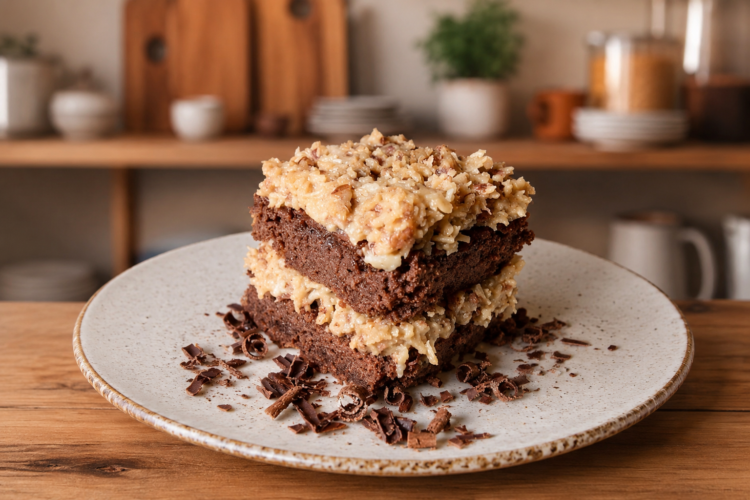
A gluten-free German chocolate cake is a rich, layered dessert that brings together moist chocolate cake, a sweet coconut and pecan filling, and smooth chocolate buttercream. It is an excellent choice for birthdays, holidays, family gatherings, and other occasions when a simple dessert is not enough. The appeal of this cake comes from the contrast between its soft chocolate layers and the thick, textured caramel-style topping. Every slice delivers chocolate, coconut, buttery sweetness, and crunchy pecans, creating a dessert that feels special without requiring complicated ingredients.
For anyone following a gluten-free diet, finding a celebration cake with a soft and satisfying texture can sometimes be difficult. Some gluten-free cakes can turn out dry, dense, or crumbly, especially when they are used in a layered dessert. This gluten-free German chocolate cake is designed to avoid those problems by combining a gluten-free 1:1 baking flour with ingredients that support moisture and structure. Sour cream, vegetable oil, eggs, and milk all contribute to a tender cake crumb, while the baking method helps the layers remain sturdy enough for frosting and filling.
Why This Gluten-Free German Chocolate Cake Is Worth Making
The best part about this gluten-free chocolate cake is that it does not rely on one flavor or texture. Instead, several different elements come together to create a complete dessert. The chocolate cake layers provide a deep cocoa flavor, while the coconut caramel filling brings sweetness and texture. Chopped pecans add a subtle crunch, and the chocolate buttercream creates a smooth finish around the cake. These different layers make the recipe especially enjoyable because every bite contains a combination of soft, creamy, chewy, and crunchy textures.
This recipe is also a great option when you want to make a homemade cake from scratch for a special occasion. The finished cake looks impressive when placed on a serving platter, but the process can be broken into simple stages. First, prepare and bake the chocolate cake layers. While the cakes are in the oven, the coconut pecan caramel filling can be made so it has time to cool. After that, prepare the chocolate buttercream and assemble everything once the individual components are completely cool.
Because this is a rich dessert, it works particularly well as a centerpiece for a celebration. It can be served as a gluten-free birthday cake, a holiday dessert, or a homemade treat for a family dinner. The two cake layers make it substantial without making the assembly unnecessarily complicated. Once decorated with chocolate frosting and the remaining coconut pecan filling, the finished cake has a beautiful homemade appearance that makes it suitable for almost any special gathering.
The Importance of a Good Gluten-Free Flour Blend
The flour blend is one of the most important ingredients when preparing a gluten-free layer cake. This recipe uses a gluten-free 1:1 baking flour, which is designed to work as a replacement for traditional flour in baking. Using a reliable measure-for-measure blend helps provide structure while allowing the cake to maintain a tender texture. A flour blend containing xanthan gum is especially useful because it can help provide some of the binding properties that gluten normally contributes to baked goods.
Gluten-free baking often requires careful attention to the balance between dry and wet ingredients. Different flour blends can absorb moisture differently, which means changing the type of flour may affect the final result. For this reason, using the specified style of gluten-free flour helps the cake batter maintain the right consistency. The goal is to create cake layers that are soft enough to enjoy but strong enough to support the filling and frosting without breaking apart during assembly.
A quality gluten-free flour blend can make a major difference in the final cake. The cake should not feel like a compromise simply because it does not contain wheat flour. When the flour works properly with the eggs, oil, sour cream, and milk, the finished layers can have a moist and tender crumb. This makes the recipe a good choice not only for people who need gluten-free desserts but also for anyone who enjoys a rich homemade chocolate cake.
How the Cake Stays Moist and Tender
Several ingredients in this recipe work together to create a moist gluten-free chocolate cake. Vegetable oil is especially helpful because it contributes moisture and helps produce a lighter crumb. Unlike some cakes that depend entirely on butter, an oil-based cake can remain soft and tender after baking and cooling. This is useful for a layered cake that may be assembled after the individual components have spent time cooling.
Sour cream also plays an important role in the cake batter. It adds richness and moisture while helping create a stable texture. The combination of sour cream and milk gives the gluten-free flour enough liquid to form a smooth batter without becoming overly thin. The eggs provide structure, while the sugar contributes sweetness and supports the overall texture of the finished cake. Together, these ingredients create layers that are suitable for stacking and frosting.
The method used to mix the batter also matters. The eggs and sugar are beaten until light and fluffy, which helps introduce air into the mixture. The oil is then added slowly, followed by the vanilla extract and lemon juice. The dry ingredients and liquids are added gradually rather than all at once. Alternating the flour mixture with the sour cream and milk helps create a smooth and evenly combined batter, giving the cake a better chance of baking evenly.
Preparing the Chocolate Cake Layers
Before mixing the batter, prepare two 8-inch round cake pans. Greasing the pans and lining the bottoms with parchment paper helps prevent the cake layers from sticking. This step is particularly useful when working with a gluten-free cake because cleanly releasing the layers from the pans makes assembly easier. Once the pans are ready, the dry ingredients can be whisked together so the cocoa powder, baking powder, salt, and gluten-free flour are evenly distributed.
In a separate bowl, beat the eggs and sugar until the mixture becomes lighter and fluffy. Slowly drizzle in the vegetable oil while mixing on low speed so the mixture retains the air created during whipping. Add the vanilla extract and lemon juice, then begin adding the dry ingredients and liquids in stages. This gradual mixing method helps the ingredients combine evenly and gives the flour time to absorb the moisture.
Once the batter is fully combined, divide it between the prepared cake pans. Bake the layers at 350°F until a toothpick inserted into the center comes out clean. The cakes should be allowed to cool in the pans briefly before being transferred to a wire rack. Complete cooling is essential before adding any frosting or filling. Warm cake layers can cause the buttercream to soften and may make the assembled cake unstable.
The Classic Coconut and Pecan Caramel Filling
The coconut pecan filling is what gives German chocolate cake its distinctive character. This rich mixture combines egg yolks, evaporated milk, butter, granulated sugar, light brown sugar, salt, vanilla extract, chopped pecans, and sweetened shredded coconut. When heated together, the ingredients form a thick, sweet mixture with a caramel-like flavor. The coconut and pecans are added to create the familiar texture that makes this type of cake different from an ordinary chocolate layer cake.
The egg yolks help create richness and contribute to thickening the mixture during cooking. Evaporated milk provides a concentrated dairy flavor that works well with the butter and sugars. Using both granulated sugar and light brown sugar gives the filling sweetness along with deeper caramel notes. The salt helps balance the sweetness, while the vanilla adds warmth and brings the flavors together.
While preparing the filling, it is important to stir the mixture consistently as it heats. The ingredients are cooked over medium heat until the mixture reaches a low boil and begins to thicken. Once the desired consistency is reached, remove the pan from the heat and stir in the vanilla, chopped pecans, and sweetened shredded coconut. The finished filling should then be allowed to cool completely before it is spread over the cake.
Why Cooling the Filling Is So Important
One of the most important steps in assembling this gluten-free German chocolate cake is allowing the coconut caramel filling to cool fully. The filling becomes thicker as it cools, making it easier to spread between the cake layers and over the top. If the mixture is still warm, it can soften the chocolate buttercream and create problems during assembly. A warm filling may also cause the cake layers to shift or slide.
Making the filling while the cakes are baking is a practical way to save time. By starting the coconut caramel mixture as soon as the cake pans go into the oven, both the cake layers and filling can cool during the same period. This makes the preparation process more efficient and helps ensure that the different components are ready around the same time.
The cooled filling should be thick enough to stay in place while still being spreadable. Its combination of shredded coconut and chopped pecans gives it a naturally textured appearance, making it attractive enough to use as the main topping for the finished cake. This is one reason German chocolate cake can look impressive even without elaborate decorations or professional cake decorating equipment.
Making the Chocolate Buttercream Frosting
The chocolate buttercream adds another layer of rich flavor to this dessert. It is made with unsweetened cocoa powder, softened butter, confectioners’ sugar, heavy cream or milk, salt, vanilla extract, and almond extract. The result is a smooth frosting that can be spread over the cake and used to create a border around the filling between the layers.
Start by mixing the cocoa powder to remove any lumps. Add the softened butter and mix until smooth before adding the remaining ingredients. The confectioners’ sugar provides sweetness and structure, while the heavy cream or milk helps create a spreadable consistency. Once everything has been incorporated on low speed, increasing the mixer speed helps create a lighter and fluffier buttercream.
The almond extract is a small but important ingredient in the frosting. It adds a subtle flavor that complements the chocolate and works well with the pecans in the coconut filling. Only a small amount is needed, but it gives the buttercream an extra layer of flavor. The finished frosting should be smooth enough to spread easily while remaining thick enough to hold its shape around the edges of the cake.
How to Assemble the Gluten-Free Layer Cake
Once the cake layers, coconut filling, and chocolate buttercream have cooled and are ready to use, the final assembly can begin. Place one cake layer on a serving platter or cake stand. Spread or pipe a border of chocolate buttercream around the outer edge of the cake. This creates a barrier that helps keep the coconut caramel filling neatly inside the cake rather than spilling over the sides.
Spread half of the cooled coconut and pecan mixture inside the buttercream border. Carefully place the second cake layer on top, making sure it is centered. The remaining chocolate buttercream can then be used to frost the top and sides of the cake. You can create a smooth finish or leave the frosting slightly textured for a more relaxed homemade appearance.
The remaining coconut caramel filling is spread over the top of the cake. If desired, additional chocolate buttercream can be piped around the edges to create a decorative finish. Once assembled, the cake has a beautiful contrast between the dark chocolate layers, creamy frosting, and golden coconut pecan topping. The finished dessert can be sliced and served immediately once the layers are stable and set.
Helpful Notes for the Best Results
For the best gluten-free cake texture, use a high-quality gluten-free 1:1 baking flour. A blend containing xanthan gum can help create better structure and reduce the risk of a crumbly cake. Because flour blends vary, it is best to avoid making unnecessary substitutions if you want to achieve a similar texture and consistency to the intended recipe.
Starting the coconut caramel filling while the cake layers bake is another useful step. The filling needs enough time to cool before assembly, and preparing it early helps prevent unnecessary waiting later. Both the cake and filling should be completely cool before frosting. Taking the time to allow everything to reach the proper temperature makes the final assembly easier and helps the cake hold its shape.
For a dairy-free adaptation, the original recipe notes that dairy-free sour cream and almond milk can be used in the cake. Dairy-free buttery sticks may replace the butter in the frostings, and full-fat canned coconut milk may be used instead of evaporated milk in the caramel filling. These changes allow the recipe to be adapted for different dietary needs while keeping the same general preparation method.
Serving and Enjoying This Rich Chocolate Dessert
This gluten-free German chocolate cake is a rich dessert, making it ideal for serving in generous but moderate slices. Each portion includes moist chocolate cake, creamy buttercream, and a sweet coconut pecan topping, so a single slice offers plenty of flavor. The cake works well as the main dessert for a birthday celebration, holiday dinner, or special family gathering.
For clean slices, use a sharp knife and wipe it between cuts when necessary. This is particularly helpful because the coconut and pecan topping is thick and textured. Serving the cake on a simple platter or cake stand allows the different layers and topping to remain the focus. The dessert is already visually appealing, so it does not require additional decoration to make an impression.
If there are leftovers, keep the cake covered to help maintain the moisture of the chocolate layers and protect the frosting. Proper storage can help preserve the texture and flavor so the cake remains enjoyable after the first serving. Because the recipe combines several rich ingredients, the flavors continue to work beautifully together even when the cake is served later.
Frequently Asked Questions
Can I Make This Cake for a Birthday?
Yes, this gluten-free German chocolate cake is an excellent choice for a birthday or other celebration. The two layers, chocolate buttercream, and coconut pecan topping give it the appearance of a special occasion dessert. It serves approximately 12 portions, making it suitable for sharing with family and guests.
Why Is My Gluten-Free Chocolate Cake Crumbly?
A crumbly cake can result from changes to the flour blend, incorrect ingredient measurements, or overbaking. Using a reliable gluten-free 1:1 baking flour and following the mixing and baking instructions carefully can help create a more stable texture. It is also important to allow the cake layers to cool properly before moving or frosting them.
Can I Use Regular Milk Instead of Evaporated Milk?
The coconut caramel filling specifically uses evaporated milk for its concentrated flavor and texture. Replacing it with regular milk may change the consistency and final result. For the closest match to the original recipe, evaporated milk should be used unless making one of the suggested dairy-free substitutions.
Why Does the Filling Need to Be Cool Before Assembly?
The coconut caramel filling should be completely cool because warm filling can soften the buttercream and make the cake difficult to assemble. Cooling also allows the mixture to thicken, making it easier to spread and helping it stay in place between the cake layers.

Gluten Free German Chocolate Cake
 Recipe by admin1
A rich and indulgent gluten-free chocolate layer cake made with moist cocoa cake layers, creamy chocolate buttercream, and a classic coconut pecan caramel filling.
12
servings10
minutes1
hour14
minutes755
kcal1
hour24
minutesIngredients
- Dry Ingredients
1 3/4 cups gluten-free 1:1 baking flour (270 grams)
1/2 cup unsweetened cocoa powder (50 grams)
3 teaspoons baking powder
1 teaspoon salt
- Other Ingredients
1 3/4 cups sugar (380 grams)
3 eggs
1/2 cup vegetable oil (100 grams)
1 tablespoon vanilla extract
1 teaspoon lemon juice
1/2 cup sour cream (120 grams), regular or light
1 cup milk (250 ml), such as 2%
- Coconut Caramel Filling
4 large egg yolks
1 cup evaporated milk (236 ml)
8 tablespoons butter, cut into 8 pieces
1/2 cup granulated sugar (100 grams)
1/2 cup light brown sugar, firmly packed (100 grams)
1/4 teaspoon salt
1 teaspoon vanilla extract
1 cup chopped pecans (125 grams)
2 cups sweetened shredded coconut (160 grams)
- Chocolate Buttercream Frosting
1/3 cup unsweetened cocoa powder (35 grams)
1/2 cup butter, softened to room temperature
3–4 cups confectioners’ sugar (340–450 grams)
1/4 cup heavy cream or milk
1/4 teaspoon salt
2 teaspoons pure vanilla extract
1/4 teaspoon almond extract
Directions
- Make the Cake
- Preheat the oven to 350°F. Grease two 8-inch round cake pans. Line the bottoms with parchment paper circles and grease again.
- In a medium bowl, whisk together the gluten-free 1:1 baking flour, unsweetened cocoa powder, baking powder, and salt.
- In a separate bowl or the bowl of a stand mixer, beat the eggs and sugar on medium-high speed for about 3 minutes until light and fluffy.
- Reduce the mixer speed to low and slowly drizzle in the vegetable oil. Add the vanilla extract and lemon juice and mix until combined.
- Add one-third of the dry mixture to the wet ingredients and mix gently. Add the sour cream, followed by another one-third of the dry ingredients.
- Add half of the milk, then the remaining dry ingredients. Finish by adding the remaining milk and mix until the batter is completely combined.
- Divide the batter evenly between the prepared cake pans.
- Bake for 35–40 minutes, or until a toothpick inserted into the center of each cake comes out clean.
- Allow the cakes to cool in the pans for 15 minutes. Carefully remove them and transfer them to a wire rack. Let the layers cool completely before frosting.
- Make the Coconut Caramel Filling
- While the cakes are baking, begin preparing the filling so it has enough time to cool.
- Add the light brown sugar, granulated sugar, salt, butter, egg yolks, and evaporated milk to a medium saucepan.
- Stir the ingredients together and bring the mixture to a low boil over medium heat.
- Continue stirring constantly for several minutes until the mixture thickens.
- Remove the saucepan from the heat.
- Stir in the vanilla extract, chopped pecans, and sweetened shredded coconut.
- Set the filling aside and allow it to cool completely before using it on the cake.
- Make the Chocolate Buttercream Frosting
- Add the unsweetened cocoa powder to the bowl of a stand mixer or a large mixing bowl.
- Mix briefly to break up any lumps.
- Add the softened butter and mix until smooth.
- Add the confectioners’ sugar, heavy cream or milk, salt, pure vanilla extract, and almond extract.
- Mix on low speed until the ingredients are incorporated.
- Increase the speed to medium and beat until the frosting becomes light, smooth, and fluffy.
- Assemble the Cake
- Place one completely cooled cake layer on a serving platter or cake stand.
- Use the chocolate buttercream to spread or pipe a border around the outer edge of the cake.
- Spread half of the cooled coconut caramel filling inside the buttercream border.
- Carefully place the second cake layer on top.
- Frost the top and sides of the cake with the remaining chocolate buttercream.
- Spread the remaining coconut caramel filling over the top of the cake.
- If desired, use extra chocolate frosting to create a decorative border around the edges.
- Slice the cake and serve.
Notes
- Begin preparing the coconut caramel filling while the cake layers are baking so the filling has enough time to cool completely.
- Use a good-quality gluten-free 1:1 baking flour for the best texture and structure.
- A gluten-free flour blend containing xanthan gum can help support the cake layers.
- The small amount of almond extract adds extra depth to the chocolate buttercream.
- For a dairy-free variation, dairy-free sour cream and almond milk can be used in the cake. Dairy-free buttery sticks can replace the butter, and full-fat canned coconut milk can replace the evaporated milk in the caramel filling.
- Make sure the cake layers and coconut caramel filling are completely cool before assembling to keep the frosting stable.
Nutrition Facts
- Calories: 755kcal
- Fat: 36g
- Carbohydrates: 104g
- Fiber: 5g
- Sugar: 87g
- Protein: 10g


