
Ginger water is a simple homemade drink with a bright citrus taste and the warm, slightly spicy flavor of fresh ginger. This recipe begins with a homemade ginger lemon syrup that is mixed with cold water and finished with lemon, lime, ginger, mint, and ice. It makes five drinks and is suitable when you want a refreshing cold beverage.
The preparation itself is easy, although the recipe includes resting and chilling time to allow the ingredients to develop their flavor. Fresh or frozen ginger root is grated, then steeped in warm simple syrup with strips of lemon zest. After straining and chilling, part of the prepared syrup is mixed with cold water.
This homemade ginger drink has several layers of flavor without requiring complicated equipment. A small saucepan, grater, vegetable peeler, fine mesh strainer, bowl, and pitcher are the main items needed. Most of the time is spent allowing the ginger syrup and prepared drink to rest in the refrigerator.
The combination of ginger and lemon is familiar in many homemade drinks. Here, the lemon zest is steeped directly in the syrup, while thin lemon slices are later added to the pitcher. Lime slices, fresh ginger, and mint leaves provide additional flavor while the drink chills before serving.
What Makes This Ginger Drink Different
The main flavor base in this recipe is a homemade ginger syrup rather than simply adding ginger directly to a glass of water. The syrup is prepared by heating 1 cup of water with ½ cup of sugar until the sugar dissolves and the mixture reaches a low boil. Freshly grated ginger and lemon zest are then added.
After the saucepan is removed from the heat, the syrup is covered and left to rest for about one hour. This inactive time allows the ginger and lemon zest to infuse the syrup. The result is a concentrated mixture that carries the main flavor of the finished ginger lemon water.
Once the syrup has rested, it is strained through a fine mesh strainer. Pressing the pulp in the strainer helps collect as much of the flavored syrup as possible. The ginger pulp and lemon zest are discarded after straining, leaving behind a smoother syrup.
Only ½ cup of the prepared syrup is mixed with 4 cups of water for the five-drink recipe. The remaining syrup does not need to be used immediately. According to the provided storage guidance, extra syrup can be kept in an airtight glass container in the refrigerator for up to one week.
Choosing Fresh or Frozen Ginger Root
This recipe allows either frozen or fresh ginger root. The original preparation uses unpeeled frozen ginger because frozen ginger can be easier to grate. A microplane or a sharp grater with small holes can be used to grate the ginger into fine pieces.
If using fresh ginger instead, the same amount can be used. The ingredient measurement remains 2 ounces of unpeeled frozen or fresh ginger root, which is approximately one 2-inch root. Keeping the ingredient amount unchanged helps maintain the intended balance of ginger flavor in the syrup.
Frozen ginger can be especially convenient when you already keep ginger root in the freezer. It can be grated while frozen, allowing the small pieces to be added directly to the warm syrup. The recipe does not require peeling the ginger before grating it.
Fresh ginger provides the same role in the recipe when that is what you have available. Whether frozen or fresh, grating the root increases the surface area exposed to the warm syrup. This helps the ginger flavor infuse during the one-hour resting period.
Preparing the Lemon Zest Correctly
Lemon zest is used to add citrus aroma to the ginger syrup. The recipe calls for strips of zest from one lemon rather than finely grated zest. A vegetable peeler is useful for making larger strips that can later be removed easily with the ginger pulp.
When peeling the lemon, remove only the yellow outer portion. The yellow part contains the citrus aroma wanted for this drink, while the white layer underneath can have a different taste. Long strips also make the straining process simpler because they remain easy to separate from the syrup.
The lemon zest is added after the sugar and water mixture has been heated and removed from the heat. It rests with the grated ginger in the covered saucepan for about one hour. During this time, the syrup absorbs both warm ginger flavor and fresh lemon aroma.
Lemon slices are also used later when the drink is assembled in the pitcher. This creates two different uses for lemon in the recipe. The zest flavors the concentrated syrup, while the thin slices sit in the cold drink with lime, ginger, and mint during the second chilling period.
Making the Ginger Simple Syrup
Begin by placing 1 cup of water and ½ cup of sugar in a 1-quart small saucepan. Heat the mixture while stirring so the sugar dissolves evenly. Continue heating until the syrup comes to a low boil, then remove the saucepan from the heat.
There is no need to continue boiling the mixture after it reaches this point. The next step is adding the grated ginger and the strips of lemon zest. Both ingredients are placed directly into the hot syrup so their flavors can begin to infuse.
Cover the saucepan and leave it to rest for approximately 60 minutes. This is an important part of the recipe because the ginger and lemon zest need time to flavor the syrup. The mixture does not require stirring or additional cooking while it rests.
After one hour, uncover the saucepan and prepare to strain the syrup. The mixture should contain liquid along with grated ginger pulp and lemon zest strips. Separating these solids produces a smoother ginger syrup that can be chilled before being added to the pitcher.
Straining the Ginger Lemon Syrup
Place a fine mesh strainer over a bowl before pouring in the prepared syrup. Slowly transfer the mixture through the strainer, allowing the flavored liquid to collect in the bowl underneath. The strainer catches the grated ginger and lemon zest.
Use a spoon or other suitable utensil to press the pulp gently inside the strainer. This helps release the syrup held between the grated ginger pieces. Continue until you have collected the liquid and little or no syrup comes through from the remaining solids.
After straining, discard the ginger pulp and strips of lemon zest. The bowl should now contain a smooth ginger lemon syrup without the larger pieces from the infusion. This syrup provides the concentrated flavor used to prepare the finished drink.
Place the strained syrup in the refrigerator and chill it for at least 30 minutes. Cooling the syrup before mixing it with the remaining water helps keep the final drink cold. It also fits naturally into the recipe’s preparation schedule before the pitcher is assembled.
Mixing the Homemade Ginger Lemon Water
After the syrup has chilled, measure ½ cup and add it to a pitcher. This amount is mixed with 4 cups of water. The syrup is concentrated, so using the stated amount creates the intended flavor while leaving extra syrup available for later storage.
The water should be cold before it is added to the pitcher. Cold water helps create a refreshing drink and supports the next stage, when fresh lemon, lime, ginger, and mint are allowed to infuse. Stirring is not a complicated process, but the syrup should be distributed through the water.
Add thin slices of lemon and lime to the pitcher. The fresh citrus slices bring another layer of flavor beyond the lemon zest already used in the syrup. Their presence also gives the drink a fresh appearance while it rests in the refrigerator.
Thin slices of fresh ginger and fresh mint leaves are added with the citrus. These ingredients remain in the pitcher during the next chilling period, allowing their flavors to slowly mix with the prepared ginger syrup and water.
Why the Second Chill Time Matters
Once the pitcher has been assembled, it should be placed in the refrigerator for another 30 minutes or longer. This chilling period is different from the first one because the syrup is already prepared. The purpose here is to give the fresh ingredients time to flavor the drink.
During this time, the lemon, lime, fresh ginger, and mint sit in the cold liquid. Their flavors gradually develop while the drink remains chilled. The recipe can be left longer if desired, giving the fresh ingredients additional time in the water.
The inactive time is one reason this recipe takes longer than a basic glass of flavored water. The hands-on preparation is brief, but the resting and chilling stages are part of the method. They allow the homemade ginger syrup and fresh ingredients to develop their flavor separately.
Planning the drink ahead can make the process convenient. Prepare the ginger syrup, allow it to rest, strain it, and chill it. Then combine the syrup and water with the remaining fresh ingredients and return the pitcher to the refrigerator until serving time.
Adding Ice Just Before Serving
Ice is added at the end of the recipe rather than during the long chilling periods. The instructions call for adding 2 cups of ice to the pitcher right before serving. This helps keep the drink cold without having the ice melt throughout the entire infusion time.
Adding ice immediately before serving can help preserve the intended strength of the ginger lemon mixture. The pitcher has already been chilled, so the ice provides the final cold touch. After adding it, the drink is ready to pour into serving glasses.
Because the recipe makes five drinks, the pitcher is useful for serving several people at once. The fruit slices, ginger, and mint can remain in the pitcher as the drink is poured. Their flavors continue to be part of the presentation and preparation.
For the best experience, serve the drink soon after adding the ice. This keeps it cold and avoids allowing the ice to melt too much before serving. The recipe is designed as a chilled drink, so the final step should happen close to serving time.
The Flavor of Ginger, Lemon, Lime, and Mint
Ginger is the strongest flavor in the prepared syrup, giving the drink its warm and slightly spicy character. Because the ginger is grated and steeped in hot syrup, its flavor becomes concentrated before being diluted with the 4 cups of water.
Lemon adds a clean citrus character through both the zest and the fresh slices. The zest is used during the syrup preparation, while lemon slices are added to the pitcher. This gives lemon a presence during more than one stage of the recipe.
Lime adds another citrus flavor that differs slightly from lemon. The thin lime slices are chilled with the prepared drink, creating a brighter mixed-citrus taste. Fresh mint leaves complete the combination with their cool, herbal flavor.
The result is a homemade ginger lemon water with sweet, spicy, citrus, and mint flavors. Each ingredient has a clear purpose, and the preparation method allows those flavors to develop gradually. Serving the drink cold with ice brings all the elements together.
How to Freeze Ginger Root
If you want to freeze ginger root for future use, begin by washing the unpeeled roots carefully. Remove any sand or dirt from the surface, then pat the ginger dry with a paper towel. Drying it before freezing helps prepare the root for storage.
Place the clean, dry ginger in a freezer-safe bag and store it in the freezer. The provided guidance states that ginger roots can be kept this way for a few months. Frozen ginger can then be used later when preparing the ginger syrup.
One advantage mentioned in the original method is that frozen ginger can be easier to grate than fresh ginger. When you are ready to use it, grate the amount required for the recipe. The ingredient remains unpeeled, so no peeling step is required.
Freezing ginger can make it easier to keep this ingredient available for future homemade drinks. Instead of needing to buy fresh ginger every time, you can store cleaned roots for later use. Always use a suitable freezer-safe bag to protect the ginger during storage.
Storing Extra Ginger Lemon Syrup
This recipe uses only ½ cup of the prepared syrup in the pitcher, so extra syrup may remain. The original storage guidance allows the remaining syrup to be stored in an airtight glass bowl in the refrigerator for up to one week.
Make sure the container is properly sealed before refrigeration. This helps protect the prepared syrup while it is stored. Keeping the syrup separately also means you do not have to prepare a completely new batch immediately when you want another ginger-flavored drink.
You may use all or only some of the prepared syrup depending on the original recipe guidance. For the stated five-drink preparation, ½ cup is mixed with 4 cups of water. Any unused syrup can be refrigerated within the recommended storage period.
Using a clean airtight glass container is a practical way to store the leftover syrup. Labeling the container with the preparation date can also help you keep track of the one-week storage period. Keep the syrup refrigerated until it is ready to be used.
Serving This Homemade Cold Drink
This ginger water is designed to be served cold. The prepared pitcher is chilled before ice is added, and 2 cups of ice are mixed in immediately before serving. This keeps the drink cool and suitable for warm weather or casual gatherings.
The recipe makes five drinks, making it easy to prepare as a small batch. Pour the chilled drink into glasses and include some of the lemon, lime, ginger, or mint from the pitcher if desired as part of the serving.
Because the drink is prepared with a concentrated syrup, cold water, and fresh ingredients, it has a layered flavor that develops over time. The first infusion comes from the grated ginger and lemon zest, while the second comes from the fresh ingredients in the pitcher.
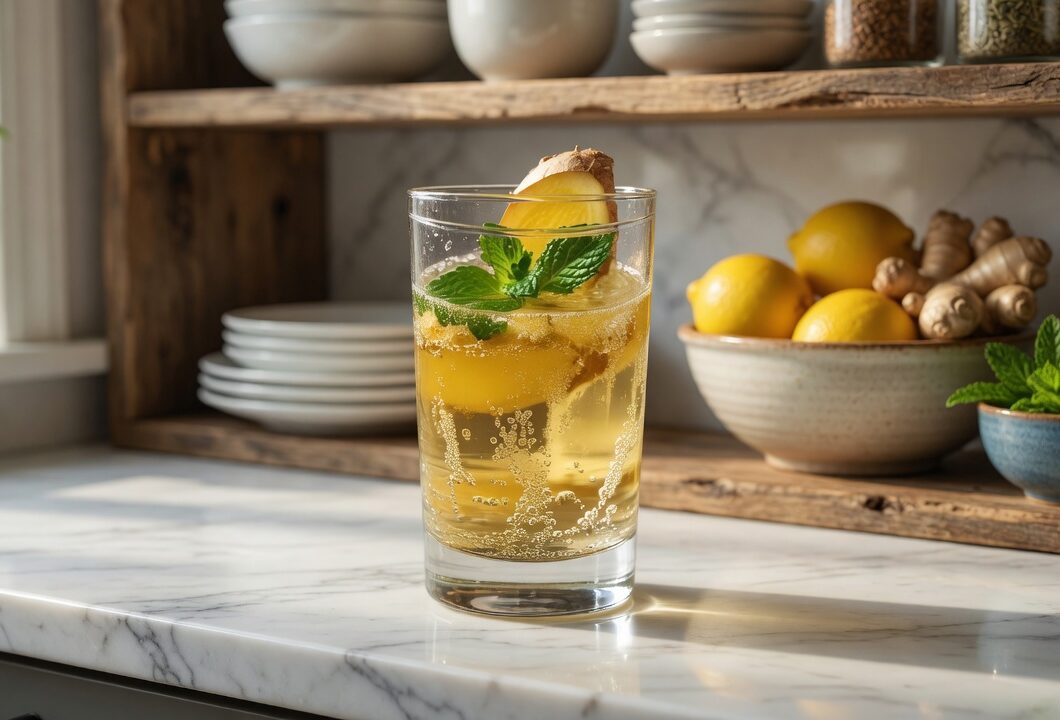
Ginger Water Recipe
 Recipe by admin1
A chilled homemade ginger drink made with a prepared ginger syrup, lemon zest, cold water, fresh lemon, lime, ginger, mint, and ice. The recipe makes 5 drinks and includes resting and chilling time for the flavors to develop.
5
drinks5
minutes1
hour1
hour2
hours5
minutesIngredients
2 ounces unpeeled frozen (or fresh) ginger root (about one 2-inch root)
1 cup water
½ cup sugar
Strips of zest from one lemon (use a vegetable peeler to get large strips)
4 cups water (mixed with ½ cup of the prepared syrup)
Thin slices of lemon, lime, and fresh ginger
Fresh mint leaves
Add ice right before serving
Directions
- Grate the unpeeled frozen or fresh ginger using a sharp small-holed grater. Use a vegetable peeler to remove long strips of the yellow zest from one lemon.
- Heat 1 cup water and ½ cup sugar in a 1-quart small saucepan, stirring until the sugar dissolves. Bring to a low boil, then remove from the heat.
- Add the grated ginger and lemon zest strips. Cover and let the syrup rest for 60 minutes, then strain through a fine mesh strainer, pressing the pulp to collect the syrup. Discard the pulp and zest and chill the syrup for at least 30 minutes.
- Pour ½ cup of the prepared syrup into a pitcher and add 4 cups of cold water. Add thin slices of lemon, lime, fresh ginger, and fresh mint leaves.
- Refrigerate the pitcher for another 30 minutes or longer to allow the fresh ingredients to infuse. Add 2 cups of ice immediately before serving and pour into glasses.


