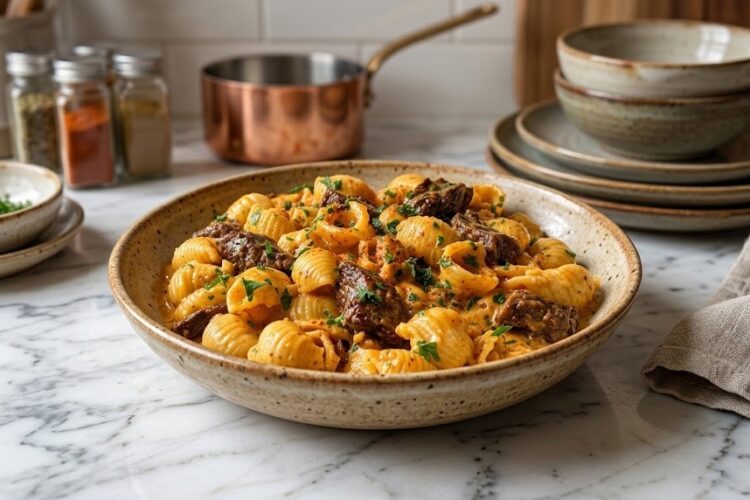
Creamy Paprika Steak Shells is a comforting stovetop dinner that brings together tender strips of seasoned steak, pasta shells, Parmesan cheese, and a rich smoked paprika cream sauce.
The combination is hearty without being complicated, making it a practical choice for busy evenings when you want a satisfying homemade meal without spending hours in the kitchen. The shells are especially useful because their shape catches the creamy sauce, while the browned steak adds a savory, meaty flavor to every bite.
Why This Creamy Steak Pasta Works So Well
There is something particularly satisfying about a creamy steak pasta dinner because it combines several textures and flavors in one skillet. The steak develops a browned exterior while remaining tender inside, the pasta provides a substantial base, and the sauce brings everything together with creaminess, garlic, onion, beef broth, Parmesan, and smoked paprika. Rather than relying on a complicated cooking method, this recipe builds flavor through a few simple steps and familiar ingredients.
The smoked paprika is one of the defining ingredients in this dish. It gives the cream sauce a deep, slightly smoky character and adds warmth without necessarily making the pasta spicy. When combined with black pepper, garlic, onion, and browned steak, the paprika creates a rich savory profile that makes the finished meal taste more developed than its straightforward ingredient list might suggest. Parmesan then adds salty, nutty depth and helps the sauce become thicker and smoother.
The Best Pasta for Creamy Paprika Steak
Pasta shells are an excellent choice for this recipe because their curved shape naturally holds onto creamy sauce. Smaller shells work particularly well because sauce can collect inside them, allowing each forkful to contain pasta, sauce, and small pieces of steak. Cooking the shells until al dente is important because they will be added to the skillet again after the sauce and steak are prepared.
When boiling the pasta, follow the package directions and avoid cooking it beyond al dente. Slightly firm pasta has a better texture and is less likely to become soft when it is tossed with the hot cream sauce. It is also helpful to reserve a little pasta water before draining. The starchy water can be used later if the sauce becomes thicker than desired, allowing you to adjust the consistency without changing the flavor.
Choosing Steak for This Pasta Recipe
Thinly sliced steak makes this meal quick enough for a weeknight because it cooks in only a few minutes in a hot skillet. The recipe simply calls for steak cut into thin strips, so there is no need to make the dish more complicated by preparing a separate marinade. Seasoning the steak with salt, black pepper, and smoked paprika before cooking gives the meat a flavorful surface and helps it complement the sauce.
A large skillet is useful because the steak should have enough room to brown rather than steam. Medium-high heat helps the meat develop color quickly. Once the steak is browned, removing it from the skillet prevents it from overcooking while the onions, garlic, and sauce are prepared. The browned bits left in the pan also contribute flavor to the cream sauce when the beef broth is added.
Building the Creamy Paprika Sauce
The sauce begins in the same skillet used for the steak, which keeps the cooking process efficient and allows the ingredients to benefit from the savory flavors left behind by the meat. Finely chopped onion is sautéed until softened, followed by minced garlic. These aromatics create a flavorful foundation before the beef broth and heavy cream are introduced.
Once the broth and cream enter the skillet, the mixture should be brought to a gentle simmer rather than aggressively boiled. A moderate simmer gives the sauce time to come together while reducing the risk of scorching the dairy. Parmesan cheese is then stirred into the warm sauce. As it melts, it contributes both flavor and body, helping create the creamy consistency that makes this steak pasta so satisfying.
How Smoked Paprika Changes the Flavor
Smoked paprika gives this recipe its distinctive character. Unlike ordinary paprika, smoked paprika has a deeper aroma with a subtle smoky quality that works particularly well with beef. It also adds a warm reddish color to the cream sauce, making the finished pasta look rich and appetizing.
The amount in the original recipe provides a noticeable paprika flavor without overwhelming the other ingredients. Because the steak is also seasoned with smoked paprika, the flavor carries throughout the entire dish rather than being concentrated only in the sauce. If you enjoy a little heat, the notes suggest adding cayenne or red pepper flakes, but that is optional and does not need to be included for the dish to have plenty of flavor.
Getting Tender, Flavorful Steak
The key to good steak pasta is avoiding overcooking the meat. Thin strips cook quickly, particularly in a properly heated skillet. The steak only needs about three to four minutes to brown before being removed from the pan. It will later return to the skillet, where it will warm through in the sauce.
Cutting the steak into thin strips also makes it easier to combine with the pasta shells. Smaller pieces distribute throughout the dish instead of remaining in large portions, so every serving gets a good balance of meat and pasta. For the best texture, avoid crowding the pan too heavily. If necessary, the steak can be cooked efficiently in the available skillet space so the pieces have a chance to brown.
Cooking the Pasta Shells Correctly
The pasta should be prepared separately before the skillet sauce is finished. Use enough water to allow the shells to move freely while cooking, and follow the package instructions for timing. The goal is al dente pasta with enough structure to withstand the final tossing stage.
Once the shells are drained, they should be set aside while the steak and sauce are prepared. Keeping the pasta ready means the final assembly can happen quickly. If the pasta has cooled slightly while the sauce cooks, that is perfectly fine because it will be reheated in the skillet. Adding the shells near the end also gives them an opportunity to absorb some of the creamy paprika sauce.
Combining Steak, Sauce, and Shells
After the Parmesan has been incorporated into the sauce, the browned steak goes back into the skillet. Tossing the meat in the sauce allows it to become coated with the creamy paprika mixture and gives the flavors time to blend. The cooked pasta shells are then added and mixed gently so they do not break or become crushed.
This final stage is where the dish changes from separate components into a cohesive dinner. The sauce clings to the pasta, the steak adds a hearty bite, and the Parmesan provides a savory finish. If the sauce appears too thick, a small amount of reserved pasta water can loosen it. The goal is a smooth sauce that coats the shells without becoming watery.
A Simple One-Skillet Dinner Approach
Although the pasta is cooked separately, the steak, aromatics, sauce, and final combination all happen in one skillet. This keeps the process straightforward and limits the number of pans needed for the main cooking stages. For busy households, that makes this creamy steak pasta especially practical.
The total cooking time is about 35 minutes, including approximately 10 minutes of preparation and 25 minutes of cooking. That makes it suitable for a weeknight dinner while still feeling substantial enough for a relaxed family meal. Since the ingredients are relatively familiar, there is also no need for a long shopping list or specialty cooking equipment.
What to Serve With Creamy Paprika Steak Shells
Creamy pasta with steak is already a filling main course, so side dishes can be kept simple. A fresh green salad can provide crispness and contrast with the rich cream sauce. Steamed vegetables can also work well if you want to add something light alongside the pasta.
For a more casual dinner, the pasta can be served on its own with fresh parsley scattered over the top. The parsley adds a fresh finish and gives the creamy dish a little visual contrast. Since the recipe is rich from heavy cream and Parmesan, lighter side dishes are generally a good match.
Making the Sauce the Right Consistency
Cream sauces can change consistency as they simmer and cool. If the sauce is too thin, allowing it to simmer gently for a little longer can help it reduce. Parmesan also contributes thickness as it melts into the sauce. On the other hand, if the sauce becomes overly thick, reserved pasta water is an easy way to adjust it.
The best consistency is creamy enough to coat the pasta shells while remaining loose enough to spread throughout the skillet. Avoid adding a large amount of liquid at once. A small splash of pasta water can be stirred in gradually until the desired texture is reached. This gives you much better control over the final result.
Easy Ways to Adjust the Recipe
One advantage of this recipe is that its basic cooking method is flexible while keeping the original ingredient combination intact. The notes suggest whole wheat or gluten-free pasta can be used as needed. These choices can accommodate different dietary preferences without changing the central preparation method.
For additional heat, cayenne or red pepper flakes can be introduced according to personal preference. If you are looking for a vegetarian alternative, the provided notes suggest substituting the steak with mushrooms or tofu. These adjustments create different versions of the meal while retaining the creamy paprika sauce concept.
How to Avoid a Dry Creamy Pasta
A creamy pasta dish is most enjoyable when there is enough sauce to coat every shell. One common mistake is allowing the sauce to reduce too aggressively before the pasta is added. Gentle simmering is preferable because it gives the ingredients time to combine without removing too much moisture.
Another useful technique is reserving pasta water. Pasta water contains starch released during boiling, and a small amount can help loosen a thick sauce while maintaining a cohesive texture. Add it gradually rather than pouring in a large quantity. Once the pasta shells are incorporated, toss everything gently and serve while the sauce is warm.
Preparing Creamy Paprika Steak Shells Ahead of Time
This dish is best served immediately because the sauce is at its creamiest when freshly prepared. However, the individual preparation stages can be organized in advance to make dinner easier. The onion can be chopped, garlic minced, parsley prepared, and steak sliced before cooking begins. Having everything ready is particularly helpful because the steak cooks quickly.
If preparing the pasta in advance, avoid overcooking it. Slightly firm pasta holds up better during reheating and final mixing. When the meal is ready to be assembled, the sauce and steak can be brought together before the pasta is added. A little reserved pasta water can help restore the sauce’s smooth consistency if needed.
Notes for the Best Results
The most important details are simple: cook the pasta until al dente, use a properly heated skillet for the steak, remove the steak before making the sauce, and simmer the cream mixture gently. Parmesan should be stirred into the warm sauce so it can melt evenly. Finally, combine the pasta and steak carefully to keep the shells intact and well coated.
For extra spice, cayenne or red pepper flakes can be added. Whole wheat or gluten-free pasta may be used when needed. Keeping some pasta water aside is useful for adjusting a sauce that becomes too thick. For a vegetarian variation, mushrooms or tofu can replace the steak, providing an alternative while maintaining the creamy paprika flavor.
Why This Recipe Is Great for Weeknight Dinner
A successful weeknight meal needs to be flavorful without requiring excessive preparation, and Creamy Paprika Steak Shells fits that description. The recipe uses everyday ingredients and a simple stovetop method while delivering a rich combination of steak, pasta, cream, garlic, Parmesan, and smoked paprika. The 35-minute total time also makes it realistic for evenings when there is limited time for cooking.
The finished dish feels more special than an ordinary pasta dinner because the steak and smoked paprika create a deeper savory flavor. At the same time, the preparation remains approachable for home cooks. There are no complicated techniques, lengthy marinades, or difficult-to-find ingredients. Everything comes together through straightforward skillet cooking and careful timing.
Serving and Presentation
For an attractive presentation, serve the creamy pasta while it is hot and finish each portion with chopped fresh parsley. The green parsley provides a fresh-looking contrast against the creamy paprika sauce. A wide bowl or shallow plate can also make the dish look more inviting because the sauce and pasta shells remain visible.
The steak pieces should be distributed throughout the pasta rather than left concentrated in one area of the skillet. Gently tossing the ingredients before serving helps create balanced portions. Because this is a rich and hearty meal, moderate portions paired with a crisp salad or simple vegetables can create a well-rounded dinner.
Frequently Asked Questions
Can I use a different type of pasta?
Yes. The original recipe specifically uses pasta shells because their shape holds the creamy sauce particularly well. Whole wheat or gluten-free pasta can also be used as noted in the recipe. If choosing another shape, varieties with ridges, curves, or openings are useful because they help capture the sauce.
How can I make the sauce thinner?
If the sauce becomes too thick, reserved pasta water is the easiest adjustment. Add a small amount at a time while gently stirring the pasta and sauce together. The starchy water helps loosen the consistency while allowing the sauce to remain cohesive rather than becoming watery.
Can I make this recipe spicier?
Yes. The recipe notes recommend adding a pinch of cayenne or red pepper flakes for extra spice. Begin with a small amount because smoked paprika already provides warmth and strong flavor. You can always add more, but it is much harder to correct a dish that has become excessively spicy.
Can steak be replaced?
The notes provide a vegetarian option using mushrooms or tofu instead of steak. This changes the character of the dish but keeps the creamy paprika sauce and pasta as the foundation. If making this substitution, cook the replacement thoroughly and combine it with the sauce in the same general stage as the steak.
What makes the pasta shells a good choice?
Shell-shaped pasta is particularly effective with creamy sauces because the curved pieces can hold sauce inside and around their surfaces. This means the paprika cream sauce is distributed throughout the meal instead of remaining mostly at the bottom of the pan.
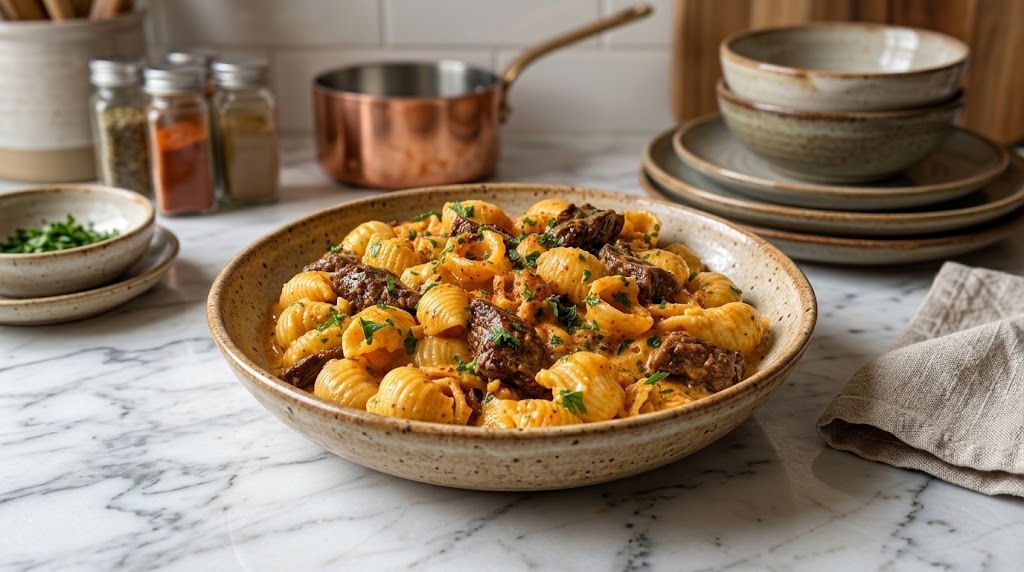
Creamy Paprika Steak Shells
 Recipe by admin1
Tender strips of steak cooked with smoked paprika, garlic, onion, beef broth, heavy cream, and Parmesan, then combined with pasta shells for a rich, comforting one-skillet-style stovetop dinner.
4
servings10
minutes25
minutes580
kcal35
minutesIngredients
12 oz pasta shells
1 lb steak, cut into thin strips
2 tbsp olive oil
1 medium onion, finely chopped
2 cloves garlic, minced
1 tbsp smoked paprika
1 cup heavy cream
1/2 cup beef broth
1/2 cup grated Parmesan cheese
Salt and black pepper to taste
2 tbsp fresh parsley, chopped, for garnish
Directions
- Cook the pasta shells according to the package directions until they reach an al dente texture. Drain them and set aside. If desired, reserve some of the pasta cooking water for adjusting the sauce later.
- Place a large skillet over medium-high heat and add the olive oil. Allow the oil to heat before adding the steak so the meat can brown properly.
- Season the thin steak strips with salt, black pepper, and smoked paprika, making sure the seasoning is distributed evenly.
- Add the seasoned steak to the hot skillet. Cook for approximately 3–4 minutes, or until the pieces are browned. Remove the cooked steak from the skillet and set it aside.
- Add the finely chopped onion and minced garlic to the same skillet. Sauté for about 3 minutes, stirring occasionally, until the onion becomes soft and the garlic is fragrant.
- Pour the beef broth and heavy cream into the skillet. Stir the mixture and bring it to a gentle simmer.
- Add the grated Parmesan cheese and stir until it melts into the sauce and the mixture becomes slightly thicker.
- Return the browned steak to the skillet. Toss it through the creamy paprika sauce so the steak is evenly coated.
- Add the cooked pasta shells and gently mix everything together. Continue heating until the pasta is warmed through and coated with the sauce.
- If the sauce is too thick, gradually stir in a small amount of reserved pasta water until the desired consistency is reached.
- Sprinkle the chopped fresh parsley over the finished pasta and serve immediately.
Notes
- For a spicier version, add a pinch of cayenne or red pepper flakes.
- Whole wheat or gluten-free pasta can be used as needed.
- Reserve some pasta water to loosen the sauce if it becomes too thick.
- For a vegetarian version, substitute the steak with mushrooms or tofu.
Nutrition Facts
- Total number of serves: 1
- Calories: 380kcal
- Fat: 32g
- Carbohydrates: 45g
- Fiber: 3g
- Sugar: 3g
- Protein: 32g


