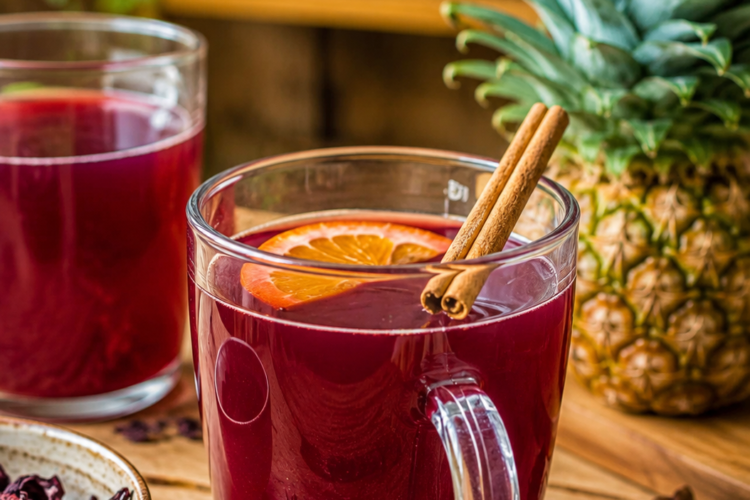
Caribbean Sorrel Tea is a vibrant, ruby-red drink made with dried hibiscus, rose hip, pineapple peel and core, fresh orange juice, ginger, cinnamon, and cloves. Traditional Caribbean sorrel is often served chilled, particularly around Christmas and other festive occasions, but this recipe gives the classic flavor a warmer and cozier presentation.
Served hot, it becomes a fragrant spiced tea with a delicious balance of tart hibiscus, tropical pineapple, bright orange, fresh ginger, and warming spices.
What Is Caribbean Sorrel?
Sorrel is a popular Caribbean name for hibiscus, particularly the dried hibiscus used to make a richly colored festive drink. The dried flowers create a naturally tart infusion with an intense crimson color. Sorrel drink is traditionally sweetened and chilled, but it can also be enjoyed warm.
This recipe focuses on the hot version, making it an excellent choice for cool mornings, chilly evenings, holiday gatherings, or anyone who enjoys homemade herbal-style beverages with bold fruit and spice flavors.
This recipe also has an interesting Caribbean and West African influence. Hibiscus-based drinks are enjoyed in different forms across both regions. In West Africa, hibiscus is commonly used to prepare zobo, while Caribbean sorrel is a familiar festive beverage.
The addition of rose hip, pineapple, orange, ginger, cinnamon, and cloves gives this particular version its own personality. It should be viewed as an inspired combination rather than a strict traditional recipe from one specific region.
Why You Will Enjoy This Hot Sorrel Tea
The appeal of homemade sorrel tea comes from the way several contrasting flavors work together. Hibiscus provides the sharp, fruity base, while rose hip adds another layer of fruitiness. Pineapple peel and core introduce subtle tropical notes, and fresh orange juice brings brightness. Ginger adds a gentle spicy warmth, while cinnamon and cloves give the drink an aromatic quality that makes it especially suitable for the festive season.
Unlike many quick tea recipes, this one is prepared as a large batch. Twelve cups of water produce approximately twelve servings, making it convenient for sharing with family and friends. You can also prepare the tea ahead of time, strain it, refrigerate it, and reheat individual portions whenever you want a warm drink. This makes homemade Caribbean sorrel tea both flavorful and practical.
The Flavor of Dried Hibiscus and Rose Hip
Dried hibiscus is the main ingredient responsible for the beautiful deep-red color of the tea. Its flavor is naturally tart, fruity, and slightly sharp. Because of this natural acidity, sweetener is added at the end of the recipe rather than being measured into the saucepan from the beginning. This allows you to taste the finished infusion and decide exactly how sweet you want it.
Rose hip adds a softer fruity character alongside the hibiscus. The two ingredients complement one another while creating a more interesting flavor than hibiscus alone. When simmered with pineapple, orange, ginger, cinnamon, and cloves, they form a complex infusion that can be enjoyed either lightly sweetened or with a more pronounced sweetness. The result is a drink that remains refreshing despite being served hot.
Using Pineapple Peel and Core
One of the distinctive features of this sorrel tea recipe is the use of pineapple skin and core rather than the pineapple flesh. The peel and core contribute tropical aroma and flavor as they simmer in the water with the other ingredients. Before using them, the pineapple should be thoroughly washed. The recipe also includes an optional soaking step with warm water and apple cider vinegar for about ten minutes, followed by rinsing.
This preparation gives the pineapple pieces a place in the recipe without requiring additional pineapple flesh. Once washed and prepared, the peel and core are added directly to the saucepan with the dried hibiscus, rose hip, spices, and ginger. As the mixture simmers, the pineapple gradually releases its flavor into the tea, adding a subtle tropical background to the tart hibiscus.
Adding Fresh Orange Juice
Fresh orange juice provides a bright citrus note that helps balance the stronger flavors in the tea. Orange works naturally with both hibiscus and pineapple, while its fresh aroma adds another dimension to the finished drink. Instead of adding orange slices as a garnish, this recipe uses the juice directly in the cooking liquid so that it becomes part of the overall infusion.
The orange juice is added along with the water before the mixture comes to a boil. As the tea simmers, the citrus flavor blends with the hibiscus, pineapple, ginger, cinnamon, and cloves. The result is a rounded beverage where no single ingredient has to dominate. The orange also helps give the tea a lively fruity character that works especially well when served warm.
The Role of Ginger, Cinnamon, and Cloves
The spices are what turn this hibiscus infusion into a distinctly warm and festive beverage. Fresh grated ginger contributes a lively heat and aromatic freshness. Cinnamon sticks provide a sweet, woody fragrance, while cloves add a stronger, warming spice note. Together, these ingredients create the kind of aroma associated with festive Caribbean drinks and cozy winter beverages.
The spice flavors become more pronounced during the extended simmering process. If you prefer a stronger overall tea, allowing the mixture to cook closer to the full one-hour-and-thirty-minute time will create a deeper infusion. For a lighter result, the shorter cooking time can be used. The recipe therefore provides some flexibility while retaining the same core ingredients.
How to Make Sorrel Tea at Home
Start by preparing the pineapple peel and core. Place the thoroughly washed pieces in a medium bowl with warm water. If desired, add apple cider vinegar and allow the pineapple to soak for approximately ten minutes. Drain the pieces, rinse them well, and set them aside. This step is simple and can be completed while gathering the remaining ingredients.
Next, place the dried hibiscus, dried rose hip, pineapple peel and core, cloves, cinnamon sticks, and grated ginger into a large saucepan. Add the fresh orange juice and twelve cups of water. Bring the mixture to a boil, allowing the ingredients to begin releasing their color, aroma, and flavor into the water. Once boiling, cover the saucepan and reduce the heat to medium-low.
Simmering the Sorrel Tea
Allow the covered mixture to simmer for one to one-and-a-half hours. The simmering time is important because it gives the dried hibiscus, rose hip, pineapple, ginger, cinnamon, cloves, and orange enough time to infuse the water. A shorter simmer produces a lighter flavor, while a longer simmer creates a stronger and more concentrated drink.
There is no need to rush this stage. Once the mixture has reached a boil, keeping the heat at medium-low provides a steady simmer. The covered saucepan helps retain the aromatic qualities of the ingredients. The longer cooking time is particularly useful if you enjoy a bold sorrel flavor and want the spices to be clearly noticeable in every cup.
Straining the Finished Tea
When the simmering time is complete, remove the saucepan from the stove. Allow the tea to cool until it is warm enough to handle comfortably. The next step is to strain the liquid carefully, removing the hibiscus, rose hip, pineapple pieces, cloves, cinnamon sticks, and ginger. A suitable fine strainer can be used to separate the solids from the finished drink.
After straining, the tea should have a rich crimson or deep red appearance. At this point, taste a small amount before adding sweetener. The natural tartness of hibiscus can vary, so tasting first makes it easier to find the right balance. Once the flavor is where you want it, sweeten the tea and stir thoroughly.
Choosing a Sweetener
This recipe deliberately leaves the amount of sweetener flexible because everyone has a different preference for sweetness. Maple syrup, raw cane sugar, coconut sugar, or another preferred sweetener can be used. The best approach is to begin with a modest quantity and gradually add more until the tart hibiscus flavor is balanced.
Granulated sweeteners should ideally be stirred into the tea while it is still hot. The heat helps them dissolve evenly and prevents undissolved sugar from settling at the bottom of a saucepan, jug, or pitcher. If using a liquid sweetener, stir it thoroughly into the strained tea so that every serving has a consistent flavor.
How to Serve Hot Caribbean Sorrel Tea
For the intended experience, serve the sorrel tea warm or hot in individual cups or mugs. The heat brings out the aromas of cinnamon, cloves, ginger, orange, and pineapple, making the drink particularly inviting on cold days. It can be enjoyed in the morning, as an afternoon beverage, or as part of a festive meal.
The crimson color also makes the tea attractive when served to guests. If preparing it for a gathering, strain the entire batch and transfer it to a suitable heat-safe pitcher or serving container. Sweeten according to taste, then serve while warm. You can also keep the prepared tea refrigerated and warm portions as needed.
Can Sorrel Tea Be Served Cold?
Although this recipe is designed specifically as a hot beverage, the finished sorrel tea can also be served cold. Once the tea has been strained and sweetened, allow it to cool completely before transferring it to a clean jug or pitcher. Refrigerate it and serve chilled when desired. The flavor will still retain the tart hibiscus, tropical pineapple, citrus, and warm spice combination.
Serving it hot, however, is what makes this recipe different from a typical chilled sorrel drink. The warmth emphasizes the fragrance of the spices and creates a comforting drinking experience. If you already enjoy traditional Caribbean sorrel served over ice, this hot version is an easy way to experience those familiar flavors in a completely different form.
Nutritional Qualities of the Ingredients
Hibiscus, rose hip, pineapple, and orange are plant-based ingredients that contribute naturally occurring nutrients and antioxidant compounds to the recipe. Hibiscus and rose hip are particularly known for their tart, fruity flavor and their contribution of vitamin C and other plant compounds. The nutritional values of the finished drink can vary depending on the ingredients, preparation method, and amount of sweetener used.
Pineapple naturally contains bromelain, a group of enzymes found in the fruit and stem. Bromelain has been researched for various biological properties. However, this homemade sorrel tea is best enjoyed as a flavorful beverage rather than considered a treatment for any health condition. Anyone with dietary restrictions or medical concerns should consider their individual needs when choosing ingredients and sweeteners.
How Strong Should Sorrel Tea Be?
The strength of sorrel tea is largely determined by the simmering time. Cooking the mixture for approximately one hour gives you a flavorful infusion, while extending the cooking time to one hour and thirty minutes produces a stronger taste. If you are making the recipe for the first time, the shorter cooking period can be a useful starting point.
The balance can also be adjusted through sweetness. A very tart batch may simply need additional sweetener rather than additional cooking. Likewise, a strongly spiced batch may be balanced by adding sweetness after straining. The important thing is to taste the finished tea and make small adjustments instead of adding a large amount of sweetener at once.
Preparing Sorrel Tea in Advance
This recipe is well suited to make-ahead preparation. Once the tea has been cooked, strained, and sweetened, allow it to cool before placing it in a clean jug or pitcher. Refrigerated sorrel tea can be kept for up to five days according to the recipe notes. Having a prepared batch in the refrigerator makes it easy to enjoy a cup without repeating the entire cooking process.
When you want a hot serving, reheat only the amount you plan to drink. This is especially useful during the festive season when several servings may be required throughout the day. Keeping the remaining tea refrigerated means the rest of the batch is ready for another serving later.
Where to Buy Sorrel and Rose Hip
Dried sorrel, commonly identified as dried hibiscus, can often be found in African and Caribbean grocery stores. Rose hip may also be available from specialty food shops or stores that carry international ingredients. Because ingredient names can vary between regions, looking for “dried hibiscus” as well as “sorrel” can make it easier to find the correct product.
Once you have the dried ingredients, the rest of the recipe uses familiar kitchen ingredients. Fresh pineapple, orange, ginger, cinnamon, and cloves combine with water to create the infusion. The preparation is straightforward, making this a useful recipe for anyone who wants to explore Caribbean-inspired homemade drinks without complicated cooking techniques.
Notes for the Best Caribbean Sorrel Tea
For the best results, thoroughly wash the pineapple before using its skin and core, simmer the ingredients gently, and give the tea enough time to develop its flavor. Taste the strained tea before adding sweetener, because the natural tartness of hibiscus can vary. If you prefer a stronger drink, use the longer simmering time; if you prefer a lighter flavor, use the shorter time.
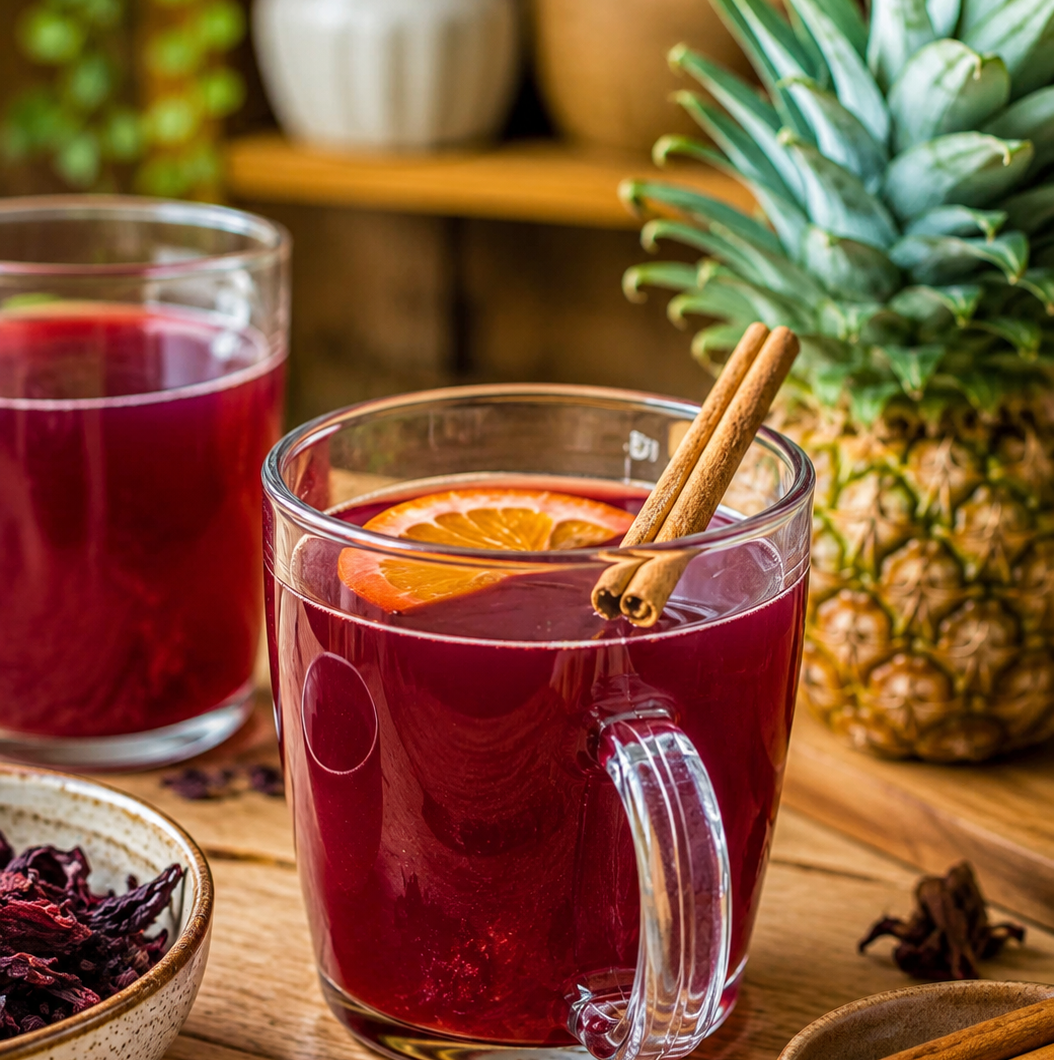
Hot Sorrel Tea (Caribbean Style)
 Recipe by admin1
A vibrant, tart, and aromatic hot sorrel tea made with dried hibiscus, rose hip, pineapple peel and core, orange juice, ginger, cinnamon, and cloves. This Caribbean-inspired herbal drink combines fruity, citrusy, and warming spice flavors and is especially enjoyable served hot during cooler weather.
12
servings20
minutes1
hour30
minutes44
kcal1
hour50
minutesIngredients
1 cup dried hibiscus/sorrel (236g)
¼ cup dried rose hip (30g)
1 pineapple, skin and core only, thoroughly washed
6 cloves
1–2 cinnamon sticks
2 tablespoons grated ginger (14g)
Juice of 1 fresh orange
12 cups water (2.84 litres)
Sweetener of your choice, such as maple syrup, raw cane sugar, coconut sugar, etc.
Directions
- Place the thoroughly washed pineapple peel and core into a medium-sized bowl filled with warm water. Add apple cider vinegar if desired and allow the pineapple pieces to soak for 10 minutes.
- Drain the pineapple pieces, rinse them thoroughly, and set them aside while you prepare the remaining ingredients.
- Add the dried hibiscus/sorrel, dried rose hip, pineapple skin and core, cloves, cinnamon sticks, and grated ginger to a large saucepan.
- Pour the fresh orange juice and 12 cups of water into the saucepan. Bring the mixture to a full boil over the stovetop.
- Once boiling, cover the saucepan with a lid and reduce the heat to medium-low.
- Allow the mixture to simmer for 1 to 1½ hours. A longer simmering time will produce a deeper, stronger sorrel flavor.
- Remove the saucepan from the heat and allow the tea to cool until warm enough to handle comfortably.
- Strain the tea carefully, removing the hibiscus, rose hip, pineapple pieces, cloves, cinnamon, and ginger.
- Sweeten the strained tea according to your preferred level of sweetness.
- Serve immediately while warm. If the tea has been refrigerated, reheat it gently before serving hot.
Notes
- Leftover sorrel tea can be cooled, transferred to a jug or pitcher, and refrigerated.
- Although the drink can be served cold, this recipe is specifically designed to be enjoyed warm or hot.
- Dried rose hip and sorrel/hibiscus can be found at many African and Caribbean grocery stores.
- Refrigerated sorrel tea should keep for up to 5 days.
- Use the recipe as a flexible guide for adjusting the balance of cinnamon, ginger, orange, and other flavors according to preference.
- If using granulated sweetener, stir it into the tea while it is still hot so that it dissolves properly rather than settling at the bottom.
Nutrition Facts
- Calories: 44kcal
- Fat: 0.1g
- Carbohydrates: 11g
- Fiber: 2g
- Sugar: 8g
- Protein: 0.5g


)