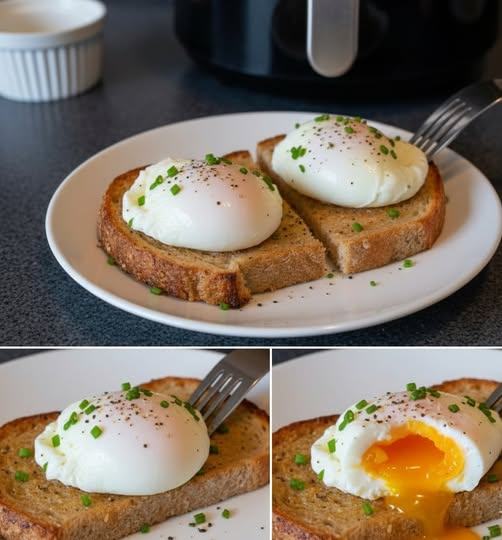
A poached egg looks simple.
One egg.
One pot of water.
A few minutes of cooking.
Yet professional chefs spend years refining the technique because poaching is one of the purest demonstrations of temperature control, timing, movement, texture, freshness, and patience in cooking. Unlike frying, where browning creates flavor, or scrambling, where texture is intentionally loose, poaching exposes every mistake immediately. The water is transparent. The egg is delicate. There is nowhere to hide.
A perfect poached egg has:
- Smooth, tender whites
- No rubbery texture
- No raw transparent slime
- A centered yolk
- A warm flowing interior
- A gentle oval shape
- Clean flavor
- Elegant appearance
This guide explores every aspect of poaching eggs in extraordinary detail, from egg biology to restaurant-level execution.
CHAPTER 1 — WHAT IS A POACHED EGG?
A poached egg is an egg cooked outside its shell in hot liquid, usually water.
Unlike:
- Fried eggs, which cook in fat
- Boiled eggs, which cook inside the shell
- Scrambled eggs, which are mixed
- Omelets, which are folded
Poached eggs are gently suspended in simmering water until the proteins in the white coagulate around the yolk.
The ideal result:
- Fully cooked white
- Soft liquid yolk
- No browning
- No crisp edges
Poaching is considered one of the “pure” egg cooking methods because the egg itself remains the center of attention.
CHAPTER 2 — HISTORY OF POACHED EGGS
Poaching eggs dates back centuries.
Ancient cooks discovered that eggs could be cooked directly in hot water without shells. Over time, European culinary traditions refined the process.
Poached eggs became especially important in:
- French cuisine
- British breakfasts
- Fine hotel dining
- Brunch culture
The rise of Eggs Benedict in the late 19th century helped popularize poached eggs globally.
Modern chefs continue to refine techniques using:
- Thermometers
- Sous vide systems
- Precision timing
- Fine strainers
Despite technological advances, the classic saucepan method remains respected worldwide.
CHAPTER 3 — UNDERSTANDING THE STRUCTURE OF AN EGG
To master poaching, you must understand the anatomy of an egg.
The Shell
The shell protects the interior.
It contains:
- Calcium carbonate
- Thousands of tiny pores
Fresh shells feel rough and firm.
The Membrane
Inside the shell are thin membranes.
These:
- Protect against bacteria
- Help maintain structure
The Egg White (Albumen)
The white consists mostly of:
- Water
- Protein
There are actually multiple layers:
- Thick inner white
- Thin outer white
The thick white helps create beautiful poached eggs.
The thin white causes messy strands.
The Yolk
The yolk contains:
- Fat
- Vitamins
- Minerals
- Lecithin
- Pigments
Yolk color varies depending on the hen’s diet.
A darker yolk does not always mean better quality, but many people prefer its appearance.
CHAPTER 4 — WHY FRESHNESS MATTERS SO MUCH
Freshness is the foundation of poaching.
As eggs age:
- The whites loosen
- Internal structure weakens
- Moisture evaporates
- Air pockets grow
Fresh eggs:
- Stay compact
- Hold shape
- Produce cleaner poached eggs
Old eggs:
- Spread everywhere
- Create feathery strands
- Become difficult to control
THE FLOAT TEST
To estimate freshness:
Very Fresh
Egg sinks flat.
Moderately Fresh
Egg stands upright underwater.
Old Egg
Egg floats.
Floating eggs should usually not be used.
CHAPTER 5 — CHOOSING EGGS
White vs Brown Eggs
Color depends on breed, not quality.
Taste difference:
- Usually minimal
Organic Eggs
May offer:
- Different yolk color
- Different farming standards
Free-Range Eggs
Hens have more movement access.
Pasteurized Eggs
Heated gently for safety.
Can behave slightly differently when poaching.
CHAPTER 6 — EQUIPMENT
Saucepan
Ideal pan:
- Medium width
- Moderate depth
- Heavy bottom
Heavy-bottom pans maintain temperature better.
Slotted Spoon
Allows:
- Safe lifting
- Water drainage
Thin-edged spoons work best.
Thermometer
Useful for precision.
Ideal water:
- 82–90°C
Timer
Critical for consistency.
Even 30 seconds changes texture noticeably.
Fine Mesh Strainer
Professional kitchens often strain eggs first.
This removes watery whites.
CHAPTER 7 — WATER SCIENCE
Water is the cooking environment.
Its movement and temperature determine the final texture.
Calm Water
Best for controlled shape.
Rolling Boil
Bad for poaching because:
- Violent movement tears whites
- Yolk may break
- Shape becomes ragged
Gentle Simmer
Perfect condition.
Look for:
- Tiny bubbles
- Steam
- Slight motion
CHAPTER 8 — THE SCIENCE OF PROTEIN COAGULATION
Egg proteins unfold when heated.
This process is called denaturation.
As proteins heat:
- They unravel
- They bond together
- Structure firms
The white sets before the yolk.
This timing difference allows:
- Firm exterior
- Liquid center
CHAPTER 9 — VINEGAR EXPLAINED
Adding vinegar changes water acidity.
Acid speeds coagulation.
Result:
- Cleaner shape
- Faster setting
HOW MUCH VINEGAR?
Recommended:
- About 1 teaspoon per liter
Too much:
- Adds sour taste
- Toughens texture
TYPES OF VINEGAR
White Vinegar
Most common.
Apple Cider Vinegar
Milder flavor.
Rice Vinegar
Subtle acidity.
Avoid strongly flavored vinegars unless intentionally experimenting.
CHAPTER 10 — SHOULD YOU SALT THE WATER?
Many chefs avoid salting poaching water.
Reason:
Salt can loosen proteins early in cooking.
Preferred approach:
- Salt after cooking
CHAPTER 11 — TEMPERATURE CONTROL
Temperature determines:
- Texture
- Shape
- Timing
TOO HOT
Results:
- Tough whites
- Exploding movement
- Broken eggs
TOO COOL
Results:
- Weak structure
- Excess spreading
- Undercooked whites
CHAPTER 12 — PREPARATION BEFORE COOKING
Preparation improves consistency dramatically.
Step 1 — Gather Equipment
Have ready:
- Pot
- Spoon
- Bowl
- Timer
Step 2 — Crack Egg Into Bowl
Never crack directly into water.
Advantages:
- Detect shell fragments
- Prevent splashing
- Improve control
Step 3 — Optional Straining
Professional method:
- Place egg in fine strainer
- Drain loose whites
- Transfer to ramekin
Produces beautiful compact shape.
CHAPTER 13 — CLASSIC POACHING METHOD
Step 1 — Fill Pot
Use enough water to allow floating.
Usually:
- 2–4 inches deep
Step 2 — Heat Water
Bring near simmer.
Never full boil.
Step 3 — Add Vinegar
Optional but helpful.
Step 4 — Create Gentle Whirlpool
Use spoon carefully.
The motion helps wrap white around yolk.
Too strong:
- Egg tears apart
Step 5 — Add Egg
Slide gently from bowl.
Keep bowl close to water.
Avoid dropping from height.
Step 6 — Cook Carefully
Soft
3 minutes
Medium
4–5 minutes
Firm
6–7 minutes
Step 7 — Remove
Use slotted spoon.
Lift slowly.
Drain excess water.
Step 8 — Dry Bottom
Place briefly on towel.
Prevents watery serving plate.
CHAPTER 14 — VISUAL STAGES OF COOKING
First 30 Seconds
White spreads and begins setting.
One Minute
Outer structure firms.
Two Minutes
White mostly solidifies.
Three Minutes
Classic soft poached stage.
Five Minutes
Yolk thickens significantly.
CHAPTER 15 — TEXTURE PREFERENCES
Different people prefer different yolks.
Runny
Flows immediately when cut.
Jammy
Partially thickened center.
Firm
Fully cooked throughout.
CHAPTER 16 — PROFESSIONAL RESTAURANT METHODS
Restaurants often pre-poach eggs.
Why?
Allows:
- Speed
- Consistency
- Batch cooking
Technique
- Slightly undercook eggs
- Shock in ice water
- Refrigerate
- Reheat before serving
CHAPTER 17 — ICE WATER SHOCKING
Ice water stops cooking instantly.
Benefits:
- Prevents overcooking
- Stabilizes shape
- Allows storage
CHAPTER 18 — REHEATING POACHED EGGS
Use warm—not boiling—water.
Reheat:
- 30–60 seconds
Too much heat ruins yolk texture.
CHAPTER 19 — MULTIPLE EGGS
Cooking many eggs is difficult.
Common Problems
- Eggs colliding
- Temperature drops
- Confusing timing
Solutions
- Use wide pan
- Add eggs slowly
- Label mentally by order added
CHAPTER 20 — TROUBLESHOOTING
Problem: Egg Explodes Into Strands
Cause:
- Old egg
- Boiling water
Fix:
- Fresher eggs
- Lower temperature
Problem: Rubbery White
Cause:
- Overcooking
Fix:
- Shorter cooking time
Problem: Raw White
Cause:
- Water too cool
Fix:
- Slightly hotter water
Problem: Broken Yolk
Cause:
- Rough handling
Fix:
- Gentle transfer
CHAPTER 21 — ALTERNATIVE METHODS
Microwave Poaching
Fast but unpredictable.
Risk:
- Explosion
Plastic Wrap Method
Creates perfect shape.
Disadvantages:
- Less natural texture
Silicone Pod Method
Easy for beginners.
Less traditional texture.
Sous Vide
Extremely precise.
Very popular in modern restaurants.
CHAPTER 22 — SOUS VIDE EGGS
Sous vide uses controlled temperature water baths.
Advantages:
- Perfect consistency
- Repeatability
- Precision
Common temperature:
- Around 63–64°C
Results:
- Custardy yolks
- Silky texture
CHAPTER 23 — SERVING STYLES
Toast
Classic.
Eggs Benedict
With:
- English muffin
- Ham
- Hollandaise
Avocado Toast
Modern brunch favorite.
Salads
Warm yolk becomes dressing.
Ramen
Adds richness to broth.
Grain Bowls
Works beautifully with rice and vegetables.
CHAPTER 24 — SAUCES
Hollandaise
Classic pairing.
Brown Butter
Nutty flavor.
Chili Oil
Adds heat.
Garlic Yogurt
Creamy contrast.
CHAPTER 25 — HERBS AND GARNISHES
Excellent choices:
- Chives
- Dill
- Parsley
- Tarragon
- Basil
CHAPTER 26 — SEASONINGS
- Black pepper
- Smoked paprika
- Aleppo pepper
- Sea salt
- Lemon zest
CHAPTER 27 — NUTRITION
One large poached egg:
- About 70 calories
- Around 6 grams protein
- Rich in vitamins
Poaching uses minimal added fat.
CHAPTER 28 — WHY PEOPLE LOVE POACHED EGGS
People enjoy:
- Silky texture
- Rich yolk
- Elegant appearance
- Lightness
- Versatility
CHAPTER 29 — COMMON BEGINNER FEARS
“The Egg Will Fall Apart”
Normal concern.
Fresh eggs and calm water solve most problems.
“The Yolk Will Break”
Gentle handling reduces risk.
“It Looks Difficult”
Poaching becomes easier quickly with repetition.
CHAPTER 30 — CHEF-LEVEL TIPS
Tip 1 — Use Fresh Eggs
Still the most important rule.
Tip 2 — Strain Eggs
Huge improvement in appearance.
Tip 3 — Control Water
Never aggressively boil.
Tip 4 — Use Timer
Consistency matters.
Tip 5 — Dry Before Serving
Professional presentation.
CHAPTER 31 — THE PERFECT BRUNCH PLATE
Build a luxury brunch:
- Toast sourdough
- Add butter
- Layer sautéed spinach
- Add smoked salmon
- Place poached egg on top
- Spoon hollandaise
- Finish with chives and pepper
Cut yolk dramatically before eating.
CHAPTER 32 — FINAL MASTER SUMMARY
Perfect poached eggs depend on:
- Fresh eggs
- Gentle simmer
- Careful handling
- Proper timing
- Calm movement
- Practice
The process may seem delicate, but every attempt improves your understanding.
Eventually:
- You recognize water temperature by sight
- You judge doneness by touch
- You move eggs confidently
- You create smooth restaurant-quality results naturally
A poached egg is more than breakfast.
It is a study in control, patience, simplicity, and technique.


