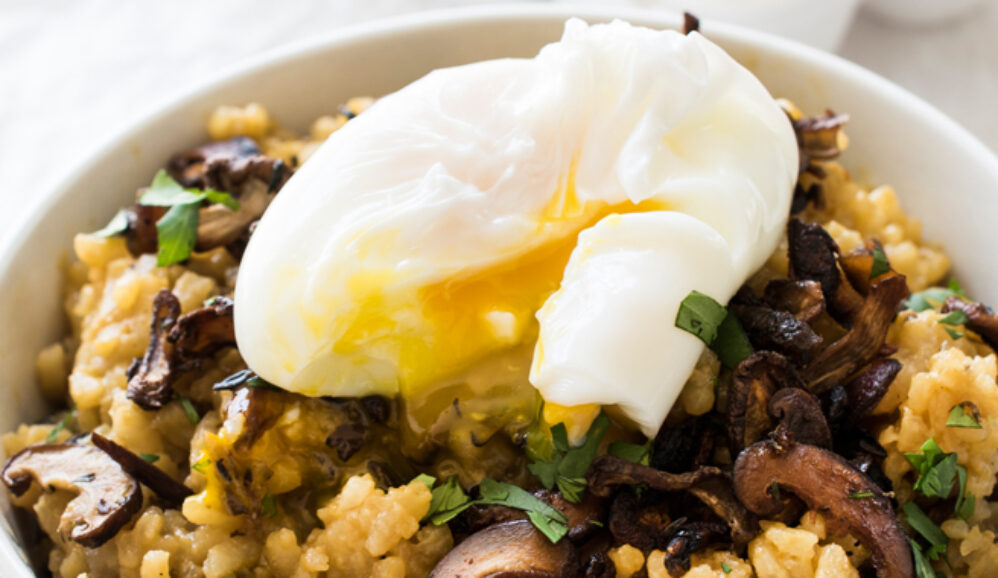
Poached Egg Mushroom Risotto is one of the most celebrated dishes in Italian-inspired cuisine because it transforms a handful of humble ingredients into something exceptionally rich, elegant, and satisfying. The secret lies not in expensive ingredients but in patience, attention to detail, and a deep understanding of how rice, stock, mushrooms, cheese, butter, and eggs interact during cooking. A properly prepared risotto should never be dry, sticky, or overly thick. Instead, it should flow gently across the plate like a soft wave, with each grain of rice maintaining its identity while being surrounded by a creamy sauce formed naturally through the release of starch. The addition of a poached egg elevates the dish further, creating a luxurious sauce when the yolk is broken and mixed into the risotto. This expanded recipe explores every stage of preparation in extraordinary detail, from ingredient selection to final presentation.
The history of risotto stretches back centuries to northern Italy, particularly the regions of Lombardy and Piedmont, where rice cultivation flourished due to abundant water resources. Over time, cooks discovered that certain varieties of rice released starch gradually when cooked, producing a creamy texture unlike any other grain dish. Mushroom risotto became particularly popular because mushrooms were widely available and paired beautifully with the richness of rice and dairy. The addition of poached eggs is a modern enhancement that contributes protein, visual appeal, and a velvety texture that complements the risotto perfectly.
For the most flavorful version of this dish, choose ingredients carefully. Use 1½ cups Arborio rice or Carnaroli rice. Carnaroli is often considered superior because it maintains its structure while releasing enough starch to create exceptional creaminess. Gather 500 to 700 grams of mixed mushrooms, including cremini, button, oyster, shiitake, portobello, or wild mushrooms if available. Different mushroom varieties contribute varying levels of earthiness, sweetness, and texture.
Additional ingredients include 2 tablespoons olive oil, 3 tablespoons unsalted butter, 1 large onion finely diced, 4 garlic cloves minced, ½ cup dry white wine, 6 cups vegetable stock or chicken stock, 1 teaspoon fresh thyme leaves, 1 bay leaf, ½ teaspoon freshly ground black pepper, salt to taste, ¾ cup finely grated Parmesan cheese, 2 tablespoons mascarpone cheese or heavy cream if desired, 4 large fresh eggs, 1 tablespoon white vinegar, fresh parsley, and extra Parmesan for garnish.
Before beginning, organize all ingredients. Professional chefs call this preparation stage mise en place, meaning everything in its place. Since risotto requires constant attention, having ingredients prepared beforehand prevents mistakes and allows for smooth cooking.
Start with the stock. Pour the stock into a medium saucepan and add the bay leaf. Place it over low heat and maintain a gentle simmer throughout the cooking process. Hot stock integrates smoothly into the rice and helps maintain a consistent cooking temperature. This consistency is crucial because sudden temperature changes can negatively affect texture.
The mushrooms deserve special attention. Since mushrooms are composed largely of water, proper cooking techniques are necessary to achieve deep flavor. Begin by inspecting each mushroom carefully. Trim any tough stems and wipe the surfaces clean using a damp cloth. Avoid soaking mushrooms because excess moisture can interfere with browning.
Slice larger mushrooms into even pieces while leaving smaller mushrooms whole or halved. Uniform sizing ensures consistent cooking. Separate mushrooms into groups according to variety if desired, as some types cook faster than others.
Heat a large, wide skillet over medium-high heat. Add the olive oil and one tablespoon of butter. Allow the butter to melt completely before adding mushrooms. Spread the mushrooms in a single layer whenever possible. Resist the temptation to stir constantly. Allowing mushrooms to remain undisturbed promotes caramelization and develops deeper flavor.
As mushrooms cook, they release moisture. Initially the pan may appear wet, but continued cooking evaporates this liquid and allows browning to occur. Stir occasionally while monitoring color development. After approximately ten minutes, the mushrooms should display rich golden-brown edges and concentrated flavor.
Season the mushrooms lightly with salt and pepper. Remove approximately one-third of the mushrooms and reserve them for final garnish. Their attractive appearance and concentrated flavor enhance the finished dish.
Reduce the heat to medium and add another tablespoon of butter to the remaining mushrooms. Stir in the diced onion. Cook slowly for seven to ten minutes. The goal is complete softness rather than browning. Properly cooked onions become sweet and almost melt into the risotto.
Add the garlic and thyme. Stir continuously for one minute. The kitchen should become fragrant with earthy and herbal aromas.
Now add the rice. Pour it directly into the mushroom mixture and stir constantly. Every grain should become coated with butter and oil. Continue cooking for approximately three minutes. During this stage, the rice undergoes subtle changes. The outer surfaces begin to toast while maintaining a firm interior.
Add the white wine slowly. A burst of steam and aroma will rise from the pan. Stir continuously until nearly all visible liquid has disappeared. The wine contributes acidity that balances the richness of butter, cheese, and egg yolk.
The most important phase of risotto preparation now begins. Add one ladle of hot stock to the rice. Stir frequently. As the liquid is absorbed, add another ladle. Continue this gradual process for twenty to thirty minutes.
During cooking, remarkable transformations occur. The rice grains slowly soften while releasing starch molecules into the surrounding liquid. These starches combine with stock and butter to create risotto’s signature creamy consistency. Unlike cream-based sauces, risotto’s creaminess comes primarily from the rice itself.
Pay attention to texture throughout cooking. If too much stock is added at once, the rice may cook unevenly. If insufficient liquid is added, the rice may become dry. Balance is essential.
After fifteen minutes, begin tasting regularly. The rice should gradually lose its hard center while maintaining slight resistance when bitten. This ideal texture is known as al dente.
Continue adding stock until the rice reaches proper consistency. Depending on environmental conditions, rice variety, and heat level, the amount of stock required may vary. Trust texture more than exact measurements.
As the rice approaches completion, remove the bay leaf from the stock. Add final seasoning adjustments. Stir in Parmesan cheese gradually. The cheese melts instantly, enriching both flavor and texture.
Add the final tablespoon of butter. This step, often called mantecatura in Italian cooking, creates extraordinary silkiness. Some chefs also incorporate mascarpone cheese or a small amount of cream for additional richness.
Allow the risotto to rest briefly. During this time, starches settle and flavors harmonize. The finished risotto should remain loose enough to spread naturally across a plate.
While the risotto rests, prepare the poached eggs with care. Fill a saucepan with fresh water. Bring it to a gentle simmer rather than a vigorous boil. Excessive bubbling can break delicate egg whites.
Add vinegar to the water. Crack each egg into a separate small bowl. Using fresh eggs is especially important because fresh whites remain compact during poaching.
Create a gentle whirlpool in the water using a spoon. Carefully slide one egg into the center. The moving water helps wrap the white around the yolk. Cook for approximately three to four minutes for a soft center. For slightly firmer yolks, extend cooking time to five minutes.
Remove each egg carefully with a slotted spoon. Place on paper towels to absorb excess water.
For presentation, warm serving bowls beforehand. Warm bowls help maintain the ideal serving temperature of risotto. Spoon generous portions into the center of each bowl. The risotto should spread gently rather than forming a mound.
Arrange reserved mushrooms artistically across the surface. Place a poached egg on top. Sprinkle with additional Parmesan and freshly chopped parsley.
The final eating experience is crucial. Insert a spoon into the poached egg and allow the yolk to flow slowly across the risotto. Mix gently. The yolk combines with cheese, butter, mushroom juices, and rice starches to create an exceptionally luxurious sauce.
Each bite should contain multiple layers of flavor. The mushrooms contribute earthiness and umami. The rice provides creamy texture and subtle sweetness. The Parmesan adds nuttiness and depth. Fresh herbs contribute brightness. The poached egg delivers richness and velvety smoothness.
For variation, roasted garlic can be incorporated into the risotto base. Truffle oil may be drizzled sparingly before serving. Wild mushrooms can replace cultivated varieties for more intense flavor. Spinach, asparagus, peas, or roasted leeks can also be added. Some cooks incorporate pancetta or smoked bacon for additional savoriness. Others finish the dish with lemon zest to introduce freshness and balance.
A truly exceptional Poached Egg Mushroom Risotto is not merely a rice dish. It is a study in texture, patience, and flavor development. Every stage, from selecting mushrooms to stirring stock into rice and poaching eggs with precision, contributes to a final dish that is comforting enough for a family dinner yet elegant enough for a fine dining experience. When prepared thoughtfully, it becomes a meal that celebrates simple ingredients transformed through careful technique into something remarkably memorable.
