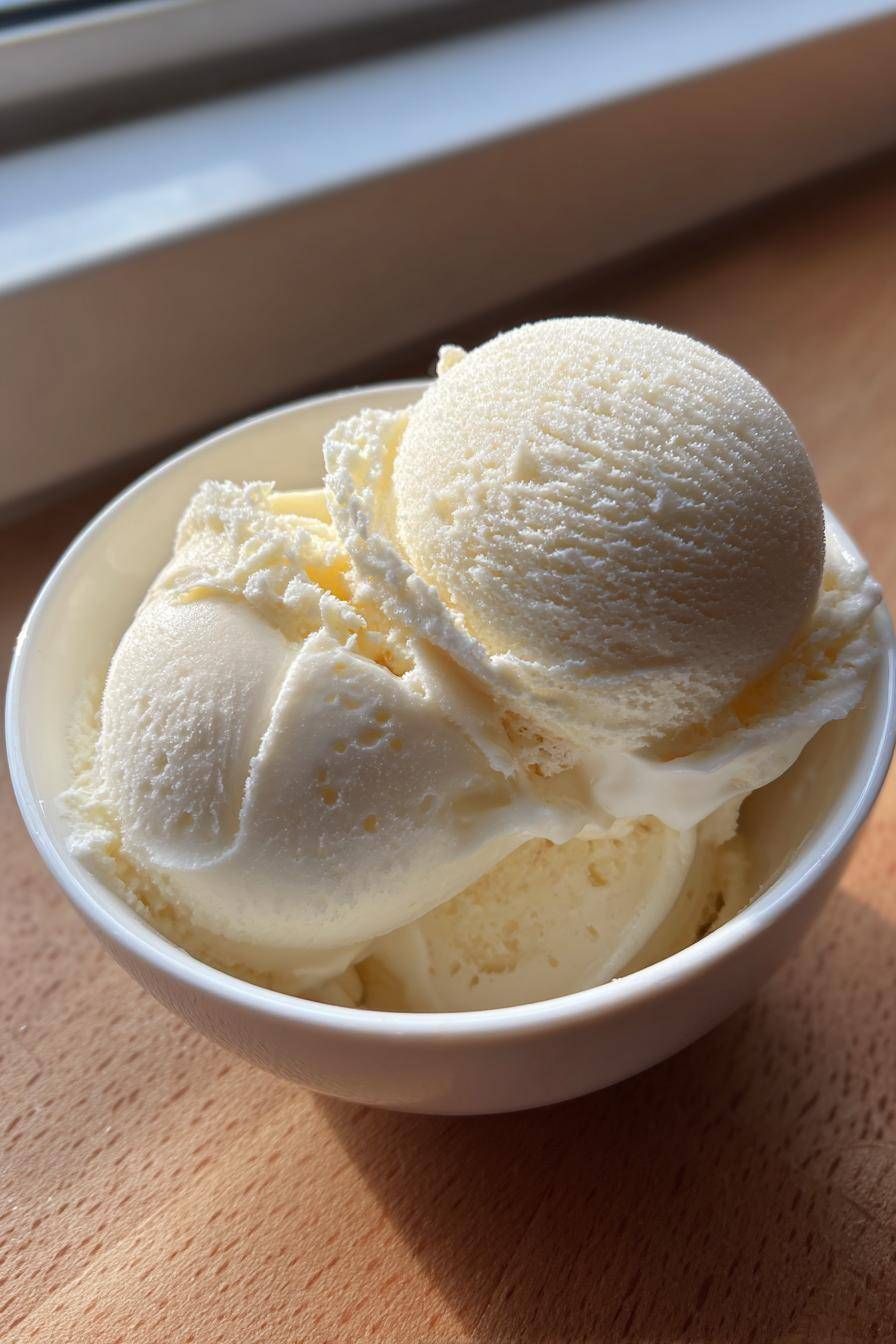
Homemade Vanilla Ice Cream
Homemade vanilla ice cream is one of the most classic frozen desserts in the world. It is creamy, rich, smooth, fragrant with vanilla, and deeply comforting. Making ice cream at home allows complete control over flavor, texture, sweetness, and ingredients. A carefully prepared homemade vanilla ice cream can rival or even surpass many commercial brands because fresh dairy, real vanilla, and proper technique create exceptional flavor.
This detailed guide explains every step thoroughly, including ingredient science, preparation methods, equipment choices, texture improvement, freezing techniques, troubleshooting, flavor variations, storage, serving ideas, and advanced professional tips.
Introduction to Vanilla Ice Cream
Vanilla ice cream appears simple, but achieving a luxurious texture requires understanding balance. Excellent vanilla ice cream should have:
- Smooth consistency
- Creamy mouthfeel
- Balanced sweetness
- Rich dairy flavor
- Aromatic vanilla fragrance
- Slow melting behavior
- Tiny ice crystals
- Stable structure
The main components of vanilla ice cream include:
- Milk
- Cream
- Sugar
- Egg yolks or stabilizers
- Vanilla
- Salt
- Air incorporated during churning
Each ingredient performs a scientific role that influences the final dessert.
History of Vanilla Ice Cream
Vanilla became popular in Europe after explorers brought vanilla beans from Mexico. Over centuries, vanilla ice cream evolved into one of the most beloved desserts globally. Traditional custard-based ice cream originated in French cuisine, where egg yolks were used to enrich frozen creams.
Modern homemade vanilla ice cream usually falls into two categories:
- Custard-style ice cream
- Philadelphia-style ice cream
Custard-style contains egg yolks and is richer.
Philadelphia-style avoids eggs and tastes lighter.
This recipe focuses on the luxurious custard-style version because it provides superior creaminess and depth.
Complete Ingredient List
Dairy Ingredients
Whole Milk – 2 cups
Whole milk provides moisture and balances the heavy cream. Using only cream can make ice cream greasy instead of creamy.
Heavy Cream – 3 cups
Heavy cream contributes fat, which creates smoothness and richness. High-fat ice cream melts more slowly and feels silkier.
Egg Yolks – 6 large
Egg yolks act as natural emulsifiers. They improve texture, prevent iciness, and produce a custard-like richness.
Sweeteners
Granulated Sugar – 3/4 cup
Sugar sweetens the ice cream and lowers the freezing point, helping maintain scoopability.
Optional Honey or Corn Syrup – 2 tablespoons
These ingredients improve texture and reduce crystallization.
Flavoring Ingredients
Vanilla Beans – 2 whole beans
Fresh vanilla beans create deep aromatic flavor.
OR
Pure Vanilla Extract – 2 tablespoons
Use high-quality extract for best results.
Supporting Ingredients
Salt – 1/4 teaspoon
Salt enhances sweetness and intensifies vanilla flavor.
Equipment Needed
Making excellent ice cream becomes easier with proper equipment.
Essential Equipment
- Saucepan
- Mixing bowls
- Whisk
- Fine mesh strainer
- Thermometer
- Ice bath container
- Ice cream maker
- Freezer-safe storage container
Understanding the Science of Ice Cream
Ice cream texture depends on several scientific factors.
Fat Content
Fat coats ice crystals and creates smoothness. Too little fat causes icy texture. Too much fat creates heaviness.
Air Incorporation
Churning introduces air. This process is called overrun.
Homemade ice cream usually contains less air than commercial ice cream, giving richer flavor.
Ice Crystal Formation
Small crystals produce smooth texture.
Large crystals create gritty ice cream.
Rapid freezing helps maintain tiny crystals.
Emulsification
Egg yolks help combine fat and water into a stable mixture.
Step-by-Step Preparation
Step 1: Preparing the Vanilla
If using vanilla beans:
- Place beans on cutting board.
- Slice lengthwise using sharp knife.
- Scrape seeds carefully.
- Reserve both seeds and pods.
The pods contain tremendous flavor and should not be discarded during infusion.
Step 2: Heating the Dairy
In a large saucepan combine:
- Whole milk
- Heavy cream
- Vanilla seeds
- Vanilla pods
- Half the sugar
- Salt
Heat gently over medium-low heat.
Do not boil.
Ideal temperature:
170°F to 175°F
77°C to 79°C
Heating slowly allows vanilla flavor to infuse deeply into the dairy.
Step 3: Preparing the Egg Yolks
In separate bowl:
- Add egg yolks
- Add remaining sugar
Whisk continuously until mixture becomes:
- Pale yellow
- Thickened
- Smooth
This process dissolves sugar and improves custard consistency.
Step 4: Tempering the Eggs
Tempering prevents scrambled eggs.
Slowly pour warm dairy mixture into egg yolks while whisking constantly.
Add gradually:
- One ladle at a time
- Continue whisking continuously
After combining, return entire mixture to saucepan.
Step 5: Cooking the Custard
Cook over low heat while stirring constantly.
Use wooden spoon or silicone spatula.
Important:
Do not boil.
Custard is ready when:
- It thickens slightly
- Coats back of spoon
- Reaches 170°F to 175°F
To test:
Draw finger across spoon coating.
If line remains clear, custard is finished.
Step 6: Straining the Custard
Pour mixture through fine mesh strainer into clean bowl.
This removes:
- Vanilla pods
- Possible cooked egg bits
- Texture imperfections
Smooth custard equals smooth ice cream.
Step 7: Rapid Cooling
Prepare ice bath:
- Large bowl with ice
- Cold water surrounding custard bowl
Cool mixture quickly to prevent bacterial growth and preserve texture.
Step 8: Aging the Base
Cover bowl and refrigerate for:
Minimum:
4 hours
Ideal:
12 to 24 hours
This stage dramatically improves flavor and texture because:
- Fat crystallizes properly
- Proteins hydrate
- Vanilla deepens
- Mixture thickens
Professional ice cream shops often age bases overnight.
Step 9: Churning
Pour chilled mixture into ice cream maker.
Churn according to machine instructions.
Typical churning time:
20 to 35 minutes
During churning:
- Air incorporates
- Mixture freezes gradually
- Texture becomes creamy
Finished consistency resembles soft serve ice cream.
Step 10: Hardening
Transfer churned ice cream into freezer-safe container.
Press parchment paper or plastic wrap directly onto surface.
Freeze for:
4 to 6 hours
This hardening stage stabilizes structure.
Professional Texture Improvement Techniques
Use Milk Powder
Adding 2 tablespoons skim milk powder improves body and reduces iciness.
Add Small Amount of Alcohol
1 tablespoon vodka can improve scoopability because alcohol lowers freezing point.
Do not add too much.
Stabilizers
Professional ice cream often uses stabilizers like:
- Guar gum
- Xanthan gum
- Locust bean gum
Very tiny quantities dramatically improve texture.
Common Mistakes
Mistake 1: Boiling the Custard
Boiling causes curdling and graininess.
Always cook gently.
Mistake 2: Insufficient Chilling
Warm base freezes poorly and forms large crystals.
Always chill thoroughly.
Mistake 3: Over-Churning
Over-churning creates buttery texture.
Stop once consistency resembles soft serve.
Mistake 4: Weak Vanilla Flavor
Use quality vanilla.
Cheap artificial flavoring tastes flat.
Vanilla Selection Guide
Vanilla Beans
Different origins produce different flavors.
Madagascar Vanilla
- Rich
- Creamy
- Traditional
Tahitian Vanilla
- Floral
- Fruity
- Delicate
Mexican Vanilla
- Spicy
- Warm
- Deep
Serving Suggestions
Homemade vanilla ice cream pairs beautifully with many desserts.
Cakes
- Chocolate cake
- Apple pie
- Brownies
- Pound cake
Sauces
- Caramel sauce
- Chocolate fudge
- Berry compote
Fruits
- Strawberries
- Peaches
- Bananas
- Mangoes
Advanced Flavor Variations
French Vanilla
Add extra egg yolks for richer custard.
Vanilla Bean Speckled Ice Cream
Use additional vanilla bean seeds for visible speckles.
Bourbon Vanilla Ice Cream
Add 1 tablespoon bourbon after cooling custard.
Honey Vanilla Ice Cream
Replace part of sugar with honey.
Brown Sugar Vanilla Ice Cream
Use brown sugar for caramel-like flavor.
No Ice Cream Maker Method
If no machine is available:
- Freeze mixture in shallow container.
- Stir vigorously every 30 minutes.
- Repeat 4 to 6 times.
This breaks up ice crystals manually.
Texture will be less smooth but still delicious.
Storage Instructions
Store ice cream in airtight container.
Best consumed within:
1 to 2 weeks
For best texture:
- Keep freezer temperature stable
- Avoid repeated thawing
- Press wrap directly onto surface
Why Homemade Ice Cream Sometimes Becomes Hard
Commercial ice cream contains:
- More air
- Stabilizers
- Emulsifiers
Homemade versions freeze harder because they lack industrial additives.
To soften before serving:
Leave at room temperature:
5 to 10 minutes
Nutritional Overview
Approximate per serving:
- Calories: 320 to 450
- Fat: 22g to 30g
- Carbohydrates: 25g to 35g
- Protein: 4g to 6g
Values vary depending on ingredients.
Expert-Level Ice Cream Secrets
Secret 1: Use Fresh Dairy
Fresh cream dramatically improves flavor.
Secret 2: Chill Equipment
Cold bowls and containers reduce melting during transfer.
Secret 3: Freeze Storage Container First
Pre-frozen containers help harden ice cream faster.
Secret 4: Use Real Vanilla Beans
Real beans create superior aroma impossible to fully duplicate.
Secret 5: Control Ice Crystal Growth
Rapid freezing creates smoother texture.
Complete Recipe Summary
Ingredients
- 2 cups whole milk
- 3 cups heavy cream
- 6 egg yolks
- 3/4 cup sugar
- 2 vanilla beans or 2 tablespoons vanilla extract
- 1/4 teaspoon salt
- Optional:
- 2 tablespoons honey
- 2 tablespoons milk powder
Instructions Summary
- Heat dairy with vanilla.
- Whisk yolks with sugar.
- Temper eggs.
- Cook custard gently.
- Strain mixture.
- Chill completely.
- Age overnight.
- Churn.
- Freeze until firm.
- Serve and enjoy.
Final Thoughts
Homemade vanilla ice cream is both culinary science and comfort food. Patience during chilling, careful custard preparation, and high-quality vanilla create extraordinary results. Although the process takes time, the reward is a deeply flavorful dessert with creamy texture and authentic vanilla aroma.
Mastering vanilla ice cream also builds foundation skills for countless frozen desserts including chocolate ice cream, fruit gelato, caramel ice cream, coffee ice cream, and many other variations. Once the base technique becomes familiar, endless creativity becomes possible in homemade frozen dessert making
