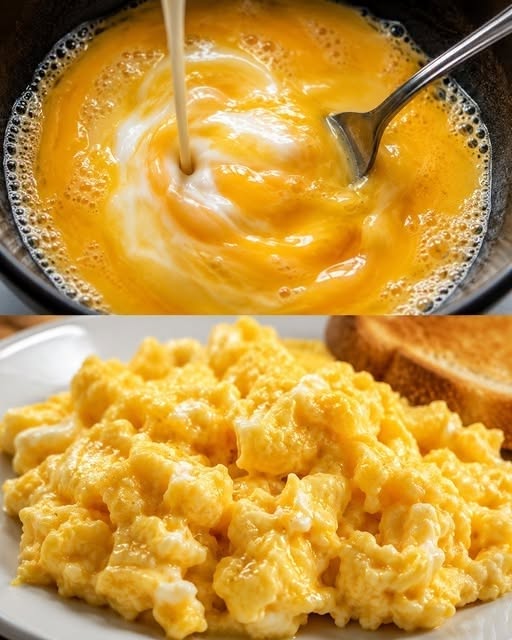
Creamy Soft Scrambled Eggs (Ultra-Detailed Long Recipe)
This recipe is designed to create exceptionally creamy, silky, soft scrambled eggs with a delicate custard-like texture. The secret is gentle heat, constant stirring, and patience. The eggs should never become dry, rubbery, or browned. Instead, they should remain glossy, moist, and luxurious.
Ingredients
6 large eggs
2 tablespoons unsalted butter
3 tablespoons whole milk, heavy cream, or crème fraîche
½ teaspoon fine salt
¼ teaspoon freshly ground black pepper
1 extra tablespoon butter for finishing
Optional additions:
1 tablespoon finely chopped chives
1 tablespoon finely chopped parsley
1 tablespoon grated Parmesan cheese
1 teaspoon cream cheese
A small pinch of smoked paprika
A few drops of truffle oil
Equipment
Medium mixing bowl
Whisk or fork
Nonstick skillet or saucepan
Silicone spatula
Small serving plate
Preparation Step 1: Selecting the Eggs
For the best texture and flavor, use fresh, high-quality eggs. Fresh eggs contain thicker whites and richer yolks, which contribute to a creamier final result. If possible, allow the eggs to sit at room temperature for about 15 to 20 minutes before cooking. Room-temperature eggs cook more evenly and blend more smoothly with the butter.
Preparation Step 2: Cracking and Mixing
Crack all six eggs into a medium mixing bowl. Inspect carefully for shell fragments and remove any pieces.
Add the milk, cream, or crème fraîche. Add the salt and pepper.
Whisk thoroughly. Continue whisking for at least one full minute. The goal is to completely combine the yolks and whites into a uniform mixture. You should no longer see streaks of egg white.
During whisking, air becomes incorporated into the eggs. This helps create a lighter and softer texture during cooking. The mixture should appear slightly frothy and pale yellow.
Preparation Step 3: Preparing the Pan
Place a nonstick skillet or saucepan on the stove.
Set the heat to very low.
Add 2 tablespoons of butter.
Allow the butter to melt slowly. Do not let it brown. Brown butter introduces nutty flavors that can overpower the delicate creaminess of soft scrambled eggs.
Once melted, swirl the butter around the pan so the entire cooking surface is lightly coated.
Cooking Step 1: Adding the Eggs
Pour the whisked egg mixture into the pan.
Do not increase the heat.
The eggs should begin warming gently rather than immediately sizzling.
If you hear aggressive frying sounds, the heat is too high.
Cooking Step 2: Gentle Stirring
Using a silicone spatula, slowly stir the eggs.
Scrape along the bottom of the pan continuously.
Move the spatula in broad sweeping motions.
Pull the eggs from the edges toward the center.
As the eggs begin to thicken, continue stirring steadily.
The objective is to form extremely small, delicate curds rather than large chunks.
Patience is important. Soft scrambled eggs may take several minutes longer than traditional scrambled eggs.
Cooking Step 3: Temperature Control
As the eggs cook, remove the pan from the heat for 15 to 20 seconds whenever the eggs appear to be thickening too quickly.
Return the pan to the heat and continue stirring.
Many professional chefs repeatedly move the pan on and off the heat throughout the cooking process. This technique prevents overheating and allows precise control over the texture.
The eggs should remain glossy and moist throughout cooking.
Cooking Step 4: Building Creaminess
When the eggs are approximately 70 percent cooked and still visibly loose, add the remaining tablespoon of butter.
Continue stirring gently.
The butter melts into the eggs, creating an exceptionally rich and silky consistency.
If using cream cheese, add it at this stage and stir until fully incorporated.
Cooking Step 5: Reaching the Perfect Texture
The eggs are finished when they appear slightly undercooked.
They should resemble a soft custard rather than firm scrambled eggs.
The surface should shine.
The curds should be small, tender, and moist.
Remember that eggs continue cooking from residual heat even after leaving the stove.
If you wait until they look fully cooked in the pan, they will become overcooked on the plate.
Finishing Step
Immediately transfer the eggs to a serving plate.
Do not leave them in the hot pan.
The retained heat of the pan can quickly turn perfect soft scrambled eggs into dry eggs.
Taste and adjust seasoning if necessary.
Optional Flavor Variations
Classic French Style
Replace the milk with crème fraîche.
Cook very slowly.
Stir continuously until the eggs resemble thick custard.
Fold in a small amount of extra crème fraîche before serving.
Extra Rich Style
Use heavy cream instead of milk.
Finish with an additional teaspoon of butter.
Add a tablespoon of grated Parmesan cheese.
Herb Style
Mix in chopped chives and parsley immediately before serving.
The herbs provide freshness while preserving the creamy texture.
Cheese Lover’s Style
Add cream cheese during cooking.
Finish with Parmesan or Gruyère cheese.
Stir until smooth and velvety.
Serving Suggestions
Serve on warm buttered toast.
Spoon over toasted sourdough bread.
Pair with smoked salmon.
Serve alongside sautéed mushrooms.
Add sliced avocado.
Use as a filling for breakfast sandwiches.
Serve with roasted tomatoes and fresh herbs.
Common Mistakes and How to Avoid Them
Using high heat
High heat causes rapid protein tightening, producing dry and rubbery eggs.
Not stirring enough
Insufficient stirring creates large curds and uneven cooking.
Leaving eggs in the pan after cooking
Residual heat continues cooking the eggs long after the stove is turned off.
Over-seasoning
Soft scrambled eggs have a delicate flavor. Excessive seasoning can overwhelm them.
Cooking until firm
The eggs should still look slightly loose when removed from the heat.
Professional Chef Tips
Cook low and slow.
Use plenty of butter.
Keep the eggs moving constantly.
Remove from heat before they seem done.
Serve immediately.
Use a silicone spatula for smooth stirring.
Never allow browning on the bottom of the pan.
For restaurant-quality softness, alternate between heat and no heat during cooking.
Final Result
When prepared correctly, the eggs should be pale yellow, glossy, creamy, and incredibly tender. Each spoonful should feel rich and smooth, almost like a savory custard, with delicate curds that melt in the mouth rather than requiring chewing. The texture should be luxurious, moist, and silky from the first bite to the last.
