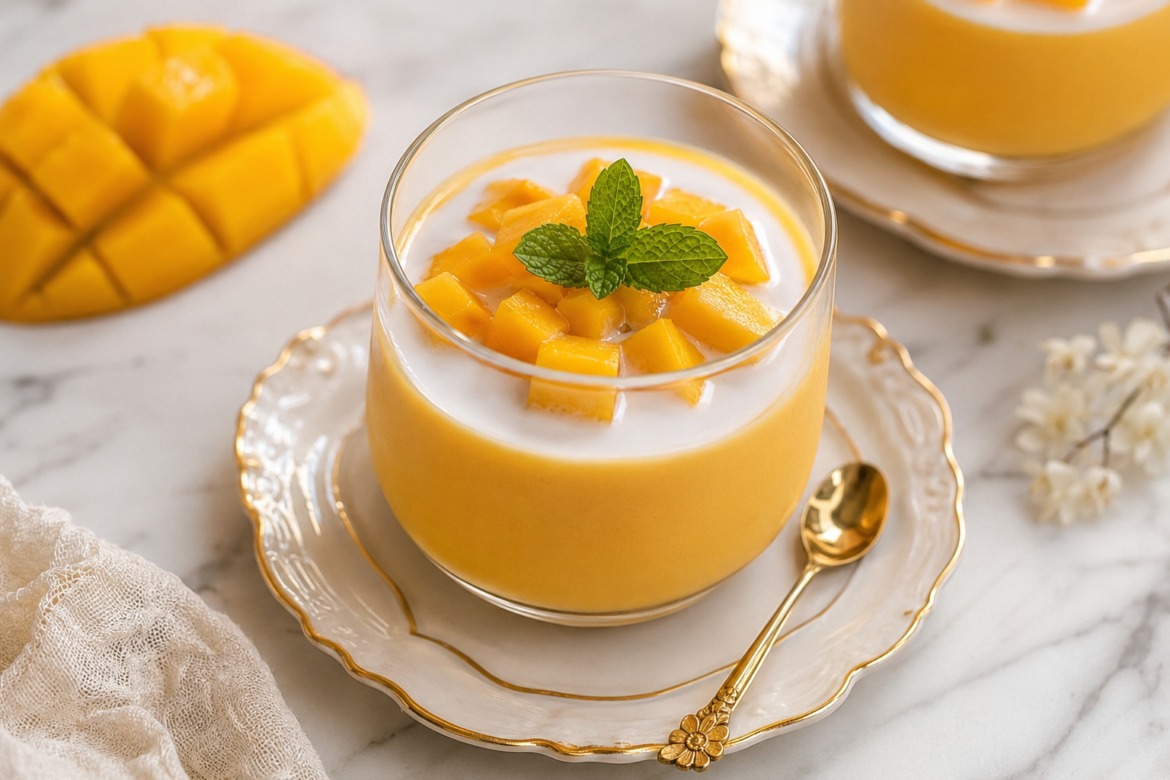
Chinese Coconut Milk Mango Pudding Easy Dessert Recipe
Chinese coconut milk mango pudding is one of the most delicious and refreshing Asian desserts. It is famous for its creamy texture, tropical mango flavor, and soft silky consistency. This dessert is commonly served in Chinese restaurants, cafes, and family gatherings because it is light, elegant, and very easy to prepare. The combination of ripe mangoes and coconut milk creates a rich and smooth pudding that feels cool and refreshing, especially during hot weather.
This recipe is perfect for beginners because it does not require baking and only needs simple ingredients. The pudding becomes soft, creamy, and slightly jiggly after chilling in the refrigerator. Many people enjoy serving it after dinner because it is sweet without being too heavy. It is also popular during Ramadan, Eid, birthdays, tea parties, and summer events.
Preparation Time
Preparation time is about 25 minutes. Chilling time is about 4 to 6 hours. Total time is approximately 6 hours including refrigeration.
Servings
This recipe makes around 6 medium dessert cups or 1 large pudding mold.
Ingredients
3 large ripe mangoes
1 cup coconut milk
1 cup whole milk
1/2 cup heavy cream
1/2 cup sugar
2 tablespoons gelatin powder
1/2 cup warm water
1 teaspoon vanilla extract
1 small pinch of salt
Ingredient Guide
Mangoes are the most important ingredient in this dessert. Always use ripe, sweet, and juicy mangoes because they provide the main flavor and natural sweetness. Mangoes with deep yellow or orange flesh work best. Chaunsa, Sindhri, Alphonso, Honey mangoes, and Ataulfo mangoes are excellent choices. Avoid sour or fibrous mangoes because they can ruin the smooth texture of the pudding.
Coconut milk gives the pudding its rich tropical flavor. Full-fat coconut milk is preferred because it creates a creamier and smoother texture. Thin coconut milk may make the pudding watery and less flavorful.
Whole milk balances the richness of coconut milk while heavy cream adds softness and luxury to the pudding. If you prefer a lighter version, you may reduce the cream slightly, but the pudding will be less rich.
Gelatin helps the pudding set properly and creates the classic soft and jiggly texture. If you prefer a vegetarian version, agar agar powder can be used instead of gelatin.
Equipment Needed
Blender
Saucepan
Mixing bowl
Whisk
Fine strainer
Dessert cups or molds
Refrigerator
Method
Wash the mangoes properly and peel them carefully. Cut the mango flesh into small cubes and keep a few cubes aside for decoration later. Put the remaining mango pieces into a blender and blend until completely smooth. If the puree contains fibers, strain it through a fine sieve to achieve a silky texture. The puree should look thick, smooth, and glossy.
Take a small bowl and pour warm water into it. Sprinkle gelatin powder slowly over the warm water and let it sit for about 5 to 10 minutes. This process allows the gelatin to absorb water and soften properly.
In a saucepan, combine coconut milk, whole milk, heavy cream, sugar, and a small pinch of salt. Heat the mixture on low to medium flame while stirring continuously. Do not boil the mixture because excessive heat can affect the creamy texture. Continue stirring until the sugar dissolves completely.
Add the softened gelatin into the warm milk mixture and whisk until fully dissolved. Make sure there are no lumps remaining. For extra smoothness, strain the mixture once again if necessary.
Allow the milk mixture to cool slightly before combining it with the mango puree. Slowly pour the milk mixture into the mango puree while stirring continuously. Add vanilla extract and mix until everything becomes smooth and creamy.
Pour the pudding mixture into dessert cups, bowls, or molds. Tap the containers gently on the counter to remove air bubbles. Place the pudding into the refrigerator and chill for at least 4 hours or preferably overnight for the best texture.
Once the pudding has fully set, decorate with fresh mango cubes, coconut flakes, whipped cream, mint leaves, or a light drizzle of evaporated milk. Serve cold for the best taste and texture.
Tips for Perfect Mango Pudding
Always use ripe and naturally sweet mangoes because artificial sweetness cannot replace fresh mango flavor. Straining the puree helps create restaurant-style silky pudding. Do not boil the milk mixture because overheating can damage both flavor and texture. Chilling overnight improves the consistency and enhances the overall taste.
Texture of Perfect Mango Pudding
A perfect Chinese mango pudding should be smooth, creamy, soft, slightly jiggly, and easy to melt in the mouth. It should not be rubbery, grainy, or too firm.
Flavor Variations
You can add cooked sago pearls to make mango sago pudding. Lychee pieces can be added for a floral fruity flavor. Some people also add lime zest or pandan essence for a Thai-inspired variation. A vegan version can be prepared using coconut cream and agar agar instead of dairy and gelatin.
Serving Ideas
This dessert looks beautiful when served in transparent glasses because the bright yellow mango color becomes more attractive. It can also be served in small party cups for gatherings and celebrations. Many Chinese restaurants pour chilled evaporated milk around the pudding before serving, which creates an extra creamy and luxurious taste.
Storage Instructions
Keep the pudding covered in the refrigerator for up to 3 days. Freezing is not recommended because it can damage the soft and creamy texture.
Nutritional Information
Each serving contains approximately 250 to 320 calories depending on the ingredients used. It also contains carbohydrates, healthy fats, and a small amount of protein.
Chinese coconut milk mango pudding is loved because it is refreshing, creamy, fruity, and elegant while still being simple to prepare. The tropical combination of mango and coconut milk creates a dessert that feels both rich and light at the same time. It is perfect for summer evenings, dinner parties, family gatherings, or whenever you want a cool and delicious homemade dessert.
