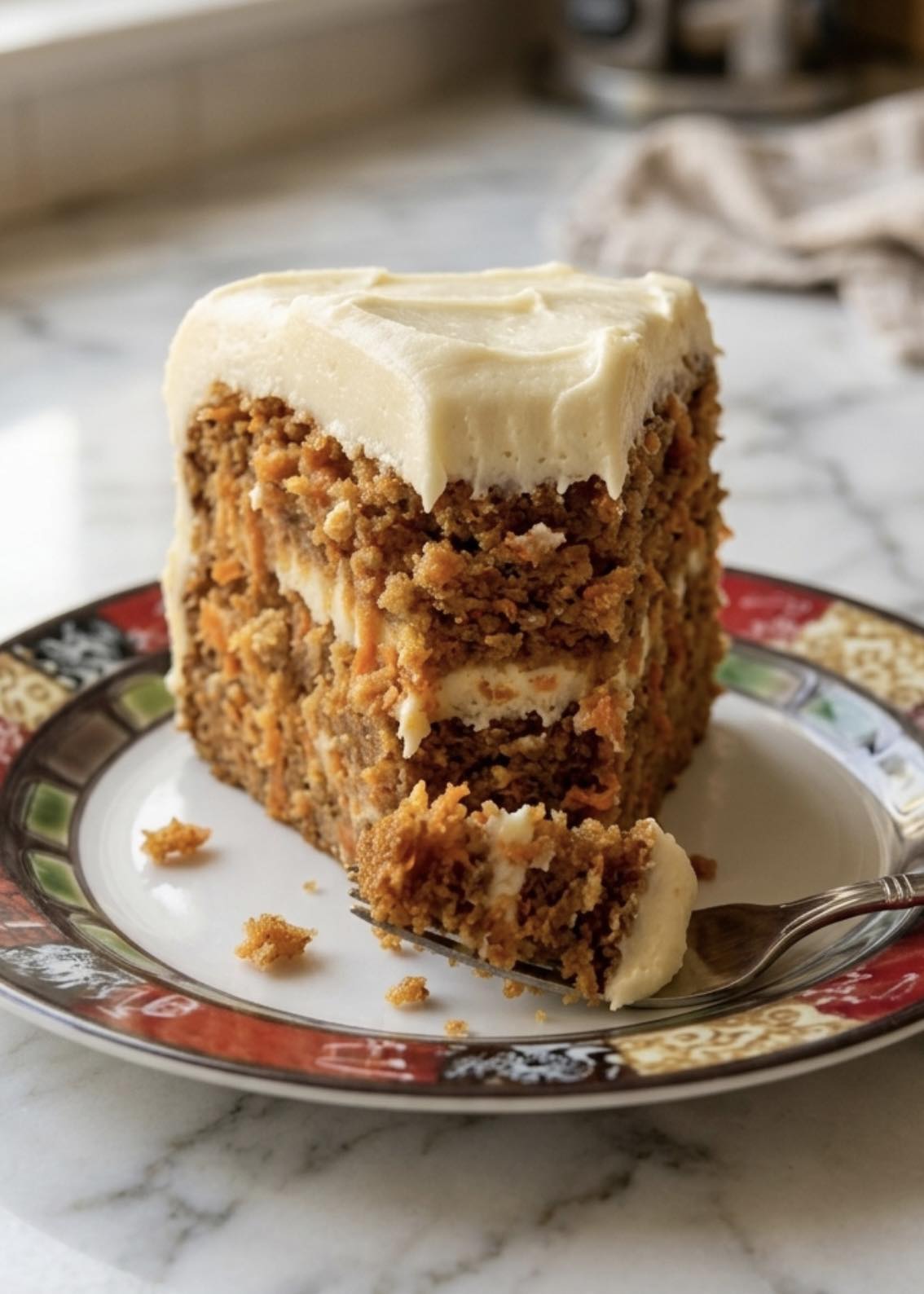
A rich, moist, deeply flavorful carrot walnut cake with crushed pineapple is one of the most beloved traditional homemade cakes because it combines warm spices, natural sweetness, texture, and tenderness in every slice. The carrots provide moisture and earthy sweetness, the walnuts add crunch and nuttiness, and the pineapple creates an exceptionally soft crumb while giving subtle fruity brightness. This version is written in detailed form with extensive explanation for every stage so the cake turns out consistently excellent even for beginners.
Introduction to the Cake
Carrot cake became widely popular because it transforms simple pantry ingredients into a luxurious dessert. Unlike sponge cakes that rely mostly on eggs for structure, carrot cake uses oil, fruits, and vegetables to create a dense but soft texture that stays moist for days.
Adding pineapple improves several qualities:
- Keeps the cake extra moist
- Adds natural sweetness
- Prevents dryness
- Balances spice flavors
- Helps the crumb remain soft after refrigeration
Walnuts contribute:
- Toasted nut flavor
- Crunchy contrast
- Richness
- Traditional bakery-style texture
This cake can be served:
- Plain
- With cream cheese frosting
- With buttercream
- With whipped cream
- As a layer cake
- As a sheet cake
- As cupcakes
- As a loaf cake
Yield
This recipe makes:
- Two 9-inch round cake layers
or
- One large 9×13-inch cake
or
- Approximately 24 cupcakes
Preparation Time
- Ingredient preparation: 30 minutes
- Batter preparation: 25 minutes
- Baking time: 35–45 minutes
- Cooling time: 1–2 hours
- Frosting and decorating: 30 minutes
Total estimated time: About 3 hours
Equipment Needed
- Large mixing bowls
- Medium bowl
- Whisk
- Electric mixer or hand whisk
- Rubber spatula
- Measuring cups
- Measuring spoons
- Box grater or food processor
- Cake pans
- Parchment paper
- Cooling rack
- Sifter
- Offset spatula for frosting
Ingredients for the Cake
Dry Ingredients
- 2½ cups all-purpose flour
- 2 teaspoons baking powder
- 1 teaspoon baking soda
- ½ teaspoon salt
- 2 teaspoons ground cinnamon
- ½ teaspoon ground nutmeg
- ¼ teaspoon ground cloves
- ¼ teaspoon ground ginger
Wet Ingredients
- 1¼ cups vegetable oil
- 1 cup brown sugar
- 1 cup granulated sugar
- 4 large eggs
- 2 teaspoons vanilla extract
Main Additions
- 3 cups finely grated carrots
- 1 cup crushed pineapple, lightly drained
- 1 cup chopped walnuts
- ½ cup raisins (optional)
Ingredient Details and Why They Matter
Flour
All-purpose flour provides the structure of the cake. Too much flour creates dryness, so measuring accurately is important. Spoon flour into measuring cups instead of scooping directly from the bag.
Baking Powder and Baking Soda
Both leavening agents work together.
Baking soda reacts with acidic ingredients such as pineapple and brown sugar. Baking powder provides additional lift for a softer texture.
Cinnamon
Cinnamon is the dominant spice flavor in carrot cake. It creates warmth and bakery aroma.
Nutmeg, Cloves, and Ginger
These spices deepen flavor complexity. Use moderate amounts because too much can overpower the cake.
Oil
Oil is preferred over butter in carrot cake because it keeps the crumb moist even after refrigeration. Neutral oils such as canola or sunflower work best.
Brown Sugar
Brown sugar adds caramel depth and moisture due to its molasses content.
Eggs
Eggs bind ingredients together and contribute richness and structure.
Carrots
Freshly grated carrots are essential. Pre-shredded carrots are often dry and thick.
Use the fine side of a grater for best texture.
Pineapple
Crushed pineapple should be lightly drained but not completely dry. Some juice is beneficial for moisture.
Walnuts
Walnuts should be chopped into medium pieces. Tiny pieces disappear into the batter while oversized chunks can sink.
Toasting walnuts before adding them creates superior flavor.
Preparing the Walnuts
Toasting Method
- Preheat oven to 350°F (175°C).
- Spread walnuts on a baking tray.
- Toast for 7–10 minutes.
- Stir once halfway through.
- Cool completely before adding to batter.
Toasted walnuts have deeper flavor and improved crunch.
Preparing the Carrots
Best Technique
- Wash and peel carrots.
- Trim ends.
- Grate finely using a box grater.
Avoid large thick shreds because they may remain slightly firm after baking.
Fresh carrots contain more moisture and sweetness than packaged shredded carrots.
Preparing the Pineapple
Use canned crushed pineapple or freshly crushed pineapple.
If using canned pineapple:
- Open can.
- Pour into sieve.
- Let excess liquid drain for several minutes.
- Do not squeeze completely dry.
Too much liquid can make the cake dense.
Preparing the Cake Pans
- Grease pans thoroughly.
- Line bottoms with parchment paper.
- Grease parchment.
- Dust lightly with flour.
This prevents sticking and helps smooth release.
Step-by-Step Cake Batter Instructions
Step 1: Preheat the Oven
Preheat oven to:
350°F (175°C)
Proper oven temperature ensures even rising.
Step 2: Combine Dry Ingredients
In a large bowl whisk together:
- Flour
- Baking powder
- Baking soda
- Salt
- Cinnamon
- Nutmeg
- Cloves
- Ginger
Whisking distributes leavening evenly.
Step 3: Combine Sugars and Oil
In another large bowl combine:
- Oil
- Brown sugar
- Granulated sugar
Whisk until smooth.
Unlike butter cakes, carrot cake batter does not require creaming.
Step 4: Add Eggs
Add eggs one at a time.
Mix well after each addition.
This helps create smooth emulsification and stable batter consistency.
Step 5: Add Vanilla
Stir in vanilla extract.
Vanilla softens spice intensity and rounds out flavors.
Step 6: Fold in Carrots and Pineapple
Add:
- Grated carrots
- Crushed pineapple
Mix gently until evenly distributed.
The batter will become thick and textured.
Step 7: Add Dry Ingredients
Gradually add dry ingredients to wet ingredients.
Mix gently until no visible flour remains.
Do not overmix because excessive gluten development can create toughness.
Step 8: Add Walnuts and Raisins
Fold in:
- Chopped walnuts
- Raisins if using
Distribute evenly throughout batter.
Understanding Batter Texture
The batter should be:
- Thick
- Moist
- Spoonable
- Slightly textured
It should not be:
- Runny
- Dry
- Overly stiff
Filling the Pans
Divide batter evenly between prepared pans.
Use a spatula to smooth tops.
Tap pans gently on counter to remove large air pockets.
Baking Instructions
Bake at:
350°F (175°C)
Baking Times
- Round layers: 35–40 minutes
- Sheet cake: 40–45 minutes
- Cupcakes: 20–24 minutes
How to Know the Cake Is Done
The cake is ready when:
- Center springs back lightly
- Toothpick inserted comes out mostly clean
- Edges pull slightly from pan
- Top appears golden brown
Avoid overbaking because carrot cake can dry out.
Cooling Instructions
- Cool in pans for 15 minutes.
- Run knife around edges.
- Remove from pans carefully.
- Transfer to cooling rack.
- Cool completely before frosting.
Warm cake can melt frosting.
Cream Cheese Frosting
Ingredients
- 8 ounces cream cheese, softened
- ½ cup unsalted butter, softened
- 4 cups powdered sugar
- 2 teaspoons vanilla extract
- Pinch of salt
Frosting Method
Step 1
Beat cream cheese and butter until smooth and fluffy.
Step 2
Add powdered sugar gradually.
Mix slowly at first to avoid mess.
Step 3
Add vanilla and salt.
Beat until creamy and spreadable.
Frosting the Cake
Layer Cake Method
- Place first layer on serving plate.
- Spread frosting evenly.
- Add second layer.
- Frost top and sides.
- Smooth using offset spatula.
Decorating Ideas
You may decorate with:
- Chopped walnuts
- Crushed walnuts around edges
- Carrot decorations made from frosting
- Pineapple pieces
- Cinnamon dusting
Flavor Variations
Coconut Version
Add:
- 1 cup shredded coconut
This creates tropical flavor.
Raisin Version
Add golden or dark raisins for sweetness and chewiness.
Spiced Version
Increase spice quantities slightly and add cardamom.
Maple Version
Replace part of sugar with maple syrup.
Reduce pineapple liquid slightly if doing this.
Storage Instructions
Room Temperature
Unfrosted cake:
- Up to 2 days covered tightly
Refrigeration
Frosted cake:
- Up to 5 days refrigerated
Bring slices to room temperature before serving for best flavor.
Freezing
Wrap unfrosted layers tightly.
Freeze up to 3 months.
Thaw overnight in refrigerator before frosting.
Common Mistakes and Solutions
Problem: Dense Cake
Possible causes:
- Too much flour
- Overmixing
- Excess pineapple liquid
Problem: Dry Cake
Possible causes:
- Overbaking
- Insufficient oil
- Too little pineapple
Problem: Cake Sinks in Center
Possible causes:
- Underbaking
- Oven door opened too early
- Excess moisture
Problem: Frosting Too Soft
Possible causes:
- Butter too warm
- Cream cheese overheated
Chill frosting briefly before using.
Serving Suggestions
This cake pairs beautifully with:
- Coffee
- Tea
- Milk
- Cinnamon latte
- Vanilla ice cream
Serve slightly chilled or at room temperature.
Advanced Baking Notes
Why Oil Cakes Stay Moist Longer
Butter solidifies when chilled while oil remains liquid. This is why carrot cakes made with oil remain softer after refrigeration.
Importance of Acid Balance
Pineapple contributes acidity which reacts with baking soda to improve tenderness and rise.
Why Resting Improves Flavor
Many bakers find carrot cake tastes even better the next day because spices and moisture redistribute throughout the crumb.
Professional Bakery Tips
Use Fresh Spices
Old spices lose aroma quickly. Fresh cinnamon and nutmeg dramatically improve flavor.
Weigh Ingredients for Accuracy
Professional bakers prefer gram measurements for consistency.
Chill Before Slicing
Slightly chilled cake slices more cleanly.
Toast Nuts Separately
Never add raw cold walnuts directly if maximum flavor is desired.
Approximate Nutrition Per Slice
Values vary depending on frosting thickness.
- Calories: 550–650
- Carbohydrates: 65g
- Fat: 30g
- Protein: 6g
- Sugar: 45g
Final Notes
A carrot walnut cake with pineapple is loved because it balances:
- Moisture
- Texture
- Sweetness
- Warm spice
- Nutty crunch
- Creamy frosting
The combination of carrots, pineapple, walnuts, brown sugar, and spices creates a cake that feels homemade, comforting, and luxurious at the same time. The cake improves after resting, stores beautifully, and is suitable for birthdays, tea gatherings, holiday tables, and celebration desserts.
Careful ingredient preparation, gentle mixing, proper baking time, and patient cooling are the keys to achieving a bakery-quality result with soft crumb, rich flavor, and excellent texture


