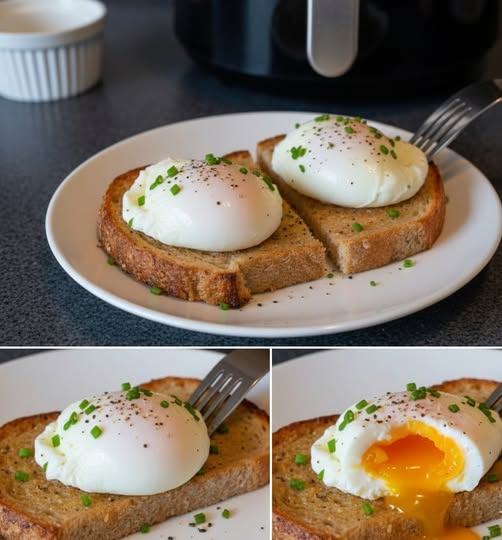
Air fryer poached eggs are a simple way to make soft, delicate eggs with runny yolks and tender whites without standing over a stove. The air fryer creates gentle heat that cooks the eggs evenly while keeping the texture smooth. This method works especially well for breakfast, brunch, sandwiches, grain bowls, avocado toast, salads, or quick protein meals. The recipe below is intentionally very detailed and extensive so you can follow every part carefully and understand how to get the best result every time.
Ingredients
2 large eggs
1 cup hot water
1 teaspoon white vinegar or apple cider vinegar
1 teaspoon butter or oil for greasing ramekins
Optional seasoning
Salt
Black pepper
Red chili flakes
Paprika
Dried herbs
Fresh parsley
Optional serving ideas
Toast
Avocado
Sauteed spinach
Smoked salmon
Turkey slices
Rice bowls
Roasted vegetables
Equipment Needed
Air fryer
2 small ramekins or oven-safe bowls
Kettle or pot for heating water
Tongs or heat-safe gloves
Small spoon
Paper towel
Preparation Time
Preparation time: 5 to 8 minutes
Cooking time: 6 to 10 minutes depending on yolk preference
Total time: approximately 15 minutes
Understanding How Air Fryer Poached Eggs Work
Traditional poached eggs are usually cooked in simmering water on a stovetop. In an air fryer, the egg sits inside a small ramekin with hot water. The circulating hot air gently heats the water and cooks the egg slowly. This creates a similar effect to stovetop poaching but with less movement and less chance of breaking the egg.
The vinegar helps the egg whites stay together and improves the shape of the egg. The hot water also prevents sudden temperature drops, helping the egg cook more evenly.
Step 1: Preheat the Air Fryer
Preheat the air fryer to 350 degrees Fahrenheit or 175 degrees Celsius for about 3 to 5 minutes.
Preheating is important because it stabilizes the cooking temperature. Starting with a cold air fryer may lead to uneven cooking where the whites remain raw while the yolk overcooks.
Different air fryer brands cook differently. Basket-style air fryers often cook slightly faster because the heating element is closer to the food. Oven-style air fryers may need an extra minute.
Step 2: Prepare the Ramekins
Lightly grease each ramekin with butter or oil. This prevents sticking and helps the egg slide out smoothly after cooking.
Add about half a cup of hot water to each ramekin. The water should be hot but not violently boiling.
Stir a few drops of vinegar into the water.
Why this matters:
Greasing prevents torn whites
Hot water speeds up cooking
Vinegar improves egg structure
Small ramekins create deeper water, helping the egg hold its shape
Step 3: Crack the Eggs Carefully
Crack one egg into a small bowl first instead of directly into the ramekin. This gives better control and avoids broken yolks.
Slowly slide the egg into the hot water.
Repeat with the second egg.
If a little egg white spreads into the water, that is normal. Fresh eggs hold together better than older eggs because their whites are firmer.
Step 4: Place the Ramekins into the Air Fryer
Carefully transfer the ramekins into the air fryer basket.
Avoid spilling the hot water.
Leave a little space between the ramekins for proper airflow.
Cook at 350 degrees Fahrenheit.
Cooking guide:
6 minutes for very runny yolks
7 minutes for soft runny yolks
8 minutes for medium yolks
9 to 10 minutes for firmer yolks
Cooking times vary depending on:
Size of eggs
Depth of water
Type of ramekin
Air fryer model
Altitude
Starting temperature of eggs
Step 5: Check for Doneness
Open the air fryer carefully because steam will be hot.
The egg whites should look set and opaque.
The yolk should jiggle slightly if you want it runny.
You can gently touch the white with a spoon to test firmness.
If undercooked, continue cooking in 30-second intervals.
Step 6: Remove the Eggs Safely
Use tongs or heat-resistant gloves.
Lift the ramekins carefully because they will be extremely hot.
Let them rest for about 30 seconds.
Run a spoon gently around the edge and scoop the egg out.
Place on paper towel briefly to absorb extra moisture.
Step 7: Season and Serve
Add salt and pepper immediately.
You can also add:
Paprika for smoky flavor
Chili flakes for heat
Fresh herbs for freshness
Parmesan cheese for richness
Serve immediately while warm and soft.
Detailed Texture Guide
Very Soft Poached Eggs
The yolk flows like sauce when cut. Ideal for toast and ramen.
Soft Medium Poached Eggs
The yolk is creamy but slightly thickened. Good for breakfast bowls.
Medium Poached Eggs
The center is partially set with a jam-like texture.
Firm Poached Eggs
The yolk is fully cooked. Useful for meal prep or sandwiches.
Best Water Temperature
Using hot water instead of cold water is one of the most important details.
Cold water causes slower cooking and rubbery whites.
Hot water encourages gentle, even coagulation of proteins.
Ideal water temperature is approximately 160 to 180 degrees Fahrenheit before adding the egg.
Fresh Eggs vs Older Eggs
Fresh eggs are strongly recommended.
Fresh egg whites stay compact and neat.
Older eggs spread more because the proteins weaken over time.
If using older eggs, adding vinegar becomes even more important.
Common Mistakes and Solutions
Problem: Whites are undercooked
Solution:
Cook longer in 30-second intervals
Use smaller ramekins
Preheat the air fryer properly
Problem: Yolk overcooked
Solution:
Reduce cooking time
Use room-temperature eggs
Remove immediately after cooking
Problem: Egg sticks to ramekin
Solution:
Grease more thoroughly
Use butter instead of spray oil
Let egg rest briefly before removing
Problem: Rubbery texture
Solution:
Lower cooking time
Avoid excessive heat
Use enough water
Flavor Variations
Garlic Herb Version
Add minced garlic and dried oregano into the water before cooking.
Spicy Version
Sprinkle cayenne pepper and chili flakes after cooking.
Cheesy Breakfast Version
Top with shredded cheddar or parmesan while still hot.
Mediterranean Style
Serve with olives, tomatoes, cucumber, and feta cheese.
Healthy Green Bowl
Serve over spinach, kale, quinoa, or brown rice.
Toast Pairings
Sourdough toast gives a crisp texture contrast.
Whole wheat toast adds nuttiness.
English muffins hold the yolk well.
Bagels create a hearty breakfast.
Croissants create a rich buttery combination.
Advanced Tips for Perfect Results
Use ceramic ramekins for more even heating.
Avoid overcrowding the basket.
Keep eggs at room temperature for more consistent cooking.
Test one egg first when using a new air fryer model.
Do not use too much water because it may splash during airflow.
If your air fryer cooks aggressively, lower the temperature slightly to 340 degrees Fahrenheit.
How to Store
Poached eggs are best eaten fresh, but they can be stored.
Place cooled eggs in cold water inside a sealed container.
Refrigerate for up to 2 days.
To reheat:
Place in warm water for 1 minute
Or air fry very briefly at low temperature
Avoid overheating because the yolk may harden.
Nutrition Information Approximate Per Egg
Calories: 70 to 80
Protein: 6 grams
Fat: 5 grams
Carbohydrates: less than 1 gram
Rich in:
Vitamin B12
Choline
Selenium
Vitamin D
Iron
Why Many People Like Air Fryer Poached Eggs
Minimal cleanup
Less monitoring
No swirling water required
Reliable cooking process
Easy for beginners
Consistent results after practice
Works well in small kitchens
Full Example Serving Plate
Two air fryer poached eggs
Buttered sourdough toast
Sauteed spinach with garlic
Roasted cherry tomatoes
Fresh avocado slices
Black pepper and parsley on top
This creates a balanced breakfast with protein, fiber, healthy fats, and rich flavor.
Complete Long-Form Recipe Summary
Preheat the air fryer to 350 degrees Fahrenheit.
Grease ramekins lightly.
Add hot water and a few drops of vinegar.
Carefully add eggs.
Cook for 6 to 10 minutes depending on desired yolk texture.
Remove carefully.
Drain briefly on paper towel.
Season and serve immediately.
The result is a tender poached egg with silky whites and a rich yolk that can be customized for many meals and flavor styles.
