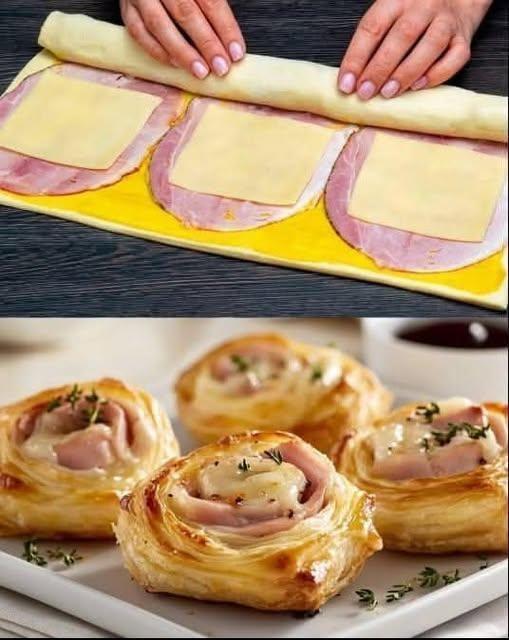
Cheese Puff Pastry Recipe
Introduction
Cheese puff pastry is one of the most delicious baked snacks because it combines buttery flaky pastry with rich melted cheese. The outside becomes crisp and golden while the inside stays soft, cheesy, and flavorful. This recipe creates a bakery-style cheese puff pastry using homemade puff pastry dough and a creamy cheese filling. The process is long because proper puff pastry requires repeated folding and chilling to create hundreds of thin buttery layers.
This detailed recipe explains every step carefully, including dough preparation, butter block preparation, folding techniques, chilling times, shaping methods, baking tips, storage instructions, reheating methods, and variations.
The recipe below makes approximately 16 medium cheese puff pastries.
Preparation Time
- Dough preparation: 45 minutes
- Chilling time: 4 to 6 hours
- Filling preparation: 20 minutes
- Shaping time: 30 minutes
- Baking time: 25 minutes
- Total time: Approximately 7 hours including resting
Ingredients
For the Dough
- 4 cups all-purpose flour
- 1 teaspoon salt
- 1 tablespoon sugar
- 2 tablespoons unsalted butter, softened
- 1 cup cold water
- 1 teaspoon lemon juice
- 1 cup cold milk
For the Butter Layer
- 2 cups unsalted butter, cold but slightly flexible
- 2 tablespoons flour
For the Cheese Filling
- 2 cups cheddar cheese, grated
- 1 cup mozzarella cheese, grated
- 1/2 cup cream cheese
- 1 small onion, finely chopped
- 2 green chilies, finely chopped
- 1 teaspoon black pepper
- 1 teaspoon chili flakes
- 1 teaspoon oregano
- 1/2 teaspoon garlic powder
- 1 tablespoon butter
- Salt to taste
For Egg Wash
- 1 egg
- 2 tablespoons milk
Equipment Needed
- Large mixing bowl
- Rolling pin
- Sharp knife or pizza cutter
- Baking tray
- Parchment paper
- Pastry brush
- Plastic wrap
- Cheese grater
Step 1: Preparing the Dough
Take a large mixing bowl and add the flour, salt, and sugar. Mix well so all dry ingredients are evenly distributed.
Add the softened butter into the flour mixture. Rub it gently using fingertips until the mixture resembles coarse crumbs. Do not overmix because the dough should remain light.
In a separate bowl combine cold water, cold milk, and lemon juice.
Slowly pour the liquid mixture into the flour mixture while mixing gently with your hand or spoon.
Bring everything together into a rough dough. The dough should not be too sticky or too dry. If needed, add one tablespoon of water at a time.
Do not knead heavily because over-kneading develops gluten and makes pastry tough.
Shape the dough into a rectangle.
Wrap it tightly in plastic wrap and refrigerate for at least 30 minutes.
Step 2: Preparing the Butter Block
Take the cold butter and place it between two sheets of parchment paper.
Use a rolling pin to flatten the butter into a square approximately 7 inches by 7 inches.
Sprinkle flour lightly over the butter during flattening.
The butter should become smooth and evenly thick.
Place the butter square in the refrigerator for 20 minutes.
The butter must remain cold but flexible.
Step 3: Laminating the Dough
Lamination creates the flaky layers in puff pastry.
Lightly flour your work surface.
Roll the chilled dough into a rectangle about twice the size of the butter block.
Place the butter block in the center of the dough.
Fold the dough edges over the butter like an envelope so the butter is completely sealed inside.
Press edges carefully so butter does not leak.
Step 4: First Fold
Roll the dough gently into a long rectangle.
Always roll from center outward.
Do not press too hard.
Once the rectangle is formed, fold one-third of the dough toward the center.
Fold the opposite third over it like folding a letter.
This is called a single fold.
Wrap the dough in plastic wrap.
Refrigerate for 30 minutes.
Step 5: Second Fold
Remove chilled dough from refrigerator.
Place folded edge facing sideways.
Roll again into a long rectangle.
Repeat the same folding process.
Wrap and chill again for 30 minutes.
Step 6: Third Fold
Repeat rolling and folding one more time.
By now many thin butter layers are forming inside the dough.
Chill again for 30 minutes.
Step 7: Fourth Fold
Perform the final fold carefully.
The dough should feel smooth and layered.
Wrap tightly and refrigerate for at least 2 hours before use.
This resting time improves texture and flakiness.
Step 8: Preparing the Cheese Filling
Heat butter in a pan over medium heat.
Add finely chopped onions.
Cook until soft and slightly golden.
Add green chilies and cook for another minute.
Add black pepper, chili flakes, oregano, garlic powder, and salt.
Mix well.
Reduce heat to low.
Add cream cheese and stir until creamy.
Turn off heat.
Add grated cheddar and mozzarella cheese.
Mix until combined.
Allow filling to cool completely before using.
Warm filling can melt pastry layers.
Step 9: Rolling the Puff Pastry
Take chilled dough from refrigerator.
Lightly flour the surface.
Roll dough into a large rectangle about 1/4 inch thick.
Try to maintain even thickness everywhere.
Use a sharp knife or pizza cutter to trim edges neatly.
Cut dough into equal squares or rectangles depending on preferred shape.
Step 10: Filling the Pastries
Place one or two tablespoons of cheese filling in the center of each pastry square.
Do not overfill because filling may leak during baking.
Leave space around edges.
Brush edges lightly with water.
Fold pastry over filling to form triangles or rectangles.
Press edges gently.
Seal edges using a fork for decorative texture.
Step 11: Chilling Before Baking
Arrange prepared pastries on a parchment-lined baking tray.
Place tray in refrigerator for 20 minutes.
Cold pastry creates better puff and prevents butter leakage.
Step 12: Egg Wash
In a small bowl whisk together egg and milk.
Brush gently over pastries.
Egg wash gives beautiful golden color and shine.
Avoid brushing too much on edges because it may prevent proper puffing.
Step 13: Baking
Preheat oven to 220°C.
Place tray in the center rack.
Bake for 15 minutes at high temperature.
Then reduce heat to 190°C.
Continue baking for another 10 to 15 minutes until deeply golden and puffed.
Do not open oven frequently during baking.
Steam inside pastry helps layers rise.
Step 14: Cooling
Remove pastries from oven.
Allow them to cool for 10 minutes on tray.
Transfer to wire rack.
The layers continue setting while cooling.
Serve warm for best taste.
Texture and Flavor
A properly made cheese puff pastry should have:
- Crisp golden outer layers
- Light airy texture
- Visible flaky sheets
- Rich buttery aroma
- Stretchy melted cheese filling
- Balanced savory flavor
Important Tips for Success
Keep Everything Cold
Cold butter is the most important part of puff pastry.
If butter melts into dough before baking, layers disappear.
Always chill dough whenever it becomes soft.
Avoid Excess Flour
Too much flour while rolling makes pastry dry and hard.
Use only light dusting.
Roll Evenly
Uneven rolling creates uneven baking.
Some parts may burn while others stay raw.
Use Good Quality Butter
High-fat butter produces better layers and richer flavor.
Cheap butter often contains more water.
Chill Between Folds
Skipping chilling causes butter to mix into dough instead of forming layers.
Patience is essential.
Cheese Variations
You can customize filling using different cheeses.
Parmesan Version
Add parmesan for stronger salty flavor.
Feta Version
Mix feta with mozzarella for tangy filling.
Smoked Cheese Version
Use smoked cheddar for deep smoky flavor.
Creamy Version
Increase cream cheese quantity for softer filling.
Vegetable Additions
You may add:
- Spinach
- Mushrooms
- Corn
- Bell peppers
- Jalapeños
- Olives
Cook vegetables first to remove moisture.
Meat Additions
Optional additions include:
- Chicken
- Smoked turkey
- Minced beef
- Pepperoni
Always cook meat fully before adding.
Mini Party Puff Pastries
Cut smaller squares for bite-sized snacks.
Reduce baking time slightly.
Perfect for tea parties and gatherings.
Storage Instructions
Refrigerator
Store baked pastries in airtight container for up to 4 days.
Freezer
Freeze unbaked pastries on tray first.
Once frozen, transfer to freezer bags.
Can be stored for up to 2 months.
Bake directly from frozen with extra baking time.
Reheating Instructions
Oven Method
Bake at 180°C for 8 minutes.
This keeps pastry crisp.
Air Fryer Method
Heat at 170°C for 5 minutes.
Avoid Microwave
Microwave softens flaky layers.
Common Mistakes
Butter Leaking
Usually caused by warm dough or broken layers.
Pastry Not Puffing
Possible reasons:
- Oven not hot enough
- Butter melted before baking
- Dough overworked
Tough Texture
Usually caused by over-kneading.
Soggy Bottom
Filling too wet or underbaked pastry.
Serving Suggestions
Serve cheese puff pastry with:
- Tomato ketchup
- Garlic sauce
- Chili sauce
- Creamy dip
- Soup
- Tea
- Coffee
Nutritional Information Approximate Per Pastry
- Calories: 320
- Protein: 8g
- Fat: 22g
- Carbohydrates: 24g
- Sodium: 280mg
Professional Bakery Tips
Professional bakers often:
- Freeze dough briefly before baking
- Use marble surfaces for rolling
- Rotate trays halfway during baking
- Rest shaped pastries before oven
- Bake with strong initial heat
Homemade Puff Pastry Advantages
Homemade puff pastry:
- Has fresher flavor
- Uses better ingredients
- Contains fewer preservatives
- Allows flavor customization
- Produces richer buttery aroma
Final Result
The final cheese puff pastry should be beautifully layered, golden brown, buttery, crispy outside, and filled with rich melted cheese inside. Every bite should have delicate flaky sheets that shatter lightly while the warm cheesy filling stretches and melts.
This recipe requires time and patience, but the final bakery-style result is worth the effort.
