instruction
After the beef has marinated for the desired amount of time, carefully remove it from the marinade and transfer the pieces to a large plate, baking sheet, or cutting board. If the recipe does not require the marinade later, it can be discarded. If you plan to use it as part of the cooking liquid, strain and reserve it separately. Before any browning begins, it is essential to thoroughly dry the beef. Using several layers of paper towels, pat every piece dry on all sides, pressing gently to absorb as much surface moisture as possible. This step may seem minor, but it plays a critical role in developing proper color and flavor. Moisture on the surface of the meat creates steam when it hits the hot oil, preventing the beef from browning effectively. Dry meat, on the other hand, develops a rich crust and deeper flavor during searing.
Once the beef has been thoroughly dried, generously season all sides with kosher salt and freshly ground black pepper. The seasoning should be applied evenly so that every piece develops a balanced flavor throughout the cooking process. Depending on the length of marination and the amount of red wine used, the beef may appear darker than usual, taking on shades of deep burgundy, reddish-brown, or even slightly purple. This color change is completely natural and is caused by the wine interacting with the proteins in the meat. Far from being a problem, it is an indication that the beef has absorbed some of the flavors from the marinade and will contribute to the stew’s rich taste and attractive final appearance.
Place a large Dutch oven or other heavy-bottomed pot over medium-high heat. Add the olive oil and allow it to heat gradually. The oil should become hot enough to shimmer across the surface of the pot but should not be smoking aggressively. A properly heated cooking surface is essential because it allows the beef to begin browning immediately upon contact. If the oil is not hot enough, the meat will release moisture and start steaming before a crust can form.
Working in small batches, carefully place several pieces of beef into the hot oil. Arrange the meat in a single layer with space between each piece. Avoid stacking or crowding the beef. One of the most common mistakes when making beef stew is attempting to brown all of the meat at once. While it may seem like a time-saving shortcut, overcrowding lowers the temperature of the pot and causes the meat to release moisture more quickly than it can evaporate. Instead of developing a rich brown crust, the beef steams in its own juices, resulting in pale, gray surfaces and a significant loss of flavor potential.
As the first batch cooks, allow the beef to remain completely undisturbed for several minutes. Resist the temptation to move the pieces around, shake the pot, or turn them prematurely. During this stage, the surface of the meat is undergoing the Maillard reaction, a complex chemical process responsible for creating hundreds of flavorful compounds and the deep golden-brown color associated with expertly cooked meat. This reaction is one of the primary sources of flavor in a great stew and cannot occur properly if the meat is constantly moved or if the cooking surface is not hot enough.
After several minutes, check one piece of beef by gently lifting an edge with tongs. If a rich brown crust has developed, the meat will release naturally from the bottom of the pot. If it still sticks firmly, allow it to continue cooking for another minute or two. Once properly browned on one side, turn each piece and repeat the process on the remaining surfaces. Continue cooking until the beef is deeply caramelized on multiple sides, developing a rich mahogany color and an appetizing crust. The goal is not to cook the beef through at this stage but rather to build as much flavor as possible on the exterior.
As each batch finishes browning, transfer the beef to a clean plate and set it aside. Continue with the remaining meat, adding additional oil as needed if the pot becomes dry. Throughout the process, maintain patience and avoid rushing. Proper browning often takes longer than many home cooks expect, but the extra time invested pays enormous dividends in the finished dish. Every piece of caramelized beef contributes layers of savory depth that will enrich the stew during its long cooking time.
As the batches progress, you will begin to notice dark brown deposits forming on the bottom of the Dutch oven. These caramelized bits, known as fond, are among the most valuable flavor-building components in the entire recipe. The fond is created from browned proteins, rendered sugars, and concentrated juices that adhere to the cooking surface during searing. While it may appear dark and messy, it should not be removed or discarded. Instead, it will become an essential ingredient in the stew’s flavor base.
By the time all of the beef has been browned and transferred to the plate, the bottom of the pot should be covered with a rich layer of deeply colored fond. This is exactly what you want to see. In the next stage of cooking, onions, carrots, celery, garlic, wine, and broth will be added to the pot. As these ingredients cook and release moisture, the fond will gradually dissolve and blend into the liquid. This process, known as deglazing, captures every bit of concentrated flavor and incorporates it into the stew, creating remarkable depth, richness, and complexity.
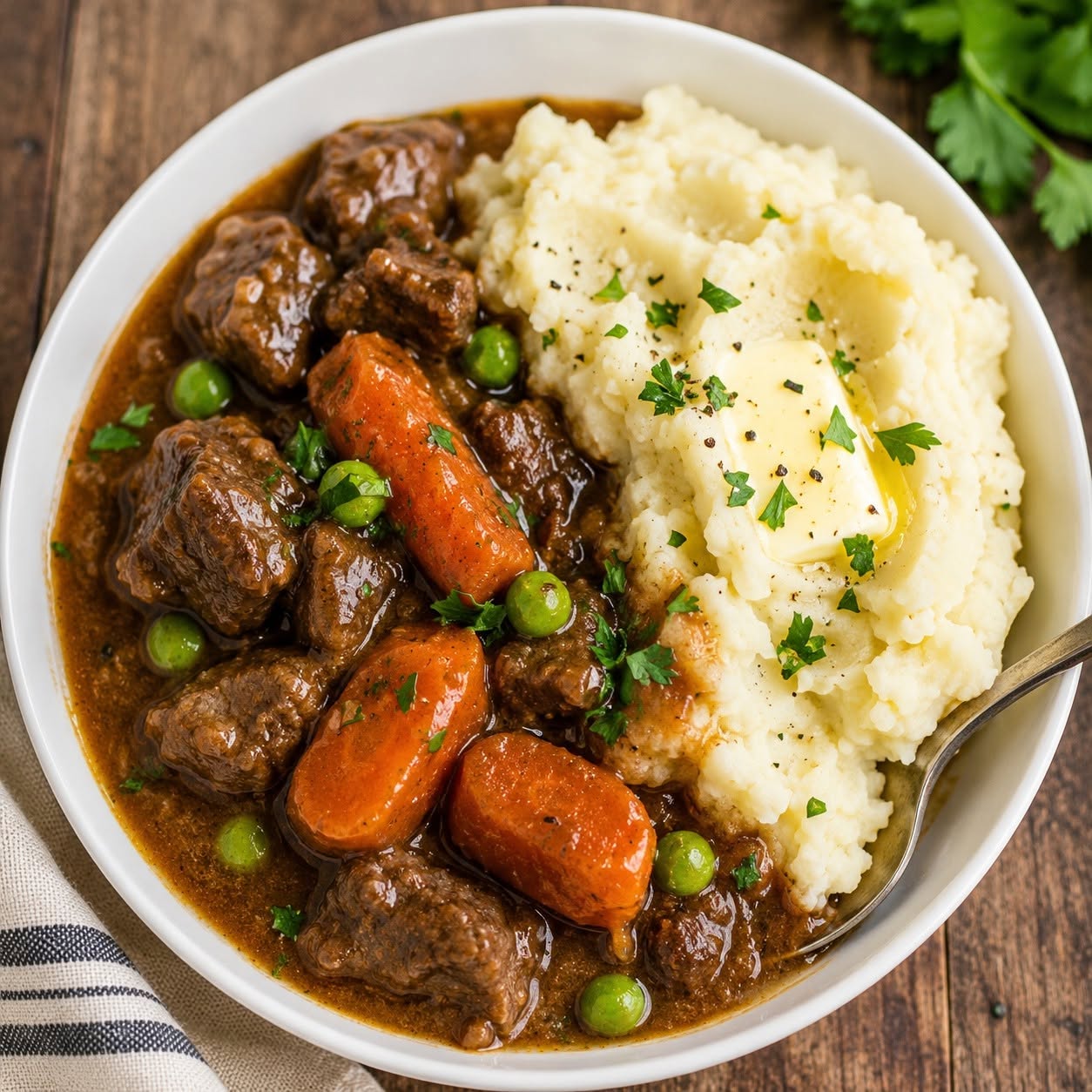
The beautifully browned beef is now prepared for the slow cooking phase of the recipe. As it simmers gently with aromatic vegetables, fresh thyme, bay leaves, red wine, and beef broth, the tough connective tissues within the meat will gradually break down into silky gelatin. Over the course of several hours, the beef will transform from firm stew meat into tender, succulent pieces that can be easily cut with a fork. The cooking liquid will slowly reduce and concentrate, becoming a luxurious gravy infused with the flavors of caramelized beef, herbs, vegetables, and wine. Sweet carrots will soften and contribute natural sweetness, onions will melt into the sauce, and briny olives will provide a subtle contrast that balances the richness of the dish. The result is an exceptionally flavorful and comforting beef stew with remarkable depth, complexity, and texture. Served over a generous mound of creamy mashed potatoes, buttery egg noodles, or crusty artisan bread, it becomes a hearty and satisfying meal that showcases the rewards of careful preparation and patient cooking.
Beef Stew with Mashed Potatoes
Ingredients (Serves 4)
For the Beef Stew
- 500 g beef chuck, cut into cubes
- 2 tablespoons vegetable oil
- 1 onion, diced
- 2 cloves garlic, minced
- 2 carrots, sliced
- 2 potatoes, diced
- 2 cups beef broth
- 1 tablespoon tomato paste
- 1 teaspoon dried thyme
- 1 bay leaf
- 1 teaspoon salt
- ½ teaspoon black pepper
- 1 tablespoon flour (optional, for thickening)
For the Mashed Potatoes
- 800 g potatoes, peeled and chopped
- ¼ cup milk
- 2 tablespoons butter
- ½ teaspoon salt
- ¼ teaspoon black pepper
Preparation Time
- 15 minute
- Cooking time
- 1 hour 50 minutes
- Total Time
- About 2 hours 5 minutes
Instructions
- Heat the vegetable oil in a large pot over medium-high heat.
- Add the beef cubes and cook until browned on all sides.
- Add the onion and garlic, and cook for 2–3 minutes until softened.
- Stir in the tomato paste and flour, if using.
- Add the carrots, diced potatoes, beef broth, thyme, bay leaf, salt, and black pepper.
- Bring the mixture to a boil.
- Reduce the heat to low, cover, and simmer for about 1½ hours until the beef is tender.
- Remove the bay leaf before serving.
Mashed Potatoes
- Place the chopped potatoes in a pot and cover with water.
- Bring to a boil and cook for 15–20 minutes until tender.
- Drain the potatoes.
- Add the milk, butter, salt, and pepper.
- Mash until smooth and creamy.
Serving
Serve the beef stew hot with a generous portion of mashed potatoes. Garnish with chopped parsley if desired.
Nutrition (Approximate Per Serving)
- Calories: 620 kcal
- Protein: 35 g
- Carbohydrates: 42 g
- Fat: 34 g
- Saturated Fat: 12 g
- Fiber: 5 g
- Sodium: 850 mg
- Sugar: 5 g
