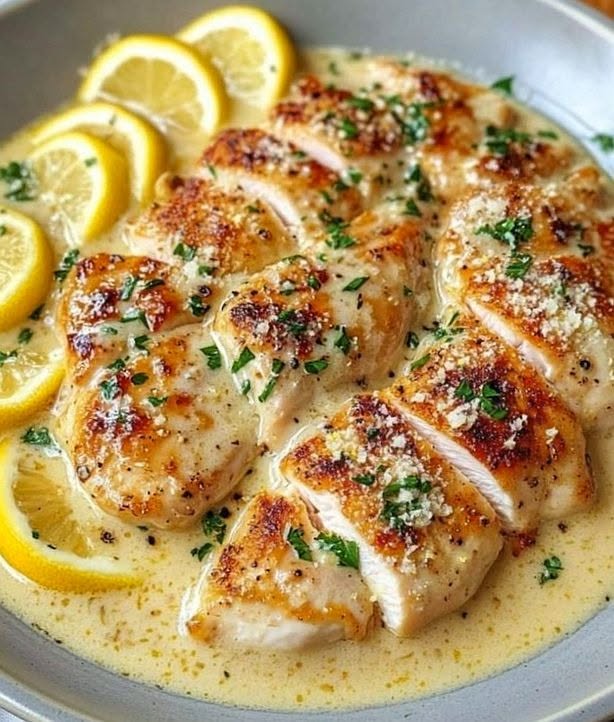
Chicken in a Creamy Lemon Sauce – Extremely Detailed Recipe
Introduction
Chicken in a creamy lemon sauce is a rich, comforting dish that combines tender, juicy chicken with a silky cream sauce flavored with fresh lemon juice, lemon zest, garlic, butter, and herbs. The balance between the richness of the cream and the brightness of the lemon creates a meal that feels both luxurious and refreshing. This recipe is designed to be highly detailed, guiding you through every step from ingredient preparation to cooking techniques, troubleshooting, serving suggestions, storage, and variations.
Yield
Serves 6 people
Preparation Time: 25 minutes
Cooking Time: 40 minutes
Total Time: Approximately 1 hour and 5 minutes
Ingredients
For the Chicken
6 boneless, skinless chicken breasts (about 180–200 grams each)
1½ teaspoons salt
1 teaspoon black pepper
1 teaspoon garlic powder
1 teaspoon onion powder
1 teaspoon paprika
½ teaspoon dried thyme
½ cup all-purpose flour
3 tablespoons olive oil
2 tablespoons unsalted butter
For the Creamy Lemon Sauce
3 tablespoons unsalted butter
6 cloves garlic, finely minced
2 tablespoons all-purpose flour
2 cups chicken broth
1½ cups heavy cream
½ cup freshly squeezed lemon juice
2 teaspoons finely grated lemon zest
1 teaspoon Dijon mustard
½ teaspoon salt (adjust to taste)
½ teaspoon black pepper
¼ teaspoon crushed red pepper flakes (optional)
½ cup freshly grated Parmesan cheese
2 tablespoons chopped fresh parsley
1 tablespoon chopped fresh chives
Optional Garnishes
Thin lemon slices
Fresh parsley leaves
Freshly cracked black pepper
Extra grated Parmesan cheese
Equipment Needed
Large skillet or sauté pan
Sharp chef’s knife
Cutting board
Mixing bowls
Whisk
Measuring cups and spoons
Tongs
Instant-read thermometer (recommended)
Wooden spoon
Microplane or fine grater
Citrus juicer
Step 1: Prepare the Chicken
Place each chicken breast on a cutting board. If the breasts are very thick, carefully slice them horizontally to create thinner cutlets. This helps the chicken cook more evenly and prevents dry outer layers while waiting for the center to cook.
Pat the chicken completely dry using paper towels. Removing surface moisture helps create a golden crust during searing.
In a small bowl, combine the salt, black pepper, garlic powder, onion powder, paprika, and dried thyme. Mix thoroughly.
Sprinkle the seasoning mixture evenly over all sides of the chicken breasts.
Place the flour in a shallow dish. Lightly coat each chicken breast with flour, shaking off excess. The flour coating will help create a beautiful crust and slightly thicken the sauce later.
Allow the chicken to rest at room temperature for about 10 minutes while preparing the remaining ingredients.
Step 2: Prepare the Lemon Components
Wash the lemons thoroughly.
Using a microplane, grate the yellow outer layer of the lemons. Avoid the white pith because it can make the sauce bitter.
Measure 2 teaspoons of lemon zest.
Cut the lemons in half and squeeze enough juice to obtain ½ cup fresh lemon juice.
Strain the juice if you prefer a perfectly smooth sauce.
Set the zest and juice aside separately.
Step 3: Prepare Additional Ingredients
Mince the garlic as finely as possible.
Finely chop the parsley and chives.
Grate the Parmesan cheese fresh from a block for the smoothest melting and best flavor.
Measure all ingredients before beginning the cooking process. Having everything prepared will make the sauce come together smoothly.
Step 4: Sear the Chicken
Place a large skillet over medium-high heat.
Add the olive oil and 2 tablespoons butter.
Allow the butter to melt completely and begin to foam slightly.
Carefully place the chicken breasts into the pan without overcrowding. Work in batches if necessary.
Cook for approximately 4 to 5 minutes on the first side without moving the chicken. This helps develop a rich golden-brown crust.
Flip the chicken and cook another 4 to 5 minutes on the second side.
The internal temperature should reach approximately 70°C (160°F) at this stage because the chicken will finish cooking later in the sauce.
Transfer the chicken to a plate and loosely cover with foil.
Do not clean the skillet. The browned bits left behind are packed with flavor and will enrich the sauce.
Step 5: Begin the Sauce
Reduce the heat to medium.
Add 3 tablespoons butter to the same skillet.
Once melted, add the minced garlic.
Cook for about 30 to 60 seconds while stirring continuously.
Do not allow the garlic to brown heavily because it may become bitter.
The garlic should become fragrant and lightly golden.
Step 6: Create the Roux
Sprinkle 2 tablespoons flour over the garlic and butter mixture.
Whisk continuously for about 1 to 2 minutes.
The flour should absorb the butter and form a smooth paste.
Cooking the flour briefly removes any raw flour taste and creates the foundation for a velvety sauce.
Step 7: Add the Chicken Broth
Slowly pour in the chicken broth while whisking constantly.
Add only a small amount at first and whisk until smooth.
Continue gradually adding the remaining broth.
Whisk thoroughly to prevent lumps.
Bring the mixture to a gentle simmer.
Cook for 3 to 4 minutes until slightly thickened.
Step 8: Add the Cream
Lower the heat to medium-low.
Slowly pour in the heavy cream while whisking.
Continue stirring until fully incorporated.
The sauce should become smooth, glossy, and pale golden in color.
Allow the sauce to simmer gently for about 4 minutes.
Avoid vigorous boiling, which can cause dairy-based sauces to separate.
Step 9: Add Lemon Flavor
Add the lemon juice gradually while whisking.
Then add the lemon zest.
Stir in the Dijon mustard.
Add salt, black pepper, and red pepper flakes if using.
Continue simmering gently for another 3 to 5 minutes.
The sauce should begin developing a balanced flavor profile that is creamy, tangy, savory, and aromatic.
Step 10: Incorporate Parmesan Cheese
Gradually add the grated Parmesan cheese.
Whisk continuously until completely melted.
The cheese will add richness, body, and depth of flavor.
Allow the sauce to simmer for 2 additional minutes.
Taste the sauce and adjust seasoning if necessary.
If you prefer more lemon flavor, add an extra teaspoon of lemon zest.
If you prefer a richer sauce, add a few tablespoons of cream.
If the sauce is too tart, add a small pinch of sugar.
Step 11: Return the Chicken to the Pan
Place the seared chicken breasts back into the skillet.
Nestle them into the sauce.
Spoon some sauce over each piece.
Reduce heat to low.
Cover partially and cook for 8 to 10 minutes.
The chicken should reach an internal temperature of 74°C (165°F).
The sauce will continue thickening during this time.
Step 12: Add Fresh Herbs
Stir in the chopped parsley and chives.
Reserve a small amount for garnish.
Allow everything to cook together for 1 additional minute.
The fresh herbs provide color, freshness, and complexity.
Step 13: Final Texture Adjustment
If the sauce becomes too thick:
Add a few tablespoons of warm chicken broth.
Whisk gently until the desired consistency is reached.
If the sauce is too thin:
Simmer uncovered for several additional minutes.
Stir occasionally until thickened.
The ideal sauce should coat the back of a spoon while still flowing smoothly.
Step 14: Rest Before Serving
Remove the skillet from heat.
Allow the chicken to rest in the sauce for about 5 minutes.
This resting period helps redistribute juices within the meat and allows the flavors to meld together.
Serving Suggestions
Serve over buttery mashed potatoes for a comforting meal.
Serve with steamed rice to absorb the creamy sauce.
Serve over pasta such as fettuccine, linguine, or spaghetti.
Serve alongside roasted vegetables.
Serve with sautéed green beans, asparagus, broccoli, or spinach.
Serve with crusty bread for dipping into the sauce.
Storage Instructions
Allow leftovers to cool completely.
Transfer to an airtight container.
Refrigerate for up to 3 days.
For best quality, store the chicken and sauce together.
Reheating Instructions
Place the chicken and sauce in a skillet over low heat.
Add a splash of cream or chicken broth.
Heat gently until warmed through.
Avoid boiling because it may cause the sauce to separate.
Freezing Instructions
Although possible, cream sauces may change texture after freezing.
If freezing, place cooled chicken and sauce in freezer-safe containers.
Freeze for up to 2 months.
Thaw overnight in the refrigerator before reheating gently.
Recipe Variations
Add sliced mushrooms for an earthy flavor.
Add baby spinach during the final few minutes of cooking.
Use chicken thighs instead of chicken breasts for extra richness.
Add capers for a Mediterranean-inspired version.
Include sun-dried tomatoes for sweetness and depth.
Use fresh basil instead of parsley for a different herbal note.
Add cooked bacon for a smoky variation.
Stir in roasted garlic for deeper flavor.
Serve with angel hair pasta for an elegant presentation.
Chef’s Tips for Perfect Results
Always use freshly squeezed lemon juice rather than bottled juice.
Do not overcook the chicken.
Use heavy cream rather than milk for the smoothest sauce.
Freshly grate Parmesan cheese for superior melting.
Allow the sauce to simmer gently rather than boil.
Taste and adjust seasoning throughout the cooking process.
Use a large skillet to prevent overcrowding.
Pat the chicken dry before seasoning.
Let the chicken rest before serving.
Balance acidity and richness by adjusting lemon juice and cream according to personal preference.
The finished dish should feature tender golden chicken coated in a luxurious creamy lemon sauce with notes of garlic, butter, Parmesan, herbs, and bright citrus, creating a restaurant-quality meal that is rich, flavorful, and satisfying.
