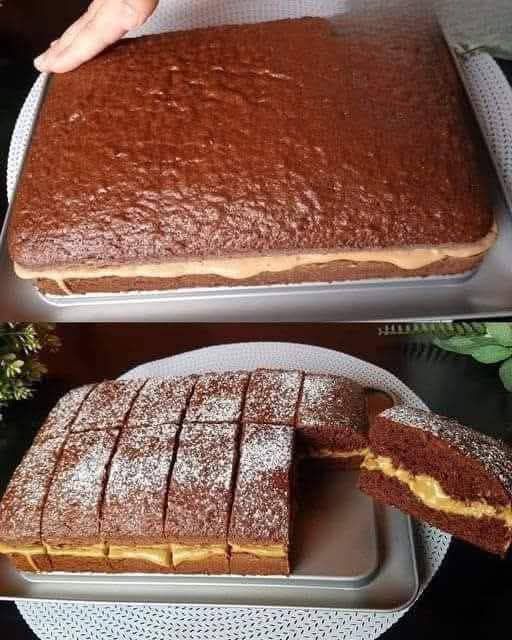
Ultra-Soft Cake Recipe (Extremely Detailed Version)
This recipe is designed to produce a cake with a very soft, light, moist, and delicate crumb. The method focuses on proper mixing, temperature control, and moisture retention. Read the entire recipe before beginning.
Introduction
Many cakes become dense, dry, or tough because of overmixing, incorrect ingredient temperatures, or inaccurate measurements. This recipe uses a combination of cake flour, oil, butter, and milk to create an exceptionally soft texture. The butter contributes flavor, the oil helps maintain moisture, and the cake flour keeps the crumb tender.
The recipe yields one large 8-inch or 9-inch round cake, or two thinner layers suitable for stacking and frosting.
Ingredients
Dry Ingredients
3 cups (360 grams) cake flour
2½ teaspoons baking powder
½ teaspoon baking soda
½ teaspoon fine salt
Butter and Sugar Mixture
½ cup (113 grams) unsalted butter, softened to room temperature
½ cup (120 milliliters) neutral vegetable oil
2 cups (400 grams) granulated sugar
Eggs
4 large eggs, room temperature
2 extra egg whites, room temperature
Liquid Ingredients
1 cup (240 milliliters) whole milk, room temperature
½ cup (120 grams) plain yogurt or sour cream, room temperature
2 teaspoons pure vanilla extract
Optional Moisture Boost
2 tablespoons honey
or
2 tablespoons light corn syrup
Either ingredient helps retain moisture and softness for several days.
Equipment Needed
Large mixing bowl
Medium mixing bowl
Electric mixer or stand mixer
Fine sieve
Rubber spatula
Measuring cups and spoons
Kitchen scale if available
8-inch or 9-inch cake pan
Parchment paper
Cooling rack
Step 1: Prepare the Cake Pan
Preheat the oven to 325°F (165°C).
Grease the cake pan lightly with butter or oil.
Cut a circle of parchment paper to fit the bottom of the pan.
Place the parchment in the pan and lightly grease it as well.
Dust very lightly with flour and tap out any excess.
Proper pan preparation helps the cake release easily without damaging the delicate crumb.
Step 2: Prepare the Dry Ingredients
Place the cake flour, baking powder, baking soda, and salt into a medium bowl.
Whisk thoroughly for at least one minute.
Sifting the dry ingredients is recommended because it removes lumps and introduces air into the flour.
Set aside.
Step 3: Prepare the Wet Ingredients
In another bowl, combine the milk, yogurt, vanilla extract, and honey if using.
Whisk until completely smooth.
Keep this mixture at room temperature.
Cold ingredients can cause the batter to curdle and affect the final texture.
Step 4: Cream Butter, Oil, and Sugar
Place the softened butter into a large mixing bowl.
Beat on medium speed for about two minutes until smooth.
Gradually add the oil while mixing.
Continue beating until the mixture looks creamy and uniform.
Slowly add the sugar.
Beat for five to seven minutes.
This stage is extremely important.
The mixture should become lighter in color and noticeably fluffier.
Tiny air bubbles created during this process contribute to a soft cake structure.
Do not rush this step.
Step 5: Add Eggs
Add one egg at a time.
Beat well after each addition.
Scrape down the sides of the bowl frequently.
After all four eggs have been added, add the two egg whites.
Mix until fully incorporated.
The batter should appear smooth, silky, and slightly fluffy.
Egg whites contribute extra tenderness and a lighter texture.
Step 6: Combine Wet and Dry Ingredients
Reduce mixer speed to low.
Add one-third of the dry ingredients.
Mix briefly.
Add half of the milk mixture.
Mix gently.
Add another third of the dry ingredients.
Add the remaining milk mixture.
Add the final third of the dry ingredients.
Mix only until no dry flour remains visible.
Overmixing develops gluten and can make the cake less tender.
Stop mixing as soon as the batter becomes smooth.
Step 7: Final Folding
Use a rubber spatula.
Fold the batter gently from bottom to top.
Rotate the bowl while folding.
This ensures everything is evenly combined without losing the air incorporated during mixing.
The finished batter should be smooth, thick, and creamy.
Step 8: Transfer Batter to the Pan
Pour the batter into the prepared pan.
Tap the pan gently on the counter two or three times.
This removes large trapped air pockets.
Do not tap excessively because too much air loss can reduce softness.
Use a spatula to smooth the surface.
Step 9: Bake the Cake
Place the pan on the center oven rack.
Bake for approximately 45 to 55 minutes.
Avoid opening the oven door during the first 35 minutes.
Opening the oven too early can cause the cake to sink.
The cake is done when:
The top springs back when lightly touched.
A toothpick inserted into the center comes out clean or with a few moist crumbs.
The edges begin to pull slightly away from the pan.
Step 10: Initial Cooling
Remove the cake from the oven.
Place the pan on a cooling rack.
Allow the cake to cool in the pan for 15 minutes.
This resting period helps the structure stabilize.
Do not remove the cake immediately.
A very soft cake can break if handled while too hot.
Step 11: Remove from Pan
Run a thin knife around the edges.
Carefully invert the cake onto a cooling rack.
Remove the parchment paper.
Turn the cake upright again.
Allow it to cool completely.
Step 12: Softness Preservation Method
Once the cake is completely cool, wrap it tightly in plastic wrap.
Allow it to rest for several hours or overnight.
During this resting period, moisture redistributes throughout the cake.
Many bakers find the cake even softer the next day.
Optional Milk Soak for Extreme Softness
Combine:
¼ cup warm milk
1 tablespoon sugar
½ teaspoon vanilla extract
Stir until dissolved.
Brush lightly over the cooled cake.
Do not soak excessively.
A light brushing adds moisture without making the cake soggy.
Optional Whipped Frosting
2 cups cold heavy cream
4 tablespoons powdered sugar
1 teaspoon vanilla extract
Beat until medium peaks form.
Spread over the cake immediately.
This frosting complements the delicate texture without weighing it down.
Professional Tips for Maximum Softness
Use room-temperature ingredients.
Measure flour accurately.
Avoid overmixing.
Do not overbake.
Use cake flour instead of all-purpose flour whenever possible.
Store the cake tightly covered.
Allow the cake to rest overnight before serving.
Use both butter and oil for the ideal balance of flavor and moisture.
Avoid excessive frosting weight if you want the soft crumb to remain airy.
Bake at a slightly lower temperature for a gentler rise and finer crumb structure.
Storage Instructions
At room temperature, the cake remains soft for approximately three days when covered tightly.
In the refrigerator, it can remain fresh for up to one week, though refrigeration may slightly firm the texture.
To restore softness after refrigeration, allow slices to come to room temperature before serving.
The cake can also be frozen for up to three months. Wrap it carefully in plastic wrap followed by aluminum foil. Thaw overnight in the refrigerator and then bring to room temperature before serving.
Final Result
The finished cake should have a pale golden color, an extremely soft crumb, a moist interior, a rich vanilla aroma, and a light texture that almost melts in the mouth. When sliced, the cake should appear fine-grained, tender, and fluffy while remaining moist enough to stay fresh for several days. This method produces one of the softest homemade vanilla cakes possible using standard baking ingredients and careful technique.
