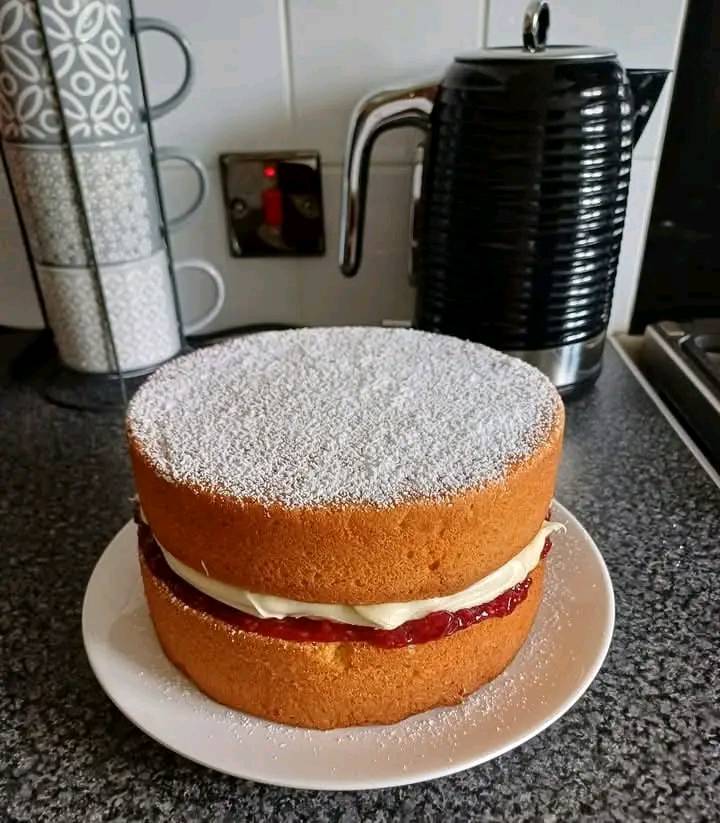
Air Fryer Victoria Sponge Cake – Extremely Detailed Recipe
A Victoria Sponge Cake is a classic British cake made from two light and fluffy sponge layers filled with jam and cream. This air fryer version produces a beautifully soft sponge while using less energy and heating time than a conventional oven.
Introduction
The Victoria Sponge, sometimes called Victoria Sandwich Cake, is named after Queen Victoria, who was known to enjoy a slice of sponge cake with her afternoon tea. The cake is famous for its simple ingredients and delicate texture. A successful Victoria sponge should be light, airy, moist, and evenly risen, with a tender crumb that melts in the mouth.
Making a Victoria sponge in an air fryer requires careful attention to temperature, pan size, and cooking time because air fryers circulate hot air more intensely than conventional ovens. This recipe has been written in extensive detail to guide beginners and experienced bakers alike.
Yield
Serves 8–10 people
Makes one 7-inch (18 cm) Victoria sponge cake, sliced into two layers
Preparation Time
Preparation: 25 minutes
Cooking: 28–35 minutes
Cooling: 1 hour
Assembly: 15 minutes
Total Time: Approximately 2 hours 15 minutes
Equipment Needed
7-inch round cake tin suitable for your air fryer
Mixing bowls
Electric hand mixer or stand mixer
Fine sieve
Rubber spatula
Cooling rack
Serrated knife
Kitchen scale
Measuring spoons
Parchment paper
Ingredients for the Sponge
175 g unsalted butter, softened to room temperature
175 g caster sugar
3 large eggs, room temperature
175 g self-raising flour
1 teaspoon baking powder
1 teaspoon vanilla extract
2 tablespoons milk, room temperature
Pinch of salt
Ingredients for the Filling
150 ml double cream or whipping cream
3 tablespoons icing sugar
4 to 5 tablespoons good-quality strawberry jam or raspberry jam
Ingredients for Decoration
1 to 2 tablespoons icing sugar for dusting
Understanding the Ingredients
Butter provides richness, tenderness, and flavor. Softened butter creams more effectively with sugar, trapping air that helps the cake rise.
Caster sugar dissolves easily and contributes to the cake’s light texture.
Eggs provide structure, moisture, and stability. Room-temperature eggs blend more smoothly into the batter.
Self-raising flour contains baking agents that help create a light sponge.
Additional baking powder gives extra lift, which can be useful in air fryer baking.
Vanilla extract adds warmth and depth of flavor.
Milk loosens the batter slightly and helps create a softer crumb.
Cream adds luxurious richness to the filling.
Jam contributes sweetness, moisture, and traditional flavor.
Preparing the Cake Tin
Grease the entire inside of a 7-inch cake tin with butter.
Cut a circle of parchment paper to fit the bottom of the tin.
Place the parchment circle inside the tin.
Lightly grease the parchment paper as well.
This preparation helps ensure the cake releases easily after baking.
Preparing the Batter
Place the softened butter into a large mixing bowl.
Add the caster sugar.
Using an electric mixer, beat the butter and sugar together for 4 to 6 minutes until the mixture becomes pale, creamy, and fluffy.
This stage is extremely important because it incorporates air into the batter. The more air trapped during creaming, the lighter the finished sponge will be.
Crack the eggs into a separate bowl.
Add the eggs gradually to the butter mixture, beating well after each addition.
If the mixture begins to curdle, add a tablespoon of flour and continue mixing.
Stir in the vanilla extract.
In another bowl, sift together the self-raising flour, baking powder, and salt.
Gradually fold the dry ingredients into the wet mixture using a spatula.
Use gentle folding motions rather than vigorous stirring.
Add the milk.
Continue folding until the batter is smooth and evenly combined.
Avoid overmixing because excessive mixing can develop gluten and produce a dense sponge.
The finished batter should be thick but easily spreadable.
Filling the Cake Tin
Transfer the batter into the prepared cake tin.
Use a spatula to level the surface.
Gently tap the tin on the counter once or twice to remove large air pockets.
Do not tap excessively because you want to retain the air incorporated during mixing.
Preheating the Air Fryer
Preheat the air fryer to 160°C for 3 to 5 minutes.
Preheating helps the sponge begin rising immediately when placed inside.
Different air fryer brands vary considerably, so temperatures may require slight adjustments.
Baking the Cake
Carefully place the cake tin into the air fryer basket.
Cook at 160°C for approximately 28 to 35 minutes.
Avoid opening the air fryer during the first 20 minutes because sudden temperature changes can cause the cake to sink.
After 28 minutes, check for doneness.
Insert a skewer into the center of the cake.
If it comes out clean or with a few dry crumbs, the cake is ready.
If wet batter remains on the skewer, continue cooking in 2- to 3-minute intervals.
The sponge should appear golden on top and spring back when lightly pressed.
Internal temperatures and cooking times can vary based on the air fryer model, basket size, and tin material.
Cooling the Cake
Remove the cake tin carefully.
Allow the sponge to cool in the tin for 10 minutes.
Run a knife gently around the edges.
Turn the cake onto a cooling rack.
Remove the parchment paper.
Allow the sponge to cool completely before slicing.
A warm sponge can tear or crumble when cut.
Preparing the Filling
Pour the cream into a chilled bowl.
Add the icing sugar.
Whip until soft peaks form.
Do not overwhip, as the cream may become grainy.
The ideal consistency is smooth, thick, and spreadable.
Slicing the Sponge
Place the cooled cake on a flat surface.
Using a long serrated knife, carefully cut the sponge horizontally into two equal layers.
Rotate the cake as you cut to achieve an even division.
Take your time to ensure neat layers.
Filling the Cake
Place the bottom sponge layer on a serving plate.
Spread the jam evenly across the surface.
Leave a small border around the edge to prevent overflow.
Spread or pipe the whipped cream over the jam.
Place the second sponge layer on top.
Press gently to secure the layers together.
Decorating the Cake
Dust the top generously with icing sugar.
Traditional Victoria sponge decoration is intentionally simple.
The beauty of the cake lies in its elegant appearance and delicate texture.
Tips for Success
Use room-temperature ingredients for better mixing and a smoother batter.
Do not overmix once the flour is added.
Always preheat the air fryer.
Check the cake near the end of cooking but avoid opening the basket too frequently.
Allow complete cooling before filling.
Use high-quality jam for the best flavor.
If the top browns too quickly, loosely cover the cake with foil during the final part of baking.
Variations
Replace strawberry jam with raspberry jam for a traditional alternative.
Add fresh strawberries between the layers.
Use lemon curd instead of jam.
Add a small amount of almond extract for a subtle nutty flavor.
Fill with mascarpone cream for extra richness.
Include fresh berries for a summer version.
Storage
Store the assembled cake in the refrigerator because of the cream filling.
Cover well and consume within 2 days for best quality.
If making ahead, bake the sponge layers one day in advance and assemble before serving.
Serving Suggestions
Serve with afternoon tea.
Pair with freshly brewed coffee.
Serve with fresh strawberries.
Offer alongside whipped cream or vanilla ice cream.
Enjoy as a celebration cake, weekend dessert, or elegant tea-time treat.
The finished air fryer Victoria sponge should be light, soft, moist, and delicately sweet, with fluffy cream and fruity jam creating the classic flavor combination that has made this cake a beloved favorite for generations


