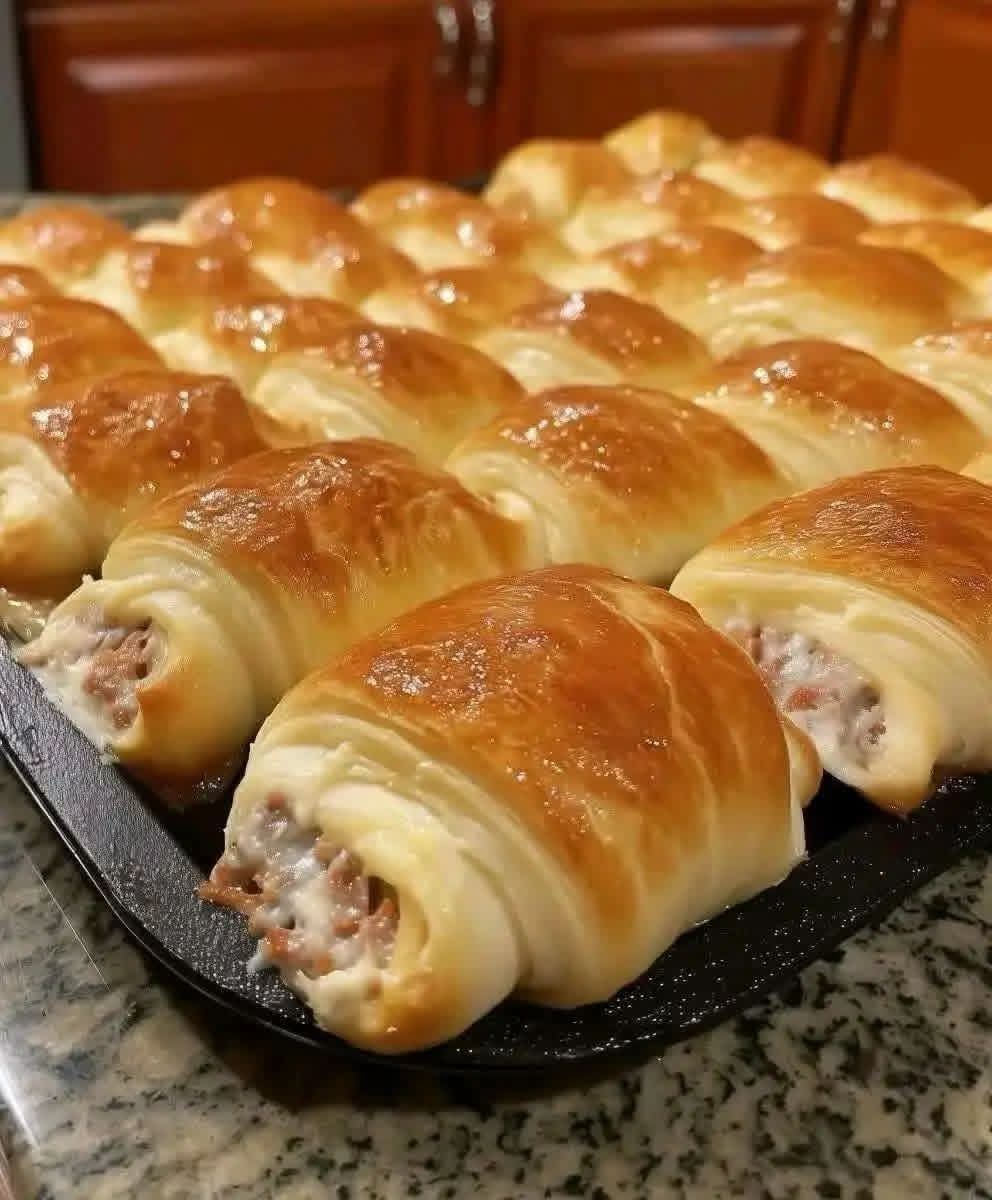
Ultimate Homemade Soft Dinner Rolls Recipe
This recipe creates rich, fluffy, golden-brown dinner rolls with a soft interior, slightly buttery crust, and bakery-style texture. The instructions are intentionally detailed so even a beginner can follow successfully.
Yield: 24 medium rolls
Preparation Time: 45 minutes active work
Rising Time: 2 to 3 hours
Baking Time: 18 to 22 minutes
Ingredients
For the Dough
- 1 cup warm whole milk (about 110°F / 43°C)
- 1 cup warm water
- 2 1/4 teaspoons active dry yeast (1 standard packet)
- 1/3 cup granulated sugar
- 2 large eggs, room temperature
- 1/3 cup unsalted butter, melted
- 1 tablespoon vegetable oil
- 1 1/2 teaspoons salt
- 5 1/2 to 6 1/2 cups all-purpose flour
For Brushing
- 3 tablespoons melted butter
- Optional: flaky salt for topping
Optional Flavor Additions
- 1 teaspoon garlic powder
- 1 tablespoon honey
- 1 teaspoon dried herbs such as rosemary or thyme
Equipment
- Large mixing bowl
- Wooden spoon or dough hook mixer
- Measuring cups and spoons
- Clean kitchen towel
- Baking tray or casserole pan
- Pastry brush
- Cooling rack
Step 1: Activate the Yeast
Pour the warm milk and warm water into a large bowl. The liquid should feel warm but not hot. If it is too hot, it can kill the yeast.
Add the sugar and stir until dissolved.
Sprinkle the yeast over the liquid. Let it sit undisturbed for 5 to 10 minutes.
You should see foam or bubbles forming on top. This means the yeast is alive and active. If nothing happens after 10 minutes, start again with fresh yeast.
Step 2: Build the Dough Base
Add the eggs, melted butter, vegetable oil, and salt to the yeast mixture.
Whisk until smooth.
Begin adding flour one cup at a time, stirring continuously. After about 4 cups, the dough will become thick and shaggy.
If using a stand mixer, switch to a dough hook.
Continue adding flour slowly until the dough pulls away from the sides of the bowl but still feels slightly soft and tacky.
Do not overload the dough with flour. Too much flour creates dense rolls.
Step 3: Knead the Dough
Turn the dough onto a lightly floured surface.
Knead for 8 to 12 minutes by hand.
To knead:
- Push the dough away with the heel of your hand.
- Fold it back over itself.
- Rotate slightly.
- Repeat rhythmically.
The dough should become:
- Smooth
- Elastic
- Soft
- Slightly springy
If using a mixer, knead for about 6 to 8 minutes on medium-low speed.
You can test readiness by pressing a finger gently into the dough. It should slowly bounce back.
Step 4: First Rise
Lightly oil a large clean bowl.
Place the dough inside and turn once so the surface is coated lightly with oil.
Cover with a kitchen towel or plastic wrap.
Place in a warm draft-free location for 1 to 1 1/2 hours, or until doubled in size.
Good rising spots:
- Inside an oven turned off with light on
- Near a warm window
- On top of a refrigerator
Step 5: Punch Down and Shape
Once doubled, gently punch down the dough to release trapped air.
Transfer to a work surface.
Divide into 24 equal pieces.
To shape each roll:
- Pull edges inward toward the center
- Pinch underneath
- Roll gently against the counter with your palm until smooth
Place rolls into a greased baking pan with slight spacing between them.
For pull-apart rolls:
- Arrange close together
For individual rolls:
- Leave more space between each
Step 6: Second Rise
Cover the shaped rolls lightly.
Let rise again for 30 to 45 minutes.
The rolls should puff noticeably and nearly double.
During the last 15 minutes of rising, preheat oven to 375°F (190°C).
Step 7: Bake
Bake in the center rack for 18 to 22 minutes.
The tops should become:
- Deep golden brown
- Slightly shiny
- Firm but soft underneath
Internal temperature should reach around 190°F (88°C) if using a thermometer.
Avoid overbaking or the rolls may dry out.
Step 8: Butter Finish
Immediately after baking, brush tops generously with melted butter.
This gives:
- Softer crust
- Rich flavor
- Beautiful shine
Let cool for 10 minutes before serving.
Texture and Flavor Notes
These rolls should have:
- Pillowy soft centers
- Light buttery flavor
- Delicate chew
- Slight sweetness
- Pull-apart texture
Serving Suggestions
These rolls pair perfectly with:
- Roasted chicken
- Beef stew
- Cream soups
- Holiday meals
- Barbecue
- Breakfast sandwiches
- Burgers
- Honey butter
- Jam
Storage Instructions
Room Temperature:
- Store in airtight container up to 3 days
Refrigerator:
- Up to 1 week, though texture may firm slightly
Freezer:
- Freeze up to 2 months
- Wrap tightly in plastic and foil
To Reheat:
- Oven at 300°F for 5 to 8 minutes
- Or microwave briefly with damp paper towel
Advanced Baking Tips
Use Bread Flour for More Chew
Bread flour creates slightly chewier rolls with stronger gluten structure.
Use Tangzhong Method for Extra Softness
Cook 3 tablespoons flour with 1/2 cup milk until thick before adding to dough. This locks moisture into the bread.
Cold Overnight Rise
After first rise, refrigerate overnight. This develops deeper flavor and improves texture.
Egg Wash Variation
Brush with beaten egg before baking for shinier tops.
Honey Butter Variation
Mix:
- 3 tablespoons butter
- 1 tablespoon honey
Brush over warm rolls.
Garlic Herb Rolls
Add:
- 1 teaspoon garlic powder
- 1 teaspoon parsley
- 1 teaspoon oregano
Brush with garlic butter after baking.
Common Problems and Solutions
Rolls Too Dense
Possible causes:
- Too much flour
- Under-kneading
- Expired yeast
Rolls Did Not Rise
Possible causes:
- Liquid too hot
- Cold room
- Dead yeast
Dry Rolls
Possible causes:
- Overbaking
- Excess flour
Sticky Dough
Possible causes:
- Humid environment
- Insufficient kneading
Do not panic if dough feels slightly sticky early on. Soft dough generally creates softer bread.
Mini Variations
Cheese Rolls
Place cheddar cubes inside each dough ball before shaping.
Cinnamon Sweet Rolls
Add cinnamon sugar filling and glaze.
Potato Rolls
Replace part of liquid with mashed potato for ultra softness.
Whole Wheat Rolls
Replace 2 cups flour with whole wheat flour.
Final Result
When made correctly, these rolls should:
- Tear apart in soft layers
- Stay fluffy for hours
- Smell rich and buttery
- Have a bakery-quality appearance
- Melt in the mouth when warm
They are ideal for family dinners, holiday tables, sandwich buns, or simply eating warm with butter.


